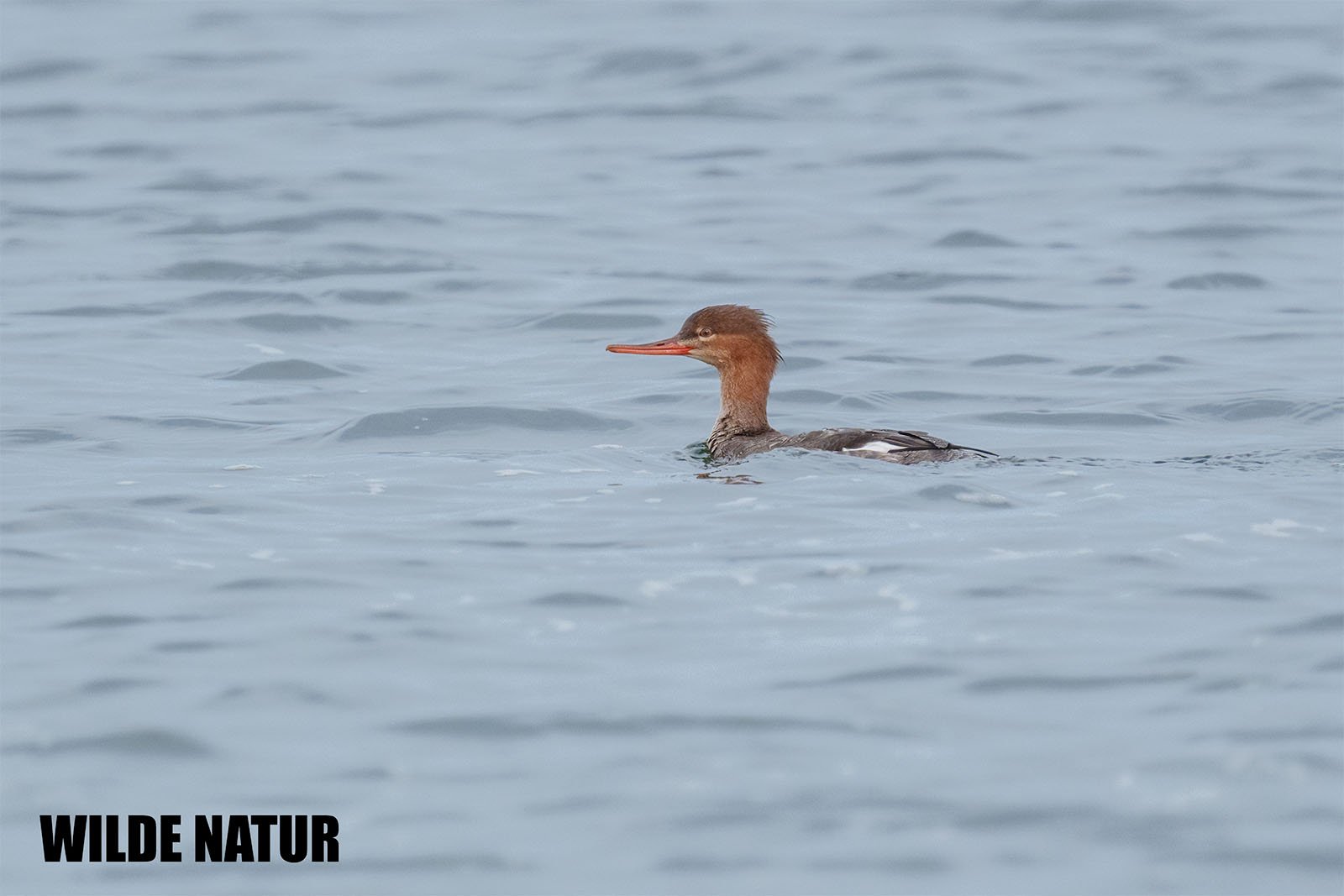
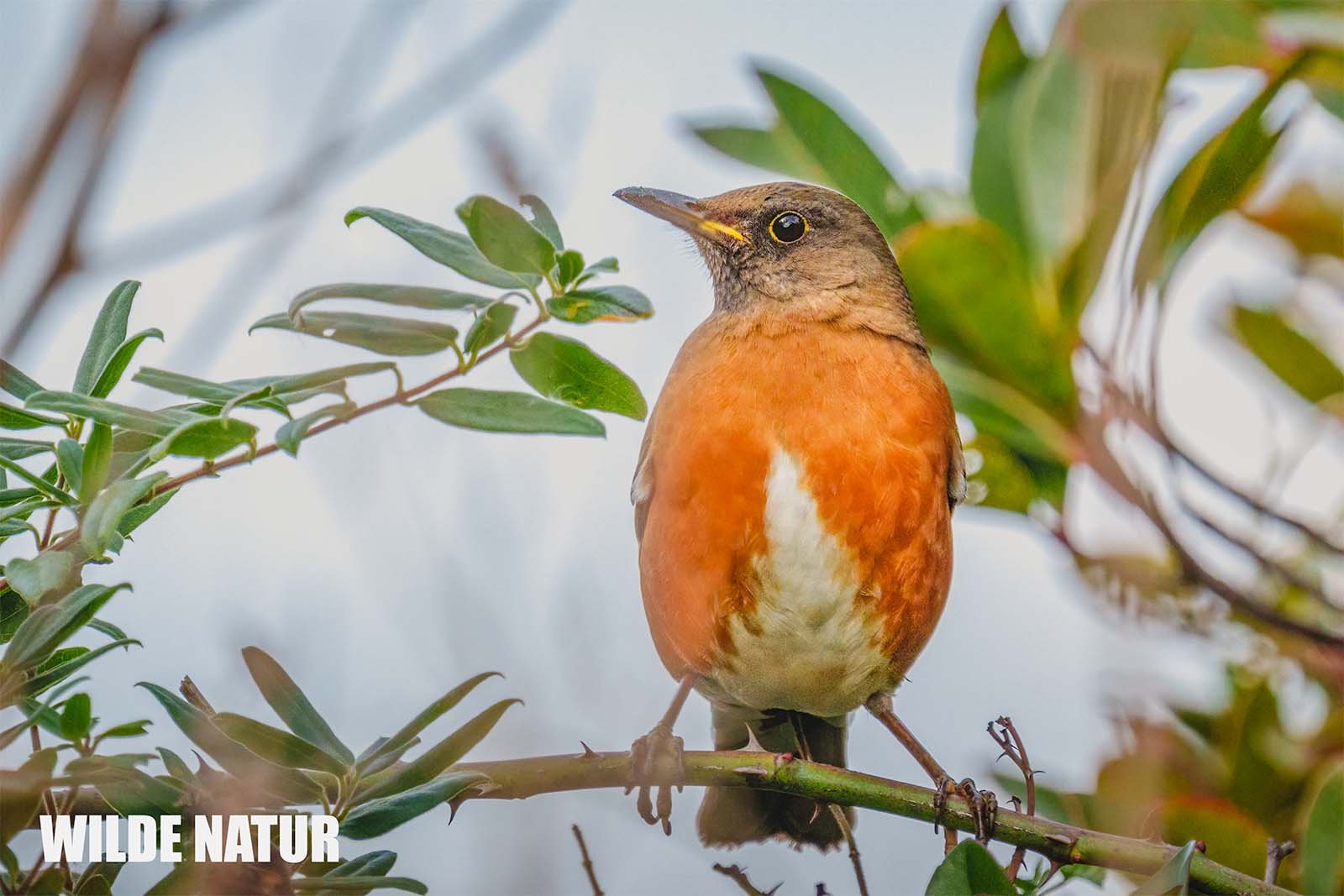
Red Birds in Germany
Which red bird was it? Discover 9 striking species with red plumage in Germany – with images, identification features, and that “aha” moment!
Red Birds – These 9 Species Have Striking Red Plumage
You saw a bird with red feathers in your garden and wonder which one it was? Germany is home to many bird species that have entirely or partially red plumage. These small, agile birds are often hard to identify with the naked eye, especially with all their color variations. It’s easy to overlook how many of our native birds actually display red areas in their feathers. Here you’ll find an overview of red birds in Germany, compact and easy to recognize.
Why some “red” birds actually appear orange
Many bird species in Germany have “red” in their name even though their plumage often looks more orange or rusty—such as the European robin, the black redstart, or the red kite. One reason for this is our subjective perception of color: red and orange tones in nature blend seamlessly and shift depending on light and viewing angle.
Another reason is that the pigments responsible for the coloration are mostly carotenoids, natural substances considered “red pigments” in biology, even though they can appear yellow, orange, or reddish depending on their concentration. Some bird species can convert these pigments into pure red only to a limited extent, which is why their feathers appear more orange.
Additionally, many bird names originate from times when colors were not described as precisely as they are today. From a biological perspective, these species are still considered “red-colored,” even if we often perceive them as more orange.
Red Crossbill
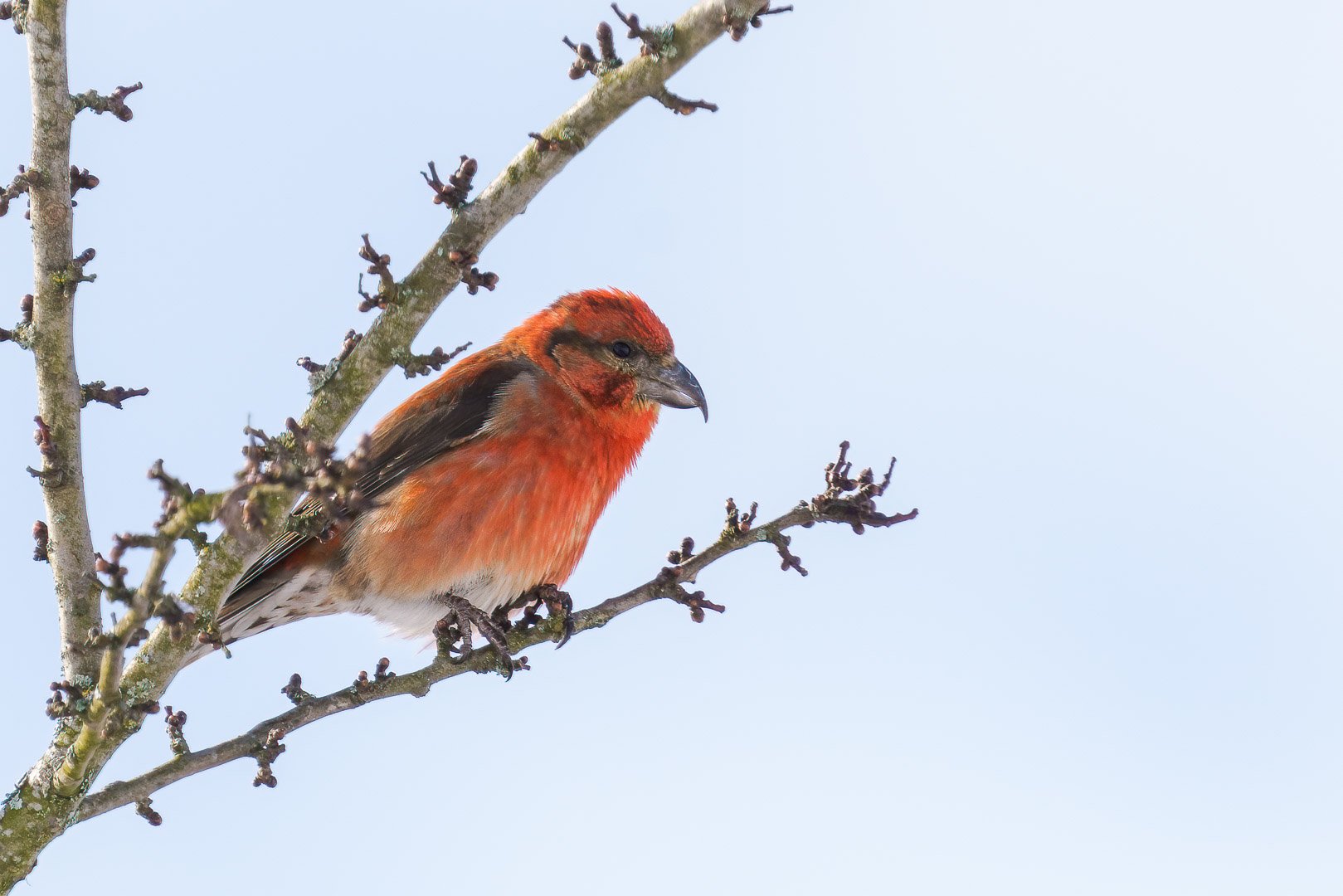
- Red plumage: Almost the entire body (in males)
- Identification features: Brick-red or orange-red plumage, crossed bill
A typical bird of coniferous forests; coloration can vary, with females appearing more greenish.
European Robin
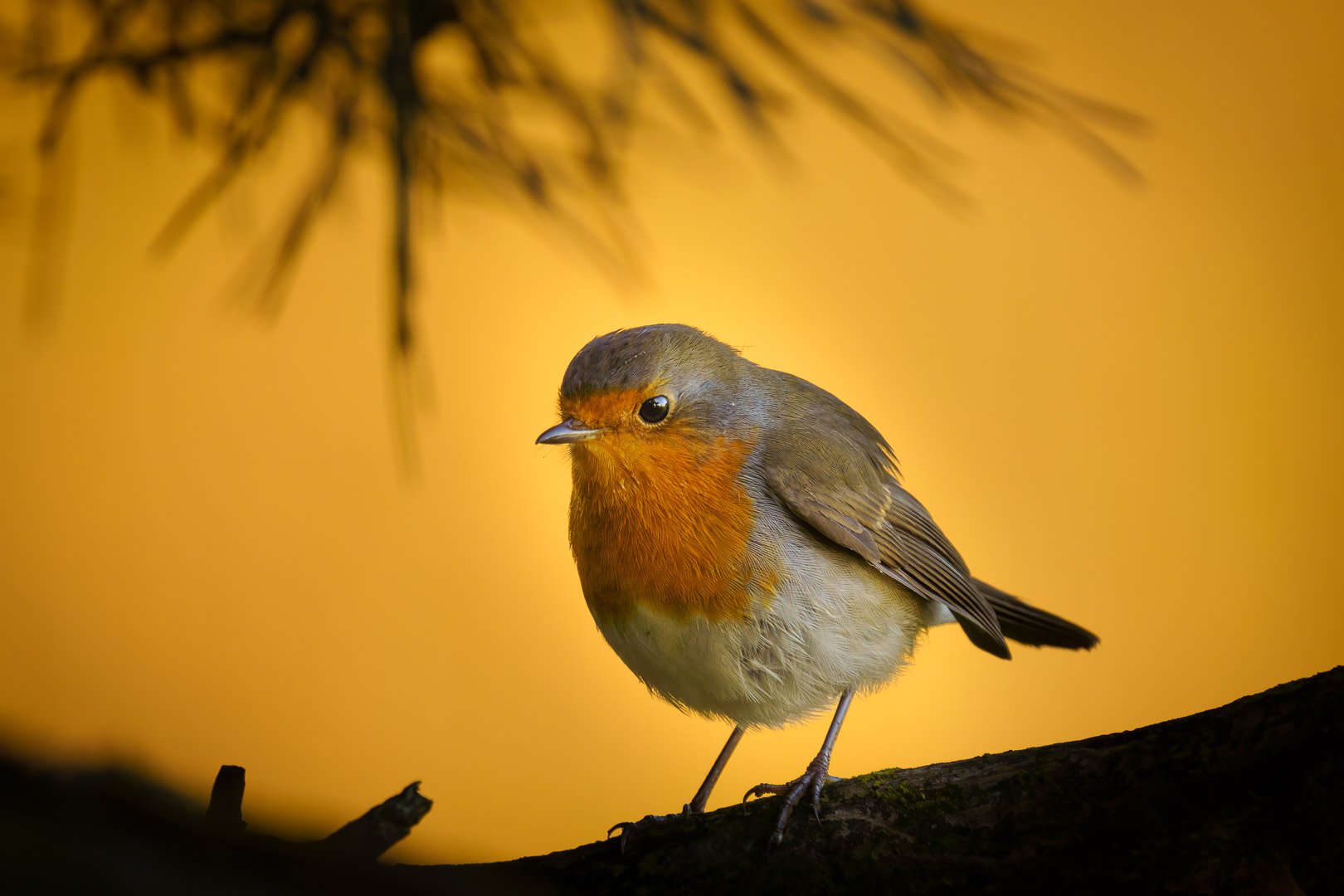
- Red plumage: Throat and breast
- Identification features: The orange-red coloration covers the throat, breast, and face.
The European robin is probably the best-known native bird with red coloration. It often forages on the ground and is active even in winter.
Bullfinch

- Red plumage: Breast and belly (in males)
- Identification features: Brick-red to pinkish underside, black head, grey back
The Eurasian bullfinch is easy to observe in winter, when its bright red plumage stands out especially well.
Great Spotted Woodpecker

- Red plumage: Red undertail; males also have a red patch on the back of the head
- Identification features: Black-and-white patterned plumage with a striking red undertail. Only the male has a red patch on the back of the head; the female lacks this mark. A common garden bird, easily recognized by its characteristic drumming and calls.
European Green Woodpecker
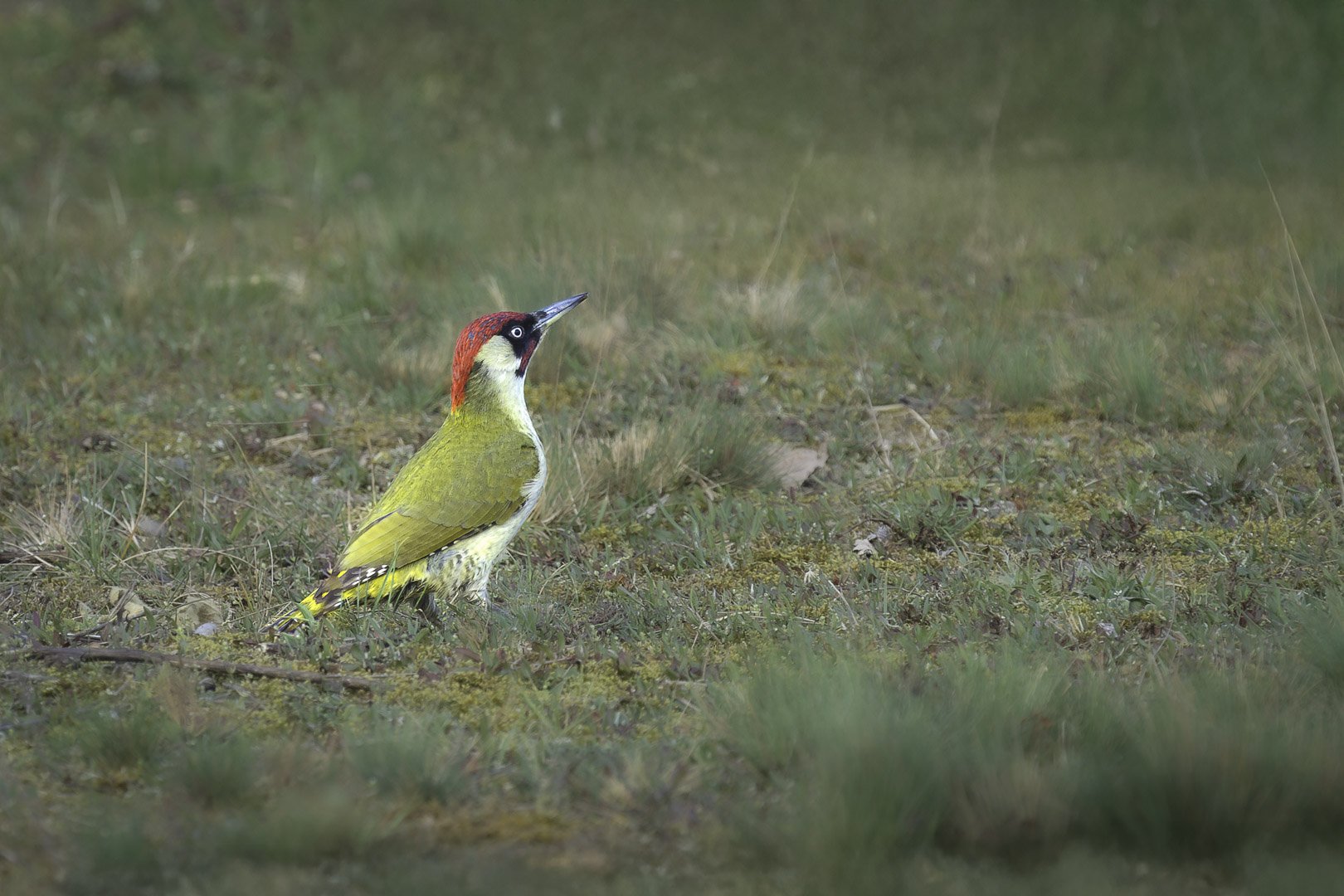
- Red plumage: Crown
- Identification features: Green overall coloration with a bright red cap from the nape to the forehead
Often seen on the ground, as it feeds mainly on ants.
European Goldfinch
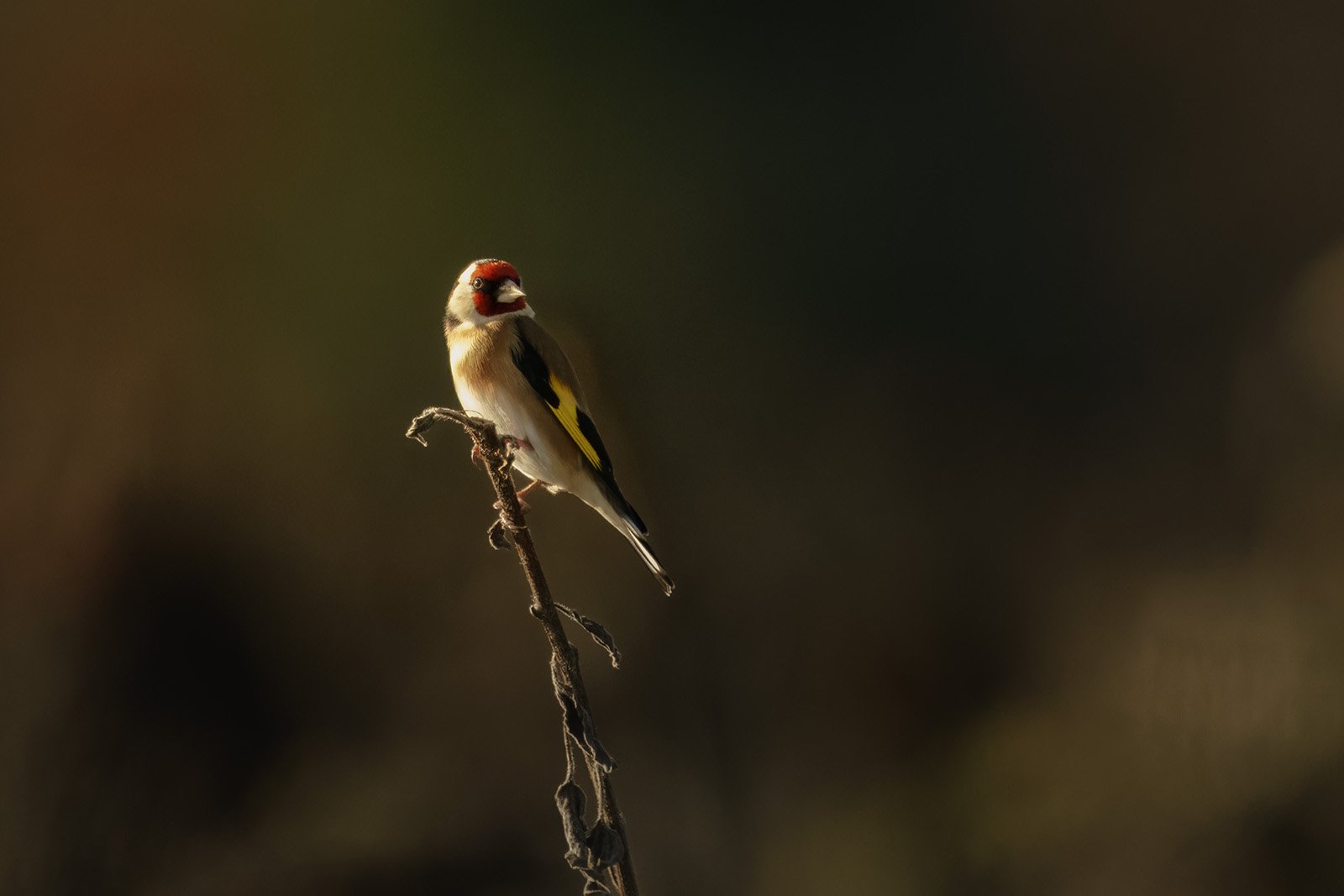
- Red plumage: Face
- Identification features: Red facial mask, yellow wing bars, and a colorful body
One of the most brightly colored birds in Germany, often found around thistles.
Common Linnet
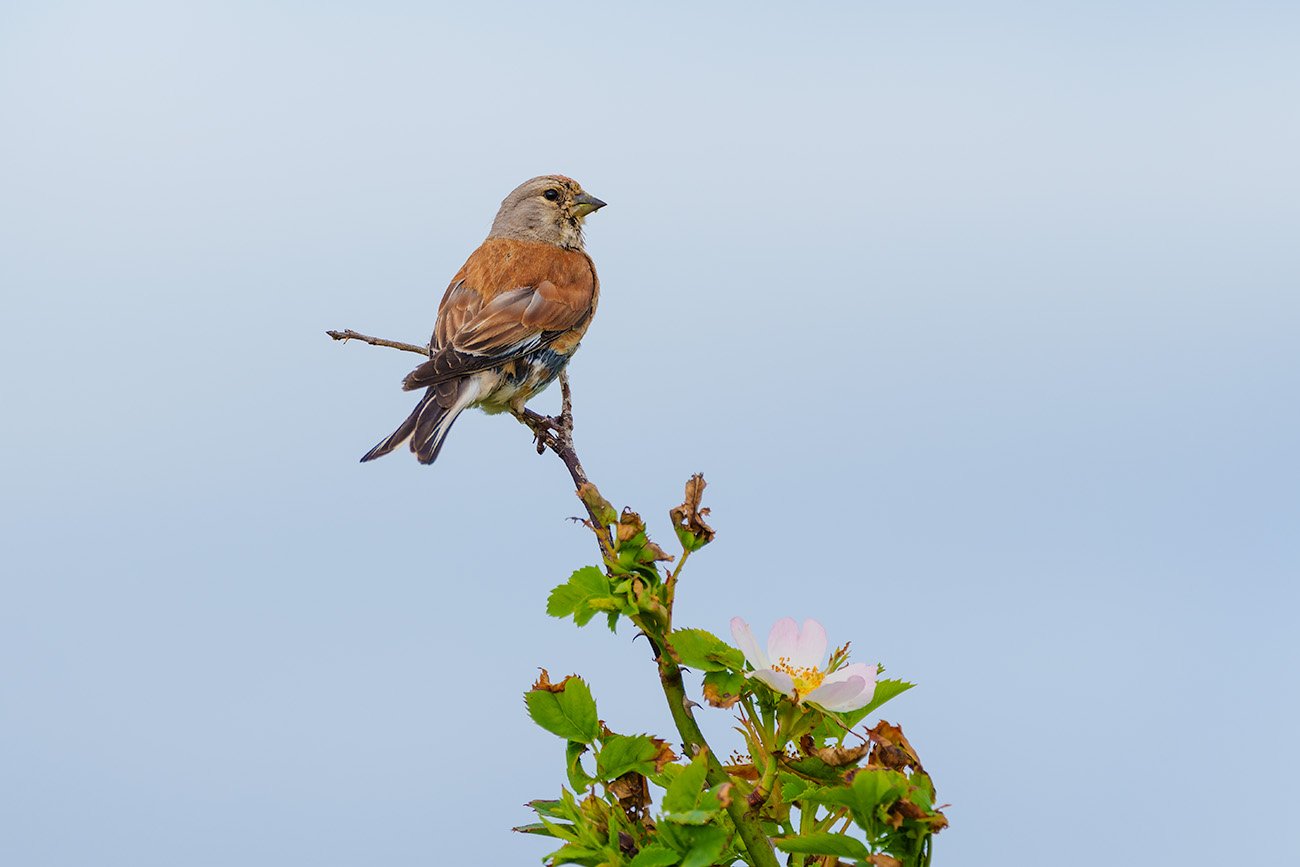
- Red plumage: Breast and forehead (in males during spring)
- Identification features: Males have a carmine-red breast and red forehead, especially striking during the breeding season. Outside the mating period, they appear much more inconspicuous.
Black Woodpecker

- Red plumage: Crown (in males)
- Identification features: Almost entirely black with a striking red “cap”
The largest native woodpecker, often heard calling from afar.
Red Kite
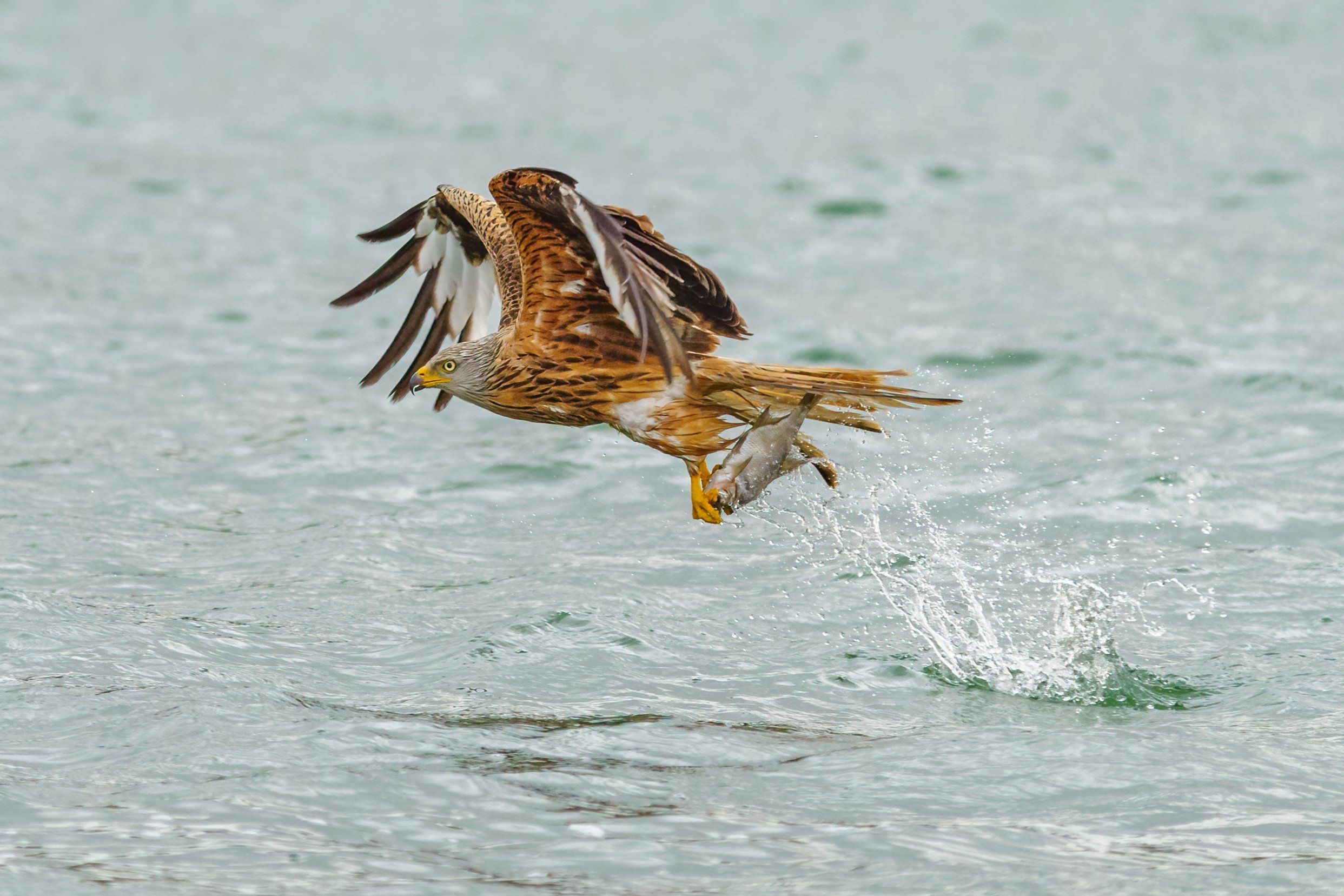
- Red plumage: Entire body (rust-red to reddish-brown), tail
- Identification features: Large and elegant, with a deeply forked tail and rust-brown plumage.
Easy to recognize in flight; in sunlight, the red tones glow impressively. Regionally also known as the “Gabelweihe.”
Red Birds in Germany Are Diverse
Whether with a red breast, mask, or crown—red birds appear in many different forms across Germany. Some are easy to recognize, while others require a closer look.
So next time you spot a bird with red plumage, take a careful look—it might have been a bullfinch, a goldfinch, or even a black woodpecker.
Tip: A camera or a pair of binoculars will help you identify species more accurately—and with a bit of luck, you may even capture a great photo!
FAQ – Frequently Asked Questions About Red Birds in Germany
1. Why do some birds have “red” in their name even though they look more orange?
Many of these names come from historical language use. In addition, the colors are based on carotenoids, which are considered “red pigments” in biology, even if they often appear orange to our eyes.
2. Which red birds are especially common in gardens?
Among the most common are the Eurasian bullfinch, the black redstart, the goldfinch, and—depending on the region—the great spotted woodpecker.
3. Is the intensity of red the same in all bird species?
No. Color intensity depends on light, season, sex, and diet. Many males display much stronger red tones during the breeding season. On snowy winter days, red stands out even more against the white background, making it appear especially vivid to us.
4. Why are some red birds more noticeable in winter?
In winter, dense foliage is absent, and colors appear more contrasting in snow and low-angled sunlight.
5. Are only male birds red?
For many species, yes. In the Eurasian bullfinch, common linnet, or black woodpecker, males show the bright red, while females are much more subdued or paler.
6. Can the red coloration of birds change over their lifetime?
Yes. Juvenile birds often look different from adults. Molting, age, and diet also affect color intensity.
7. What role does diet play in red plumage coloration?
Birds must obtain carotenoids through their food. If these are lacking, feathers appear paler and less red. Diet therefore has a direct impact on the richness of the color.
8. Why do red birds sometimes look brown in the shade?
Shade lacks the light components needed to make red tones glow, so they appear darker, more rust-colored, or even brown.
9. Are there any completely red birds in Germany?
Only very few species are predominantly red. In most cases, the red coloration is limited to specific body areas—such as the breast, head, or tail.