Terek Sandpiper (Xenus cinereus)
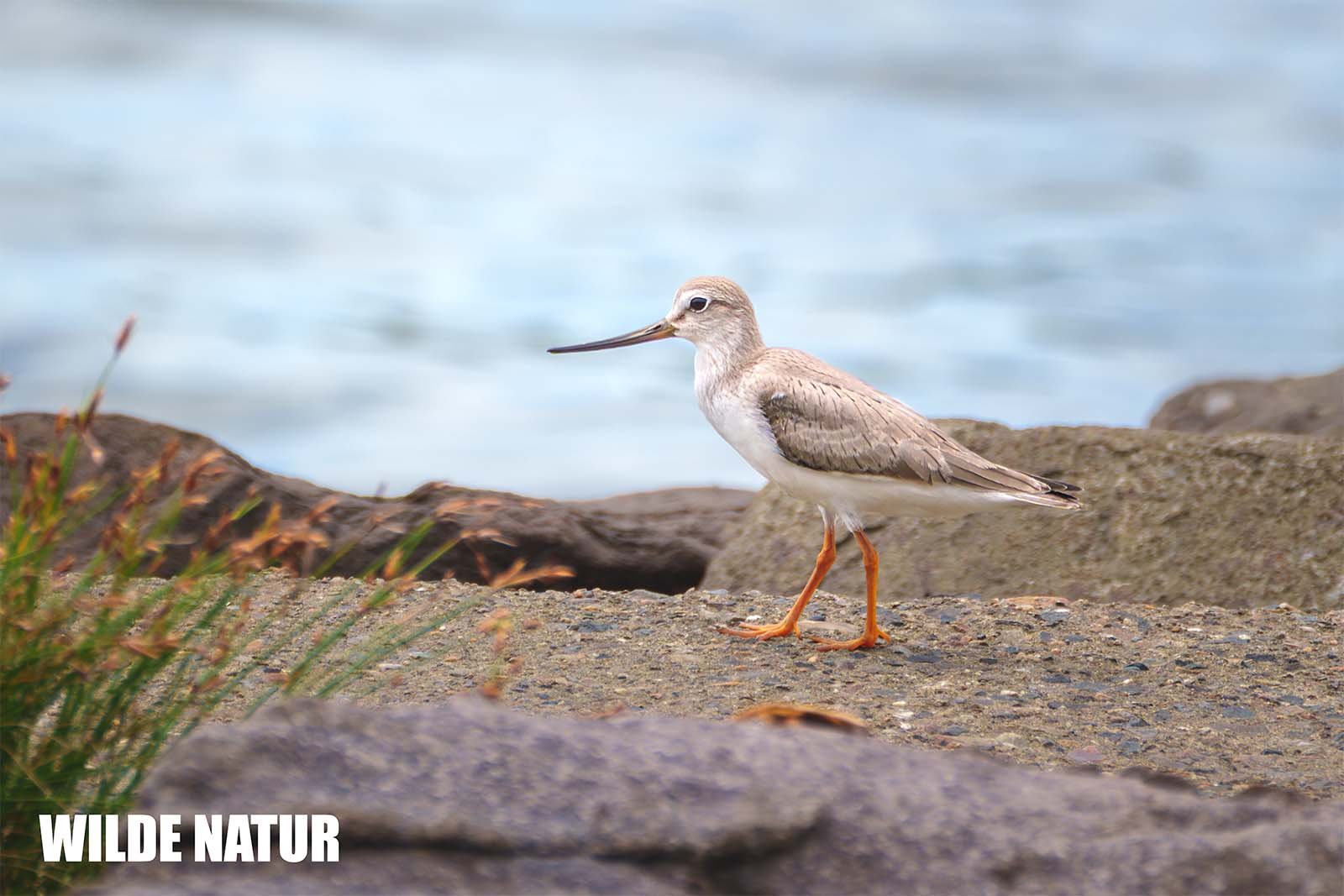
Terek Sandpiper (Xenus cinereus)
Terek Sandpiper: A Wader with a Twist in Its Bill
Key Facts
- Name: Terek Sandpiper (Xenus cinereus)
- Size: 22–27 cm, compact build
- Diet: Worms, larvae, crustaceans
- Occurrence in Japan: Migrant, not a breeding species
- Migration: Long-distance migrant, stopover in Japan
- Appearance: Grey-white plumage, orange legs, upturned bill
- Conservation status: Not threatened, but habitat under pressure
- Scientific name: Xenus cinereus
- English name: Terek Sandpiper
- German name: Terekwasserläufer
- Weight: estimated 80–100 g
- Where it appears in Japan: Coasts, river mouths, mudflats
- Breeding range: Taiga zones of Russia
- Migration route: Russia – South Asia – Africa – Australia
—
Table of Contents
- Introduction
- Appearance and Behaviour
- Habitat in Japan
- Migration: A Marathon with Stopovers
- Diet: Probing That Pays Off
- Breeding: Secretive in the Taiga
- Conservation: Growing Pressure on Stopover Sites
- FAQ: Five Questions About the Terek Sandpiper
—
Introduction
It may look harmless, but there’s a true high-flyer behind that modest appearance: the Terek Sandpiper is a wader that covers thousands of kilometres—with only brief breaks. In Japan, it pauses during its long-distance migration and is anything but sluggish. Anyone who spots it quickly realises: this bird has style, speed, and a strong personality—it nods as it runs, probes rapidly in the mud, and rarely loses its composure.
Appearance and Behaviour
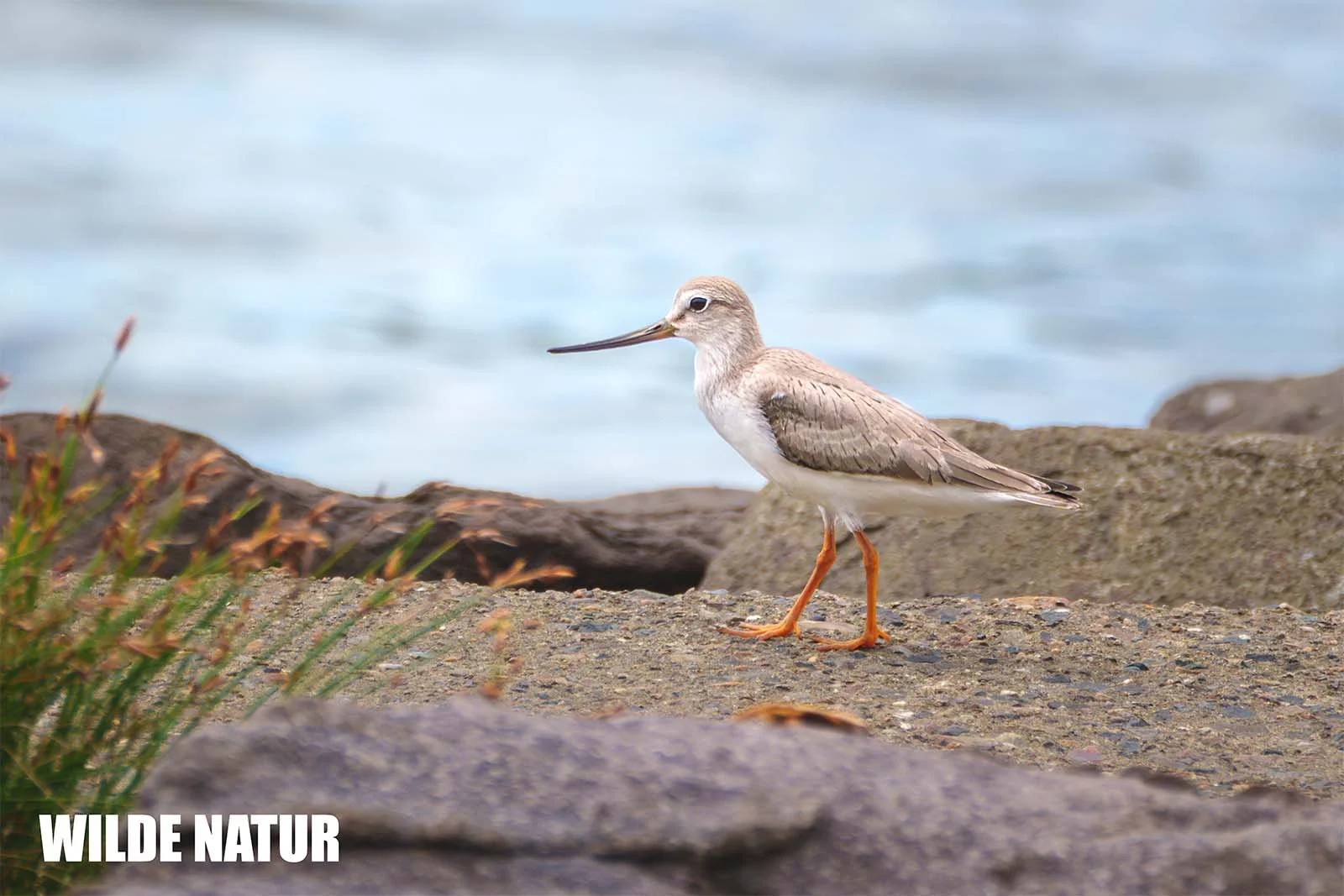
At first glance, the Terek Sandpiper looks like a typical wader. But then the bill catches your eye: slightly upturned, with an orange base. And those legs—bright orange, almost like tiny signal lights.
- Colour: Grey-brown on back and wings, whitish underneath
- Head: Rounded, with a dark eye-stripe
- Bill: Black with an orange base, slightly upturned
- Legs: Short, orange-yellow
- In flight: White trailing edge on the wings, pale tail base
- Movement: Fast, lively, with its characteristic head-bobbing
If you watch it feed, you’ll see real precision: it pecks, probes, and darts about—at a pace that could impress even the busiest city dwellers.
Habitat in Japan
The Terek Sandpiper does not breed in Japan—but it stops there regularly.
Where to find it:
- Along coasts
- In river mouths
- On mudflats
- In wetlands
When to find it: - Spring: April to May
- Autumn: August to October
You’ll have better chances in southern Japan—Kyushu and Shikoku, for example. Occasionally it strays inland. Breeding attempts? None. For this bird, Japan is a brief stopover—nothing more.
Migration: A Marathon with Stopovers
Terek Sandpipers are true long-distance migrants. Their route is astonishing:
- Start: Breeding grounds in Russia
- Destination: South Asia, India, Africa, Australia
- Stopover: Japan
One thing becomes clear: they rely on wetlands. These stopover sites are vital. No stopover, no onward flight—it’s as simple as that.
Diet: Probing That Pays Off
A bird that travels this fast needs energy—and it gets that energy from mudflat foraging.
What’s on the menu:
- Small crustaceans
- Insect larvae
- Worms
- Molluscs
It searches for food in shallow water or along muddy shores. It runs quickly, nods its head noticeably, and probes with purpose. Its mantra: speed, strategy, precision.
Breeding: Secretive in the Taiga
Japan is not part of its breeding range—that happens farther north, in the Russian taiga.
Breeding behaviour at a glance:
- Nests built in dense vegetation near water
- 3–4 eggs per clutch
- Both parents incubate
- Young raised in remote river valleys
These breeding sites are hard to reach. That remoteness gives the species some protection from human disturbance.
Conservation: Growing Pressure on Stopover Sites
Officially, the Terek Sandpiper is listed as Least Concern. But this can be misleading—its survival depends heavily on intact stopover habitats.
The biggest threats:
- Destruction of wetlands
- Coastal development
- Pollution in river mouths
In Japan, many of these habitats are threatened by harbour construction and land reclamation. The core issue: no stopover, no migration.
What helps? - Protecting wetlands
- Preserving mudflats
- International cooperation for migratory birds
FAQ: Five Questions About the Terek Sandpiper
1. Why is it called “Terek Sandpiper”?
The name comes from the Terek River in the Caucasus region, where the species occurs.
2. Is the bird native to Japan?
No. It is a migrant and not a breeding species in Japan.
3. When are the best chances to see it?
In spring (April–May) and autumn (August–October) along coasts and river mouths.
4. What is its most distinctive feature?
Definitely the upturned bill with its orange base—and its constant head-bobbing while running.
5. Is the species threatened?
Globally no, but locally pressured due to the loss of stopover habitats.