Azure-winged magpie (Cyanopica cyanus)
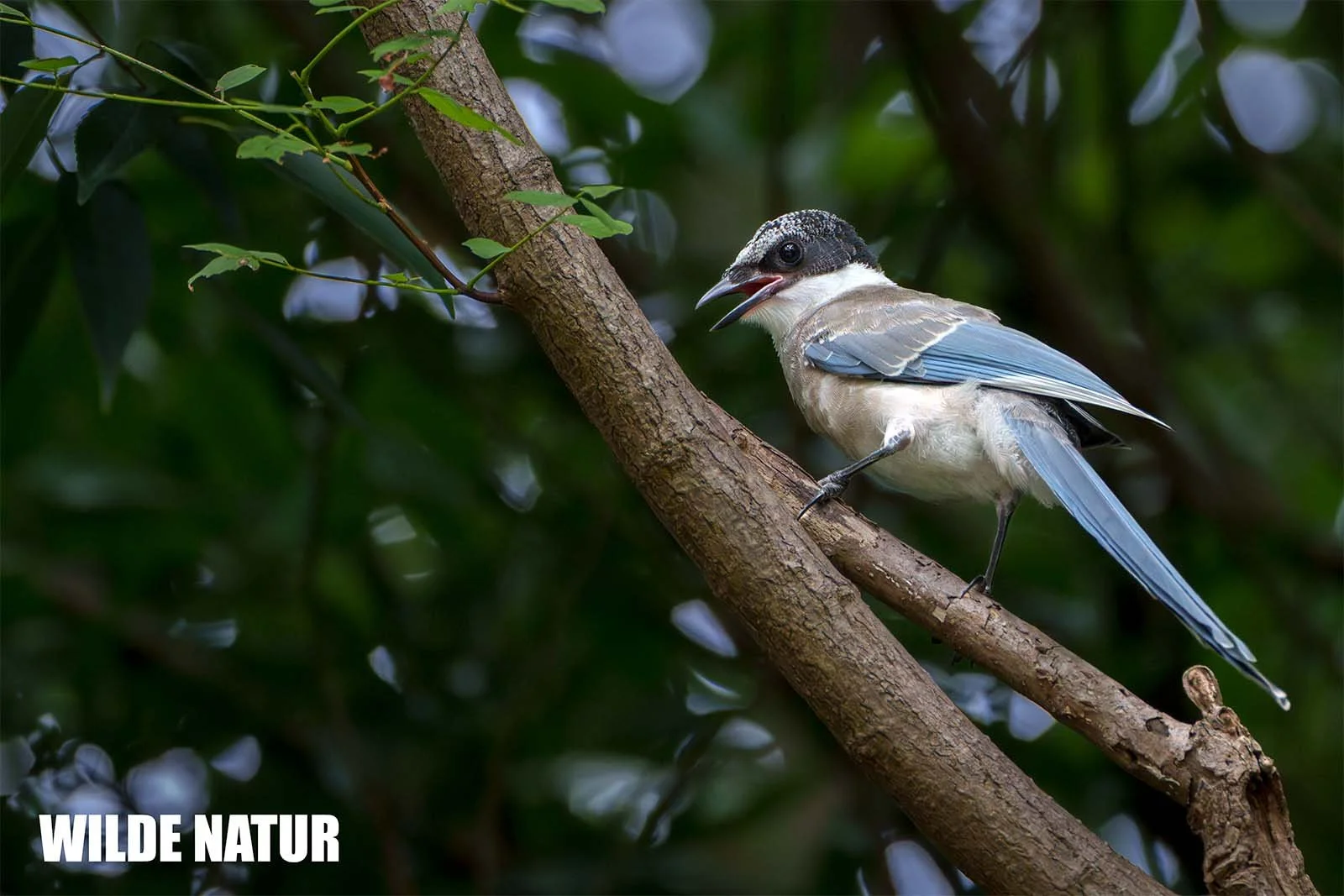
Azure-winged magpie (Cyanopica cyanus)
Azure-winged Magpie: Blue-shimmering Corvid of Japan
The azure-winged magpie stands out with its azure-blue wings and long tail. Learn all about its appearance, lifestyle, distribution, and behavior in Japan.
Key Facts
- Size: 31–35 cm, almost half of it tail
- Weight: 65–110 g
- Diet: fruits, seeds, acorns, insects, small animals
- Seasonality: year-round, resident in Japan
- Range: Japan on Honshū, Kyūshū, locally Shikoku
- Breeding: 5–7 eggs, both parents involved, helpers possible
- Migration: non-migratory, forms flocks outside breeding season
- Social behavior: gregarious, noisy, group-living
- Conservation status: stable, not threatened
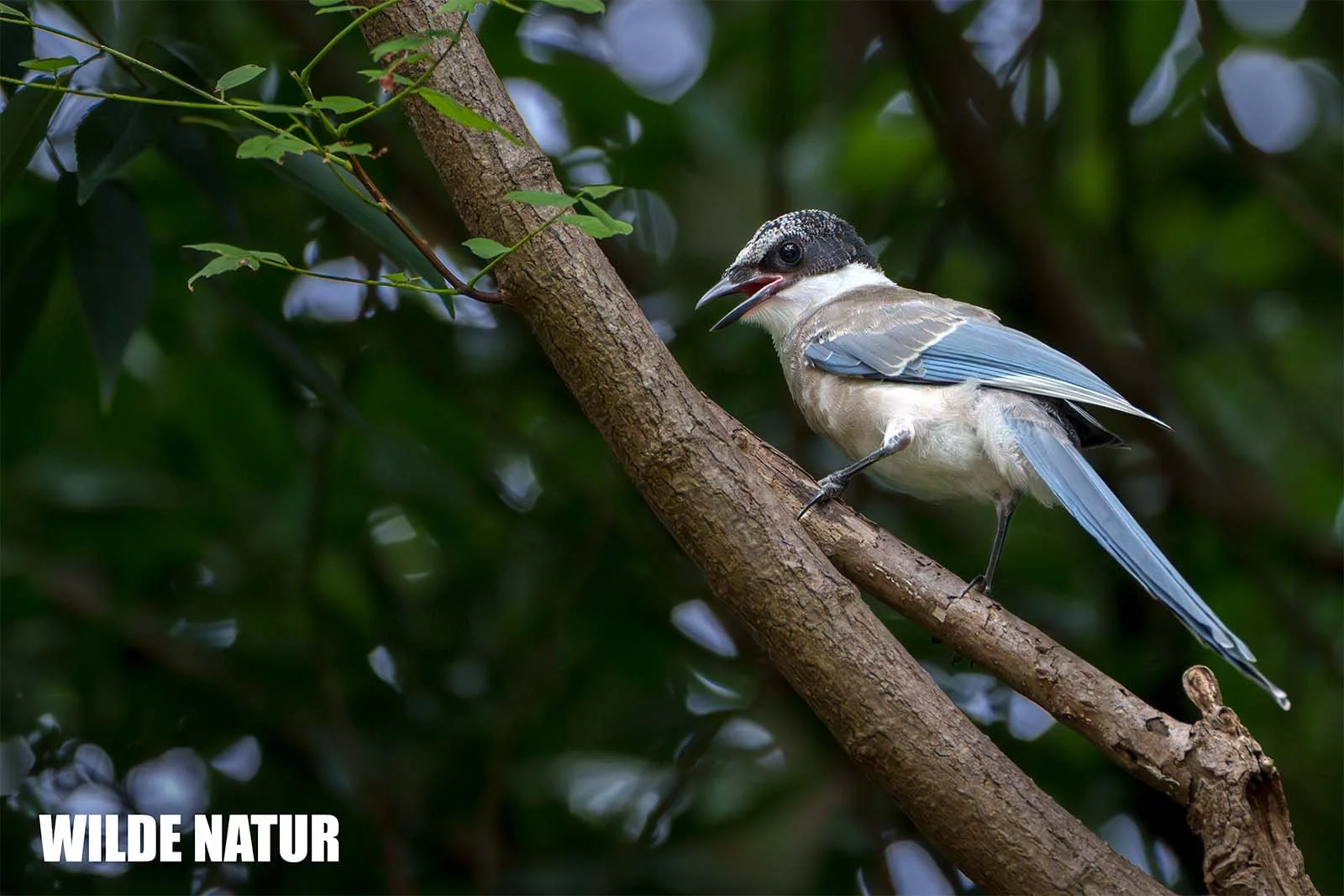
- Distinguishing marks: black head, gray body, azure-blue wings and long tail
- Scientific name: Cyanopica cyanus
- German name: Azurelster
- Habitat: open woodlands, forest edges, parks, gardens, farmland with trees
Table of Contents
- Introduction
- Appearance
- Characteristics
- Diet
- Breeding
- Seasonal Behavior
- Distribution in Japan
- Social Behavior
- Conservation Status
- FAQ
- Conclusion
Introduction
A flash of blue in flight, a wedge-shaped tail, and harsh calls from the trees: this is the azure-winged magpie. It is one of Japan’s most striking corvids. With its sociable nature, flexible diet, and stable population, it shows just how adaptable members of the crow family can be.
Appearance
The azure-winged magpie has a distinctive color pattern:
- Head: velvety black, in sharp contrast to the lighter body
- Back and breast: light gray to beige, soft in appearance
- Wings and tail: azure-blue, often with a metallic sheen
- Belly: whitish to light gray
- Bill: black, strong, slightly curved
- Eyes: dark brown to black
- Legs and feet: black, sturdy
The long tail is especially striking, making up almost half the total body length and giving the bird a graceful silhouette in flight.
Characteristics
- Size: 31–35 cm, nearly half of it tail
- Weight: 65–110 g
- Build: slender, elegant, long-tailed
- Colors: black, gray, white, and azure-blue in clear contrast
This blend of proportions and coloring makes the azure-winged magpie unmistakable.
Diet
The azure-winged magpie is an omnivore.
- Plant food: berries, fruits, seeds, acorns
- Animal food: insects, worms, spiders, and during breeding season also small vertebrates
It adapts its diet flexibly to the season and food availability.
Breeding
The breeding season falls in spring and summer.
- Nest: built from twigs, lined with grass and soft material
- Clutch: usually 5–7 eggs
- Parental care: both parents incubate and feed the chicks
- Special feature: young from the previous year often help with raising the brood – an example of cooperative breeding.
Seasonal Behavior
The azure-winged magpie is a resident species that remains in its range year-round.
- No long migrations, only local movements
- Food supply and weather may influence local shifts
- Outside the breeding season, it often gathers in loose flocks for foraging
Distribution in Japan
The species occurs mainly on Honshū and Kyūshū, locally also on Shikoku.
Habitats include:
- open woodlands
- forest edges
- parks and gardens
- farmland with scattered trees
This shows the azure-winged magpie’s adaptability, as it thrives even in cultural landscapes.
Social Behavior
The azure-winged magpie is both sociable and vocal.
- Lives in small to medium-sized groups
- Communicates with harsh, rasping calls
- Flock formation is particularly common in autumn and winter
Its social lifestyle aids in foraging and provides safety from predators.
Conservation Status
Azure-winged magpie populations are considered stable.
- IUCN status: Least Concern (not threatened)
- In Japan, there are no signs of significant decline
FAQ
How big is the azure-winged magpie?
It measures 31–35 cm, with nearly half of that length being tail.
What does it eat?
Berries, fruits, seeds, acorns, insects, and occasionally small animals.
Where does it live in Japan?
Mainly on Honshū and Kyūshū, locally also on Shikoku, in open woods and human-shaped landscapes.
Is it a migratory bird?
No, it remains in its range year-round, with only small local movements.
What is its conservation status?
Globally not threatened, with stable populations in Japan.
Conclusion
The azure-winged magpie combines striking beauty with social behavior. Its black head, gray body, and azure-blue wings make it unmistakable. As a sociable resident species with stable numbers, it is a familiar presence across much of Japan – from forests to gardens. Once seen in flight, it is clear why this bird ranks among the most eye-catching members of the crow family.