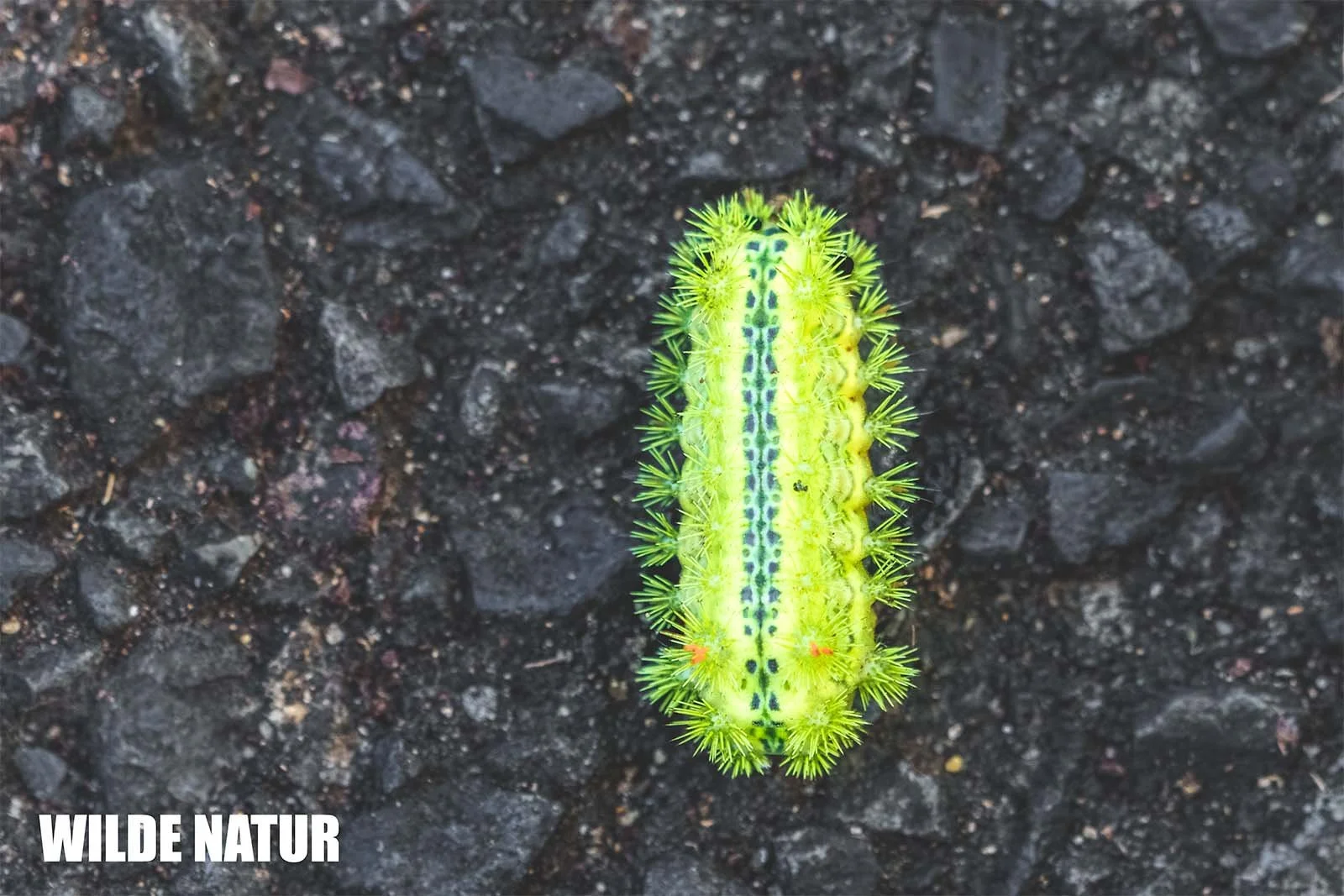
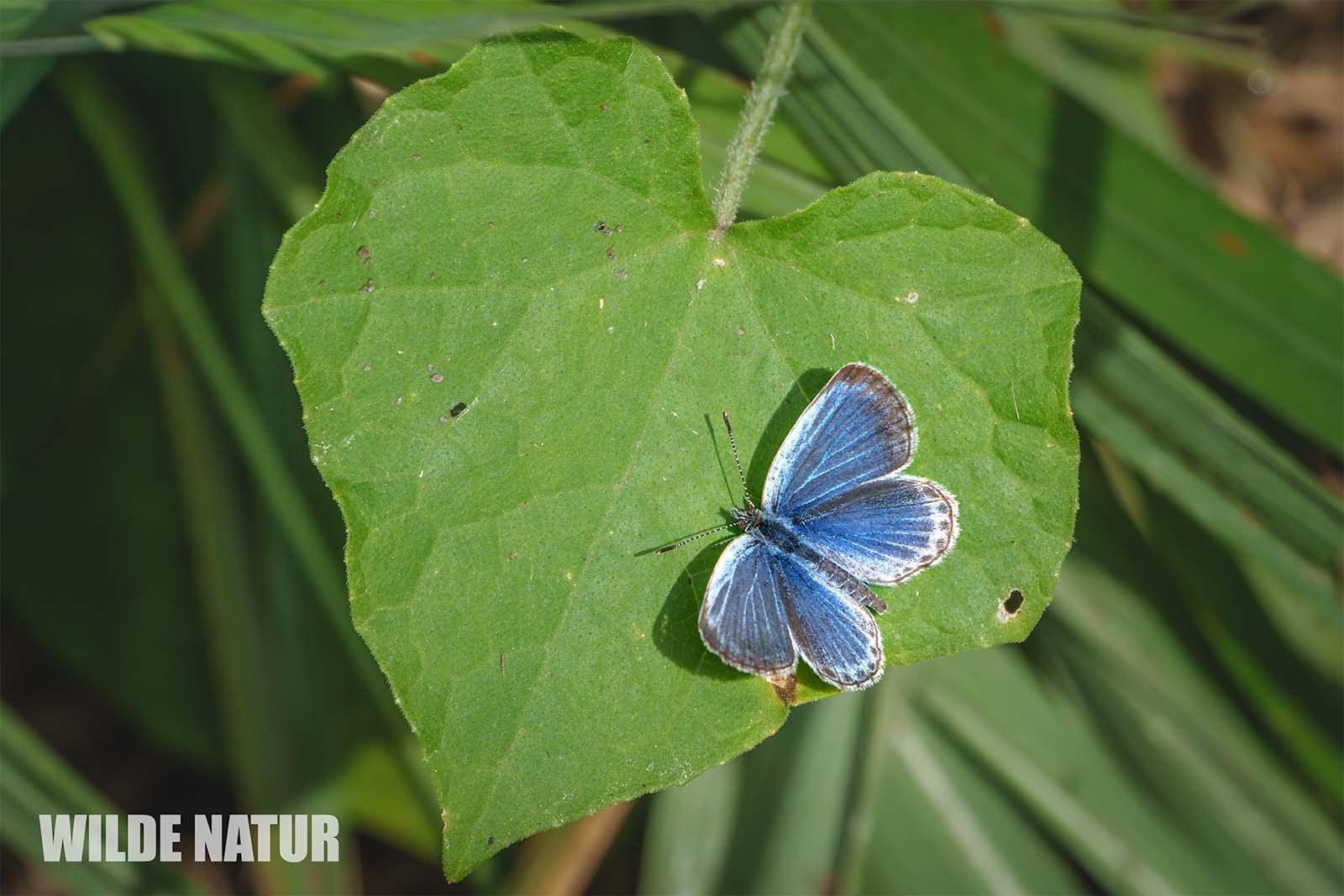
Yellow-Barred Long-Horn (Nemophora degeerella)
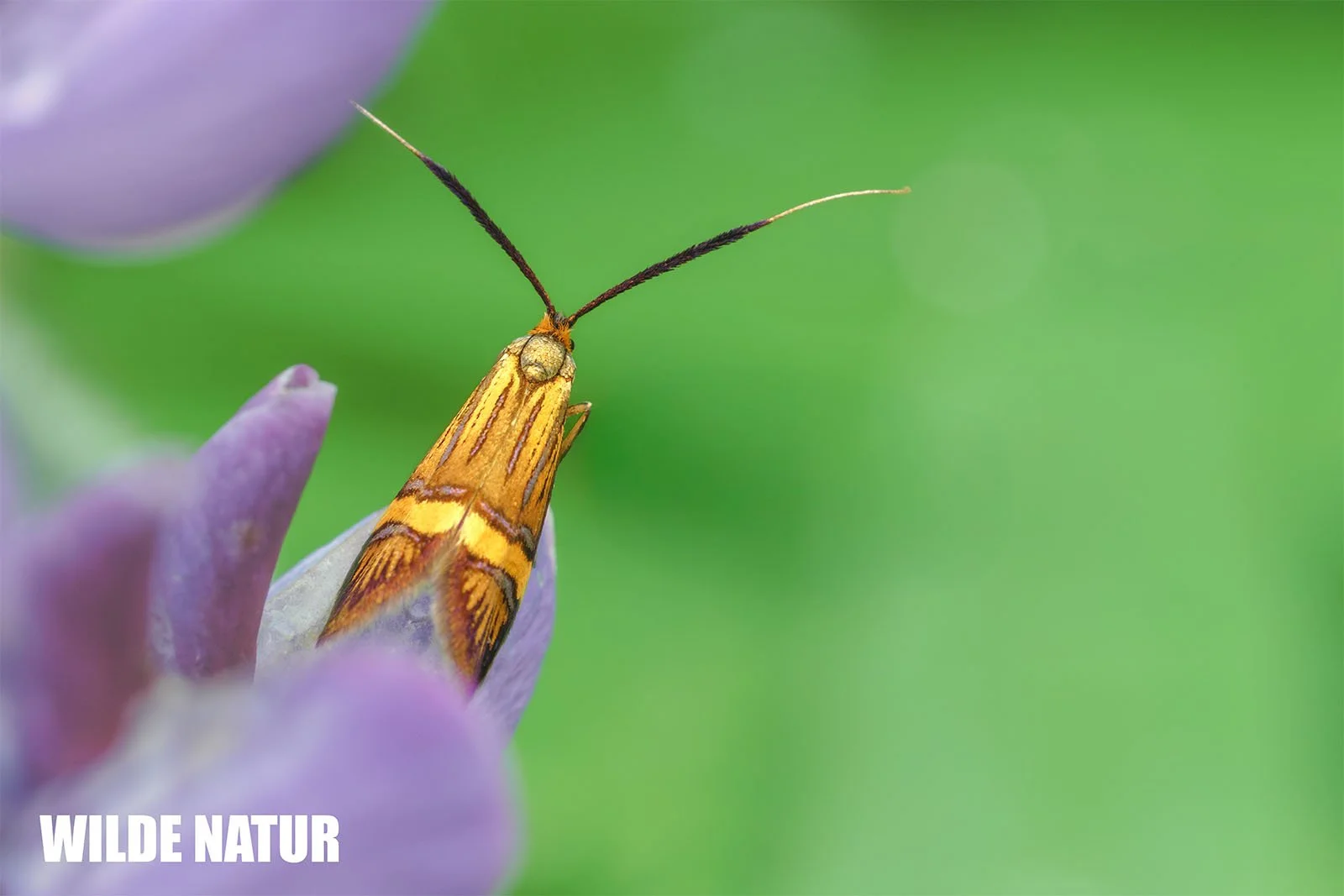
Yellow-barred long-horn (Nemophora degeerella)
Yellow-Barred Long-Horn – A Shimmering Day-Flying Moth with Spectacular Antennae
Yellow-barred long-horn (Nemophora degeerella): A delicate day-flying moth with strikingly long antennae – harmless, beautiful, and easy to spot. Discover its secret life.
Key Facts
- Yellow-barred long-horns shine with a metallic sheen and fly in sunny weather.
- Males have extremely long antennae – much longer than their bodies.
- Larvae live in leaf litter and feed on decaying plant material.
- Flight season is May to June; larvae overwinter in a self-made leaf case.
- Widespread across Europe, especially in deciduous woodlands.
- Scientific name: Nemophora degeerella
- Family: Adelidae (Long-horn moths)
- Wingspan: 16–23 mm
- Antenna length (males): several times the wingspan
- Diet: Adults drink nectar; larvae feed on detritus (leaf litter)
- Habitat: Europe – especially deciduous forests and woodland edges
- Activity: Active by day, mainly from May to June
Table of Contents
- Introduction
- Appearance and Features
- Feeding and Behavior
- Reproduction and Life Cycle
- Seasonal Behavior
- Distribution and Habitat
- Encounters with Humans
- Where to Spot Them
- FAQ
Introduction
On a forest walk, you might catch a flash of gold and purple as a tiny moth glimmers in the sunlight – its wings metallic, its antennae longer than its body. The yellow-barred long-horn is a truly eye-catching sight – active by day, completely harmless, and wonderfully elegant. Best of all, you don’t have to travel far: this gem lives right here in Europe.
Appearance and Features
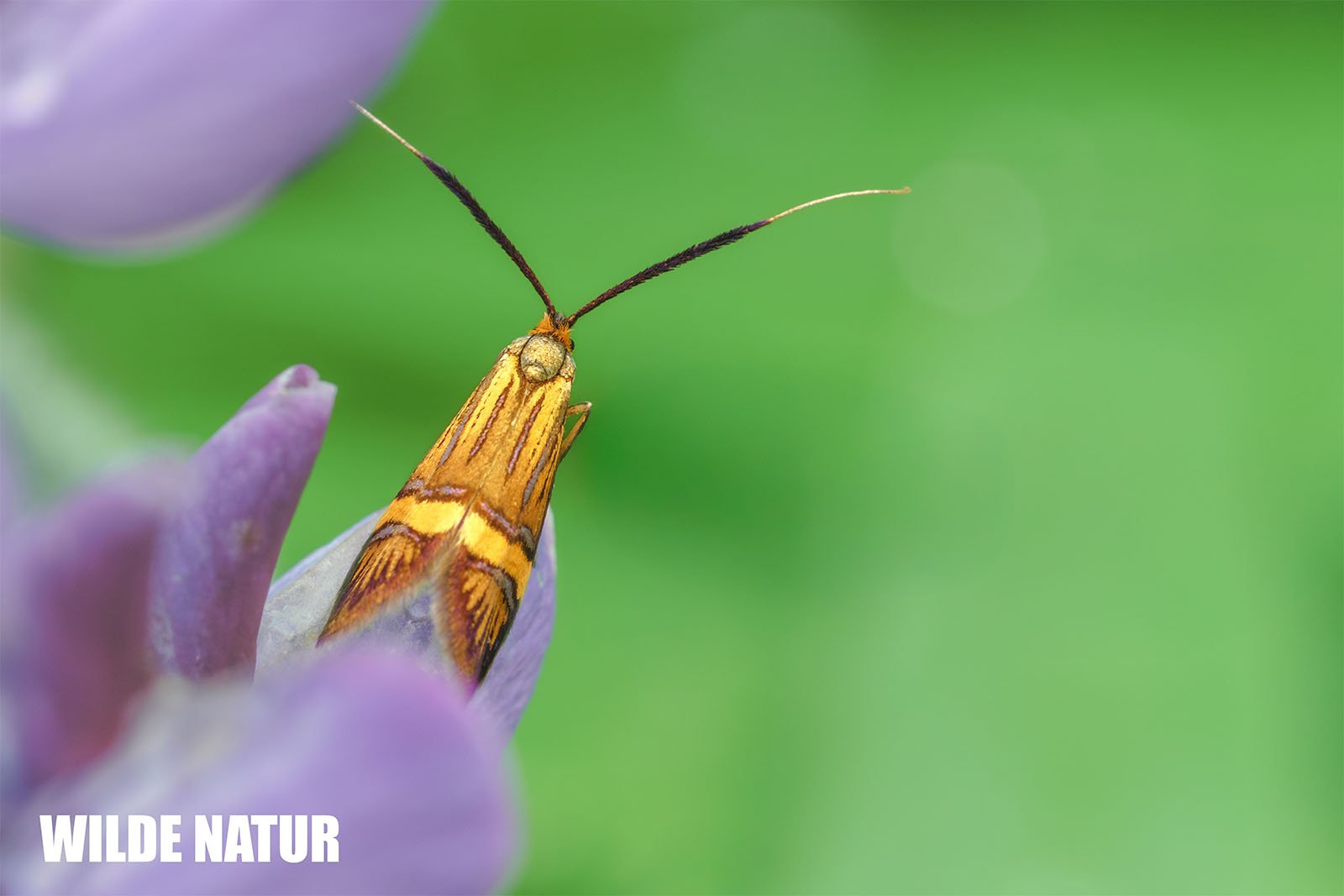
This long-horn moth is best known for the males’ extraordinary antennae – often several times longer than their wings.
Typical Features:
- Wingspan: 16–23 mm
- Color: Bronze to golden yellow with a metallic shine
- Marking: Broad yellow band across the forewings
- Hindwings: Plain grey-brown
- Antennae: Males have extremely long, thread-like antennae; females’ are much shorter
- Shimmer: Caused by light refracting through microscopic wing scales
Note: The moth’s metallic colors aren’t from pigments but from fine structural features – a phenomenon called structural coloration.
Feeding and Behavior
Adult Moths:
- Feed on nectar from wildflowers (e.g. nettles, thistles, meadow herbs)
- Active in sunny weather – especially along forest edges
Larvae:
- Live in leaf litter on the forest floor
- Feed on dead plant material (detritus)
- Build a portable case from plant fragments, which serves as both shelter and mobile feeding base
- Spend winter inside this "leaf house"
The larva is like a tiny recycler – processing organic matter while staying safe from predators.
Reproduction and Life Cycle
- May–June: Adults emerge, perform courtship displays, and mate
- Summer: Eggs are laid, larvae hatch and move into leaf litter
- Autumn: Larvae build mobile leaf cases
- Winter: Larvae overwinter in their cases
- Spring: Pupation, followed by emergence of the next generation
This species is univoltine – just one generation per year.
Seasonal Behavior
The yellow-barred long-horn is an early and strictly day-flying moth.
Behavior:
- Flight season: May to June
- Most active in sunshine
- Flies low to the ground or at eye level
- Males perform courtship displays: hovering in small groups near forest edges
With the right timing and a bit of luck, you can spot this display with the naked eye.
Distribution and Habitat
This species is widespread across Europe, especially common in Central Europe.
Preferred Habitats:
- Moist, structurally rich deciduous woodlands
- Forest edges, clearings, and flower-rich ditches
- Key habitat elements: leaf litter for larvae and nectar plants for adults
Even natural gardens with undisturbed leaf piles and native wildflowers can support them.
Encounters with Humans
The yellow-barred long-horn is entirely harmless:
- No biting or stinging
- No plant damage
- No interest in buildings or homes
- Shy and stays outdoors
It's a quiet part of the food chain – a treat for birds and a delight for people who take the time to look.
Where to Spot Them
Example 1: Forest clearing
A June walk brings you to a sunlit clearing. At eye level, tiny moths with long antennae float in midair – it’s mating season.
Example 2: Leaf pile in the garden
You leave autumn leaves under your shrubs. In spring, delicate moths flutter above the nettles – welcome to long-horn paradise.
Example 3: Nature watching at the forest edge
A photographer waits at the forest edge on a sunny day – soon, shimmering moths start to appear.
FAQ
1. Is the yellow-barred long-horn dangerous?
No. It’s completely harmless and doesn’t cause any damage.
2. Where can I best observe it?
In deciduous woodlands and along forest edges – especially in May and June on sunny days.
3. How can I identify it?
By the broad yellow band on its forewings and the very long antennae of the males.
4. Why are the antennae so long?
They help detect pheromones and may also play a role in visual courtship displays.
5. How can I support its habitat?
Leave leaf litter in the garden, grow native wildflowers, and avoid pesticides.