Common green bottle fly (Lucilia sericata)
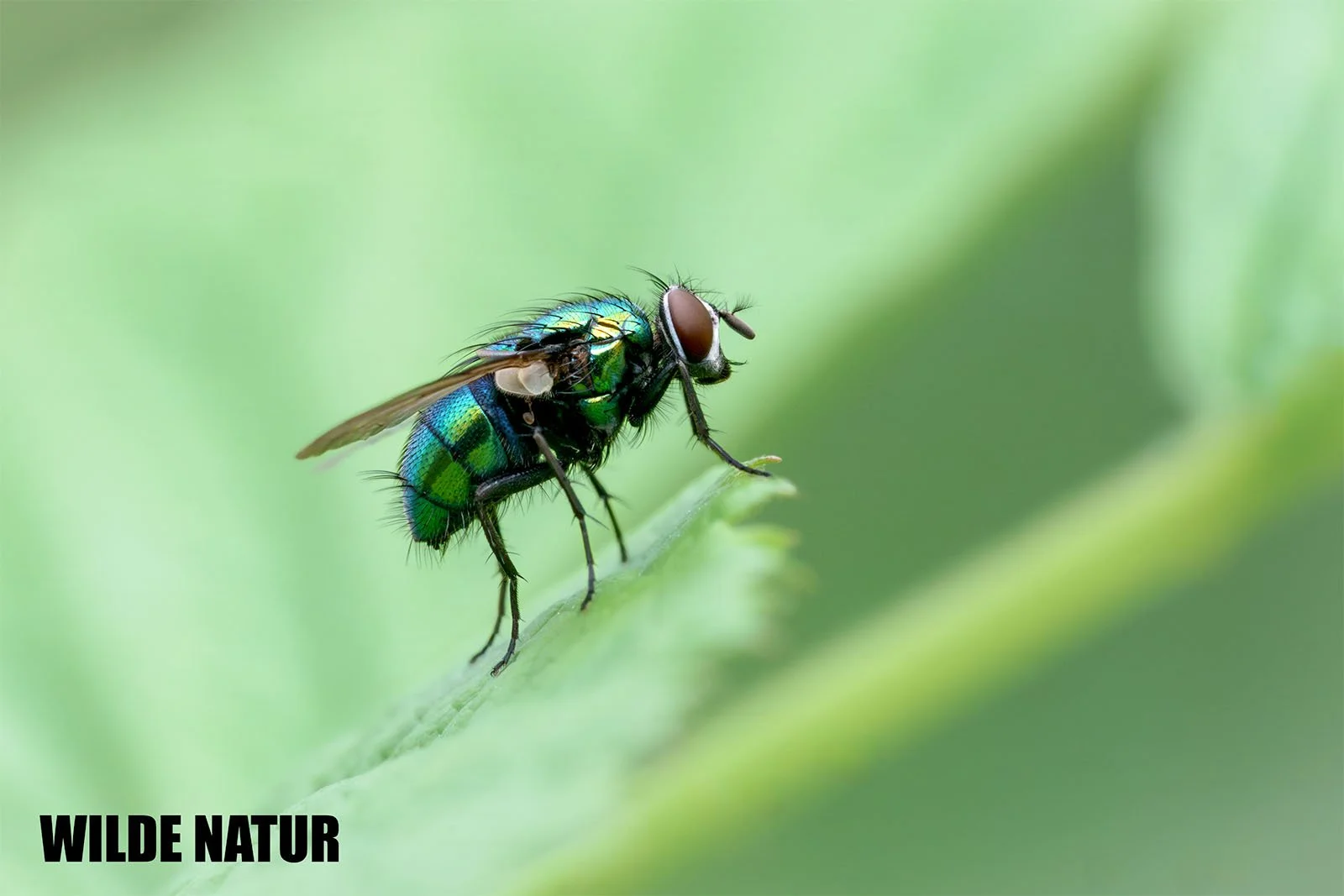
Common green bottle fly (Lucilia sericata)
Common green bottle fly: Shiny, bothersome – and sometimes useful
Lucilia sericata – a metallic gold-green blowfly with a double life: scavenger, disease carrier, and medical helper all at once.
Key Facts
- Size: 8–10 mm
- Colour: metallic gold to green
- Diet: carrion, animal waste, organic substrates
- Special feature: larvae used in medicine (“maggot therapy” – only when sterile-reared)
- Distribution: worldwide, especially near settlements and pastureland
- Species: Lucilia sericata
- Family: blowflies (Calliphoridae)
- Shape: smooth, oval, shiny
- Occurrence: cosmopolitan – cities, pastures, garbage sites, carcasses
Table of Contents
- Introduction: Shine on the rubbish heap
- Appearance: How to identify Lucilia sericata
- Traits: What makes the green bottle fly special
- Diet: From carrion to organic substrates
- Reproduction: How maggots develop
- Seasonal behaviour: Flight period and overwintering
- Distribution: A fly conquering the world
- Case studies: Waste, wounds, medicine
- FAQ: Questions about the common green bottle fly
- Colour traits at a glance
1. Introduction: Shine on the rubbish heap
It looks beautiful when the sunlight hits it—green, golden, almost jewel-like. Yet most people react with disgust when they spot it: the common green bottle fly shows up wherever organic matter decays—on carrion, garbage, or animal waste.
At the same time, it plays a remarkable medical role: its larvae are used for wound debridement. Behind its metallic body lies an ecologically important cycle of decomposition, recycling, and healing.
2. Appearance: How to identify Lucilia sericata
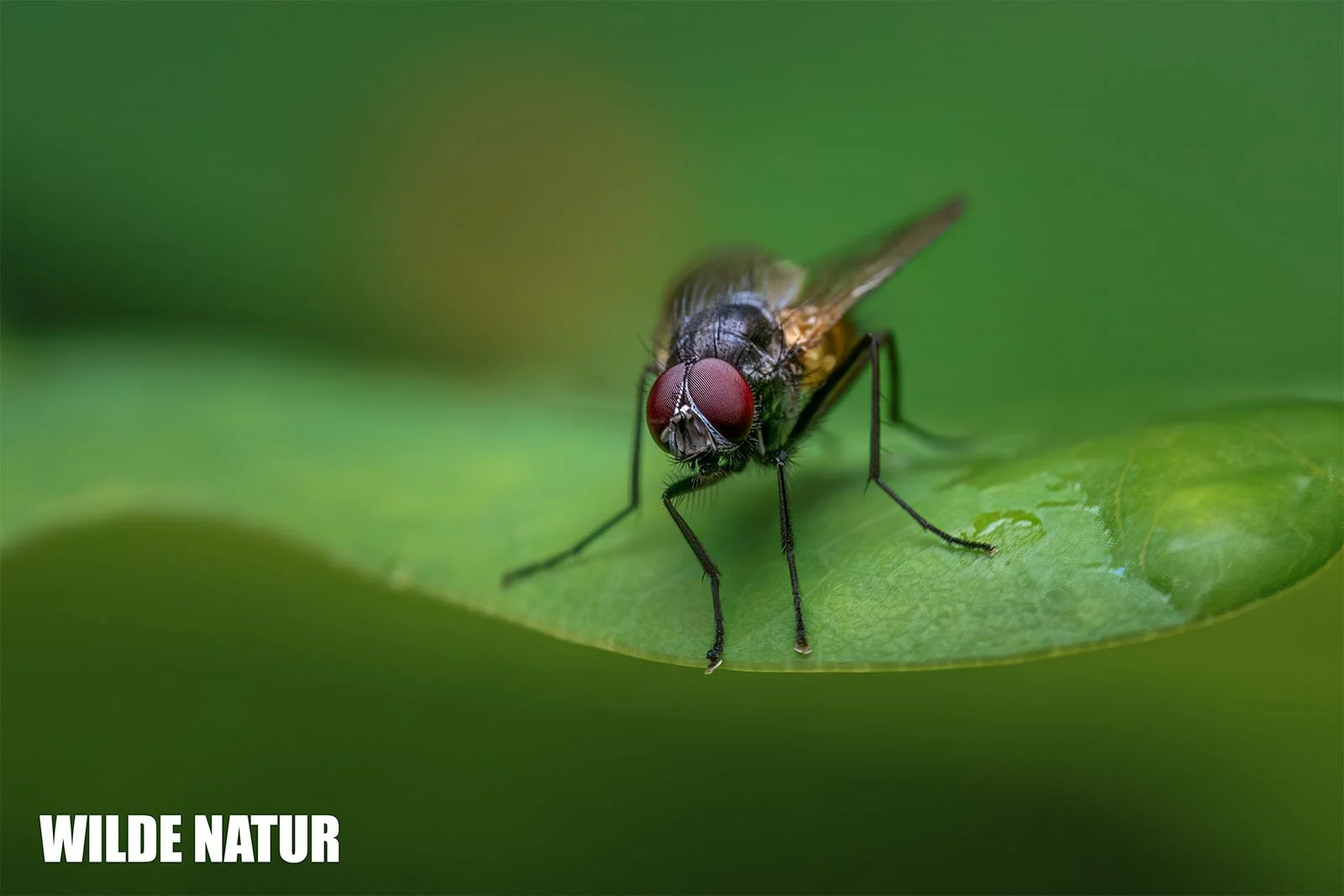
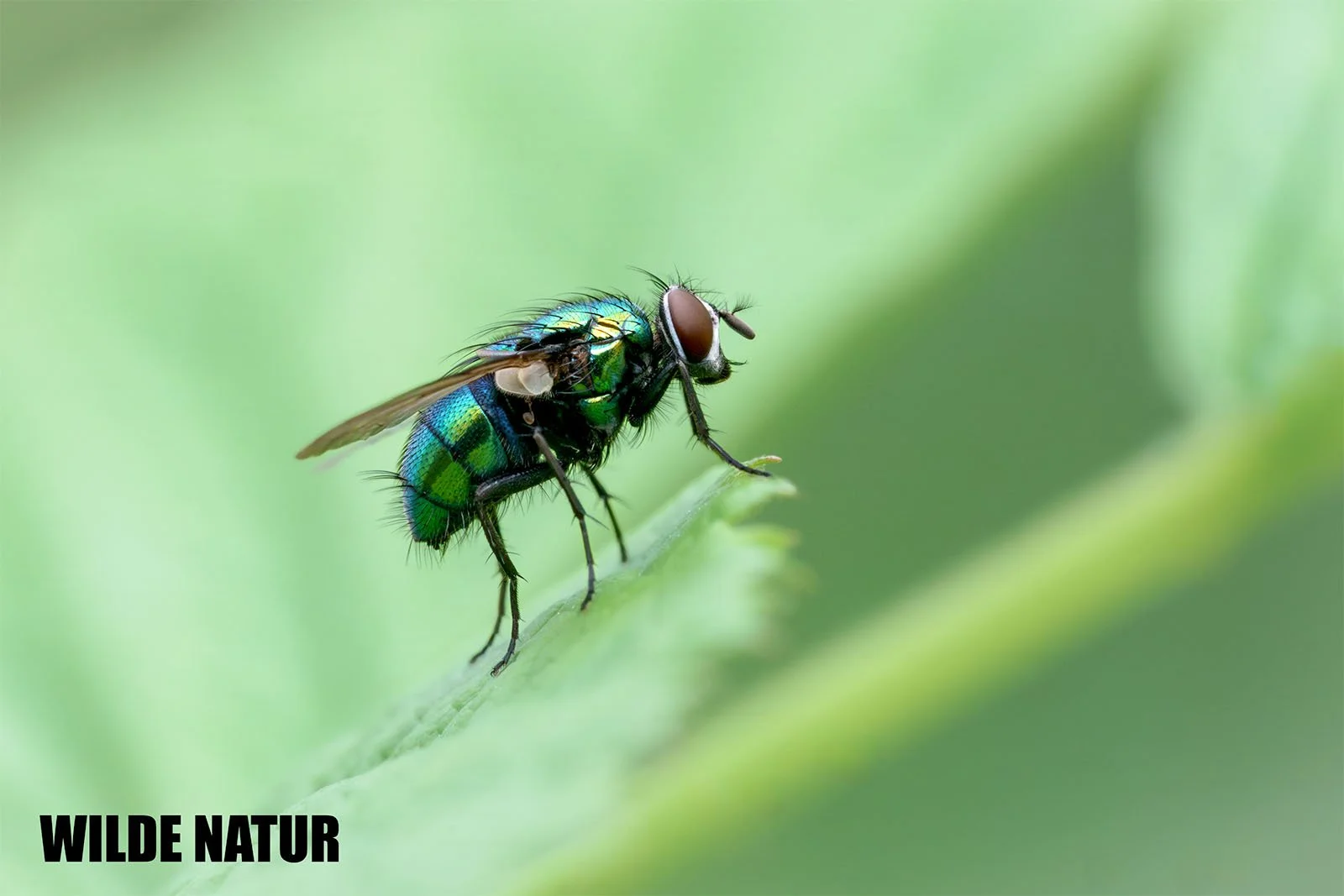
The common green bottle fly is a typical blowfly—compact, shiny, and brightly coloured.
Body
- Colour: golden-green to strong metallic green
- Size: 8–10 mm body length
Abdomen
- Shape: smooth, oval-elongated
- Shine: intensely metallic
- Pattern: unpatterned, uniformly green-gold
Thorax
- Colour: also metallic green
- Legs: black and sturdy
Head
- Eyes: large, reddish to copper-coloured
- Sex difference: male eyes set closer together
- Antennae: black
- Arista: dark, densely feathered
3. Traits: What makes the green bottle fly special
- Strong metallic shine – characteristic of the species
- Classic blowfly shape – oval, glossy, with a robust head
- Rapid colonisation of carrion, waste, and decomposing material
- Ecologically essential for decomposition and nutrient cycles
- Medically valuable larvae, when laboratory-reared and sterile
This species is extremely active in warm weather and commonly found near human habitation.
4. Diet: From carrion to organic substrates
The green bottle fly uses everything that decays or produces nutrient-rich fluids.
Adult flies feed on:
- Carrion
- Organic waste
- Excrement
- Nutrient-rich fluids from decomposing matter
(Nectar is visited occasionally but is not a key resource.)
Larvae (maggots) develop in:
- Carcasses
- Animal waste and slaughter by-products
- Decomposing organic material
- Wounds in animals (myiasis)
- Sterile medical applications
The larvae preferentially consume dead tissue, making them so valuable in medicine.
5. Reproduction: How maggots develop
Lucilia sericata reproduces quickly—well adapted to short-lived resources.
Life cycle
Egg laying:
- On carcasses, animal waste, or similar substrates
- Often in large egg clusters
- In warm conditions, within minutes of locating a resource
Hatching:
- 8–24 hours after laying
Larval phase:
- Three larval stages
- Lasts 3–7 days
Pupation:
- In soil, leaf litter, or near the feeding site
- Duration: 6–14 days
Emergence:
- Entire cycle in warm months: 14–21 days
Several generations develop each summer.
6. Seasonal behaviour: Flight period and overwintering
Active period
- Spring to late autumn
- Active from around 10–12 °C
- Most abundant in summer
Overwintering
- Usually as a pupa in the soil
- Occasionally as an adult in sheltered places
- Reactivates in spring
7. Distribution: A fly conquering the world
Lucilia sericata is globally widespread.
Regions
- Europe
- North America
- Australia
- North Africa
- Parts of Asia
- Worldwide in urban areas and pastureland
Habitats
- Open, warm environments
- Urban areas, refuse sites, livestock buildings
- Pastures
- Forest edges and roadside ditches
The key factor is the presence of organic material.
8. Case studies: Waste, wounds, medicine
Example 1: Summer rubbish bin
Open organic waste attracts flies instantly—perfect breeding conditions.
Example 2: Carcass in the forest
Green bottle flies are among the first insects to colonise a carcass—important in forensic work.
Example 3: Medical maggot therapy
Sterile Lucilia sericata larvae clean chronic wounds and promote healing—a well-established method.
9. FAQ: Questions about the common green bottle fly
1. Is the green bottle fly dangerous?
Not directly—but it can transmit pathogens.
2. Why are the maggots medically useful?
They feed only on dead tissue and clean wounds with precision.
3. Where am I most likely to find them?
In settlements, near waste, manure, or carcasses.
4. How long is the life cycle?
In summer: 2–3 weeks.
5. Can it be confused with other species?
Yes—several blowflies are metallic green. Head features help distinguish them.
10. Colour traits at a glance
- Body colour: golden-green to strong metallic green
- Shine: intensely metallic
- Eyes: reddish to copper
- Antennae: black, arista densely feathered
- Legs: black
- Wings: transparent with strong venation