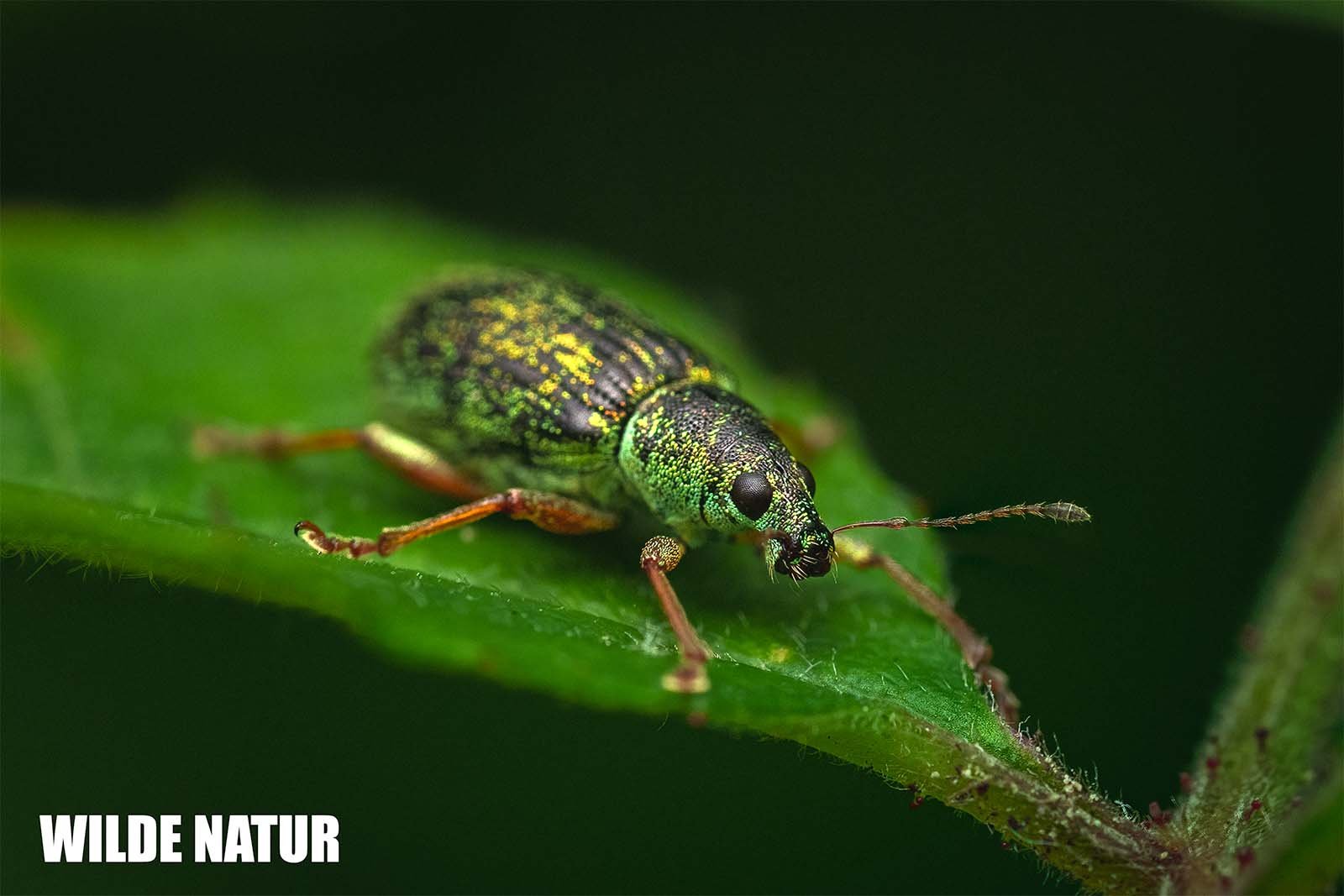
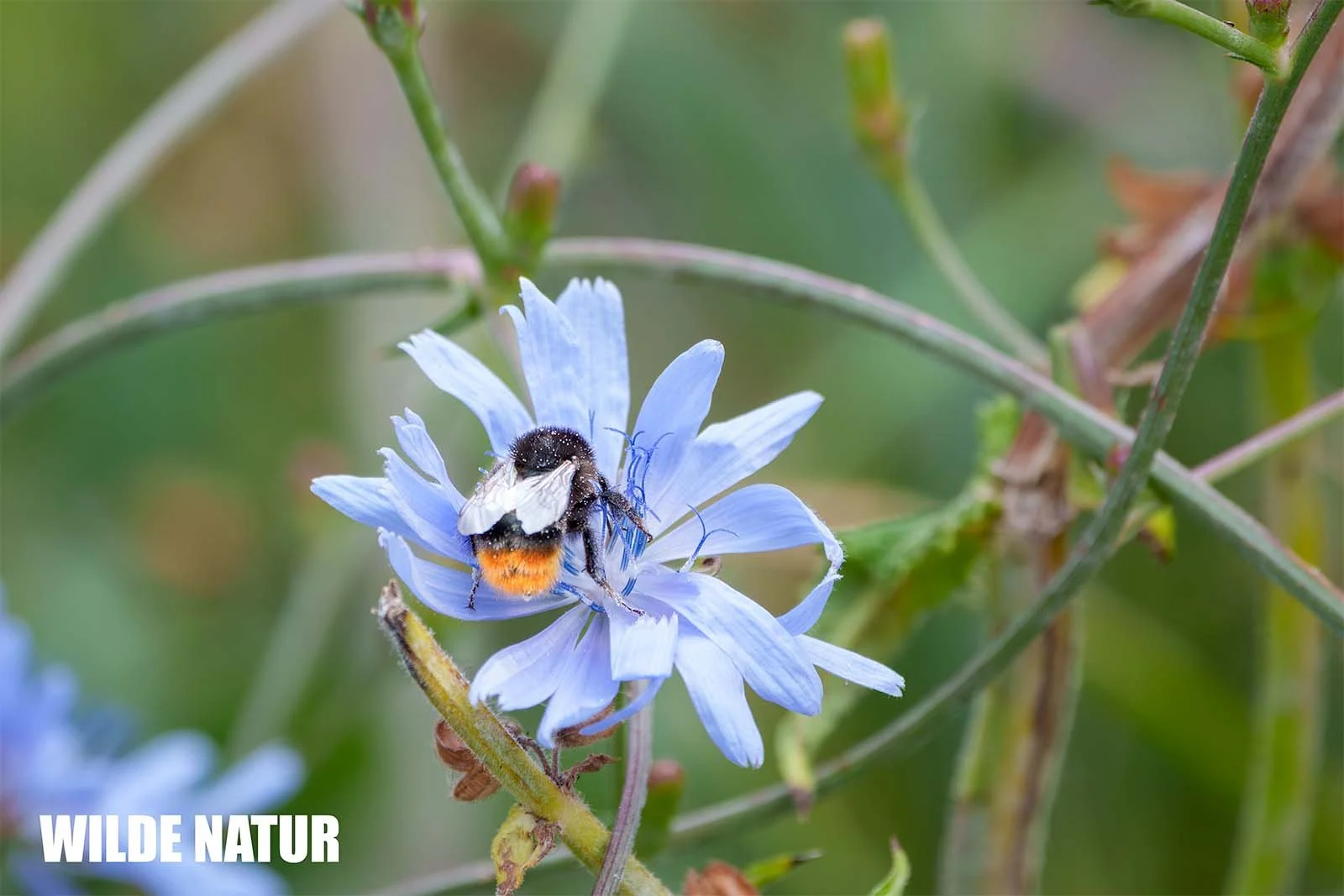
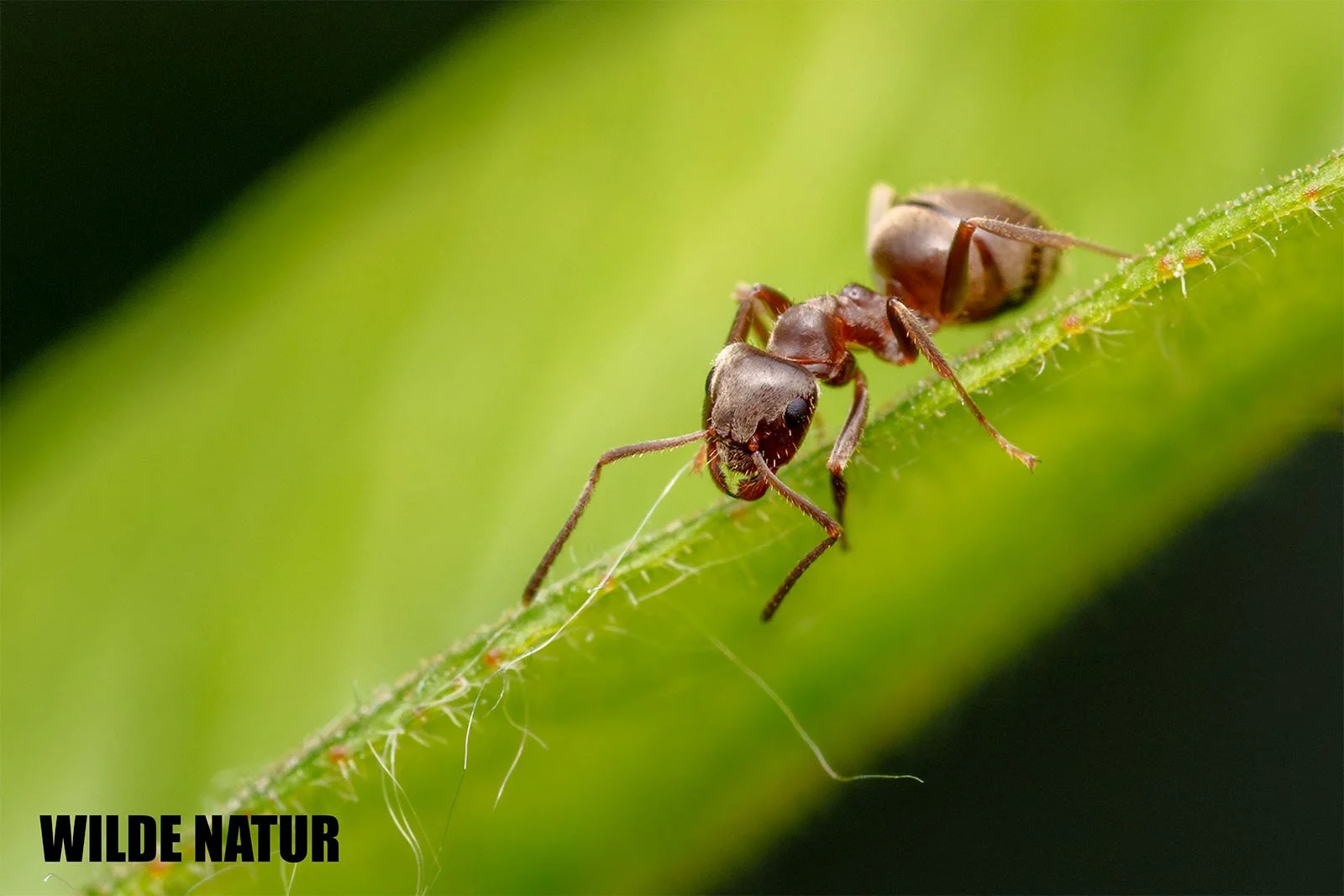
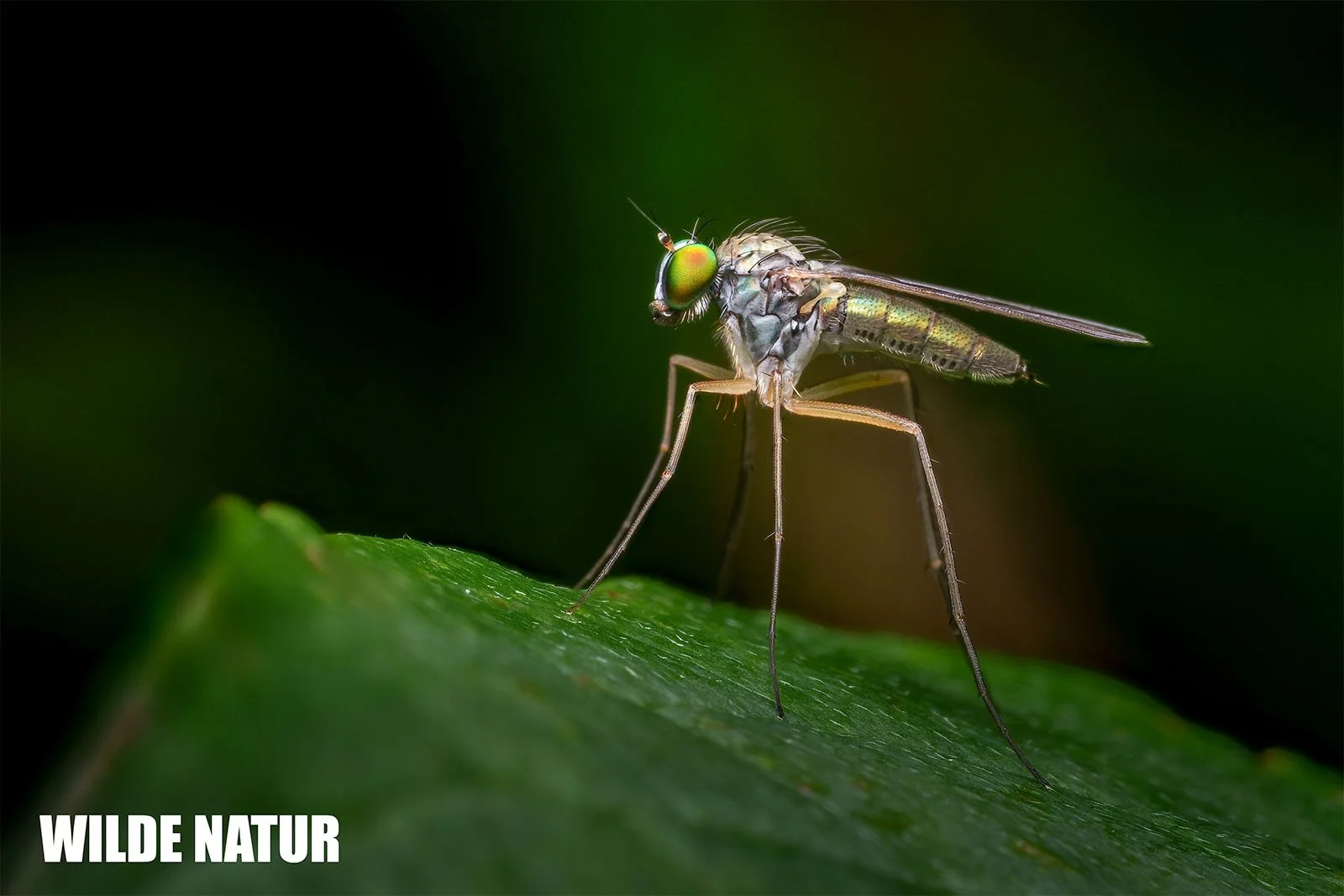
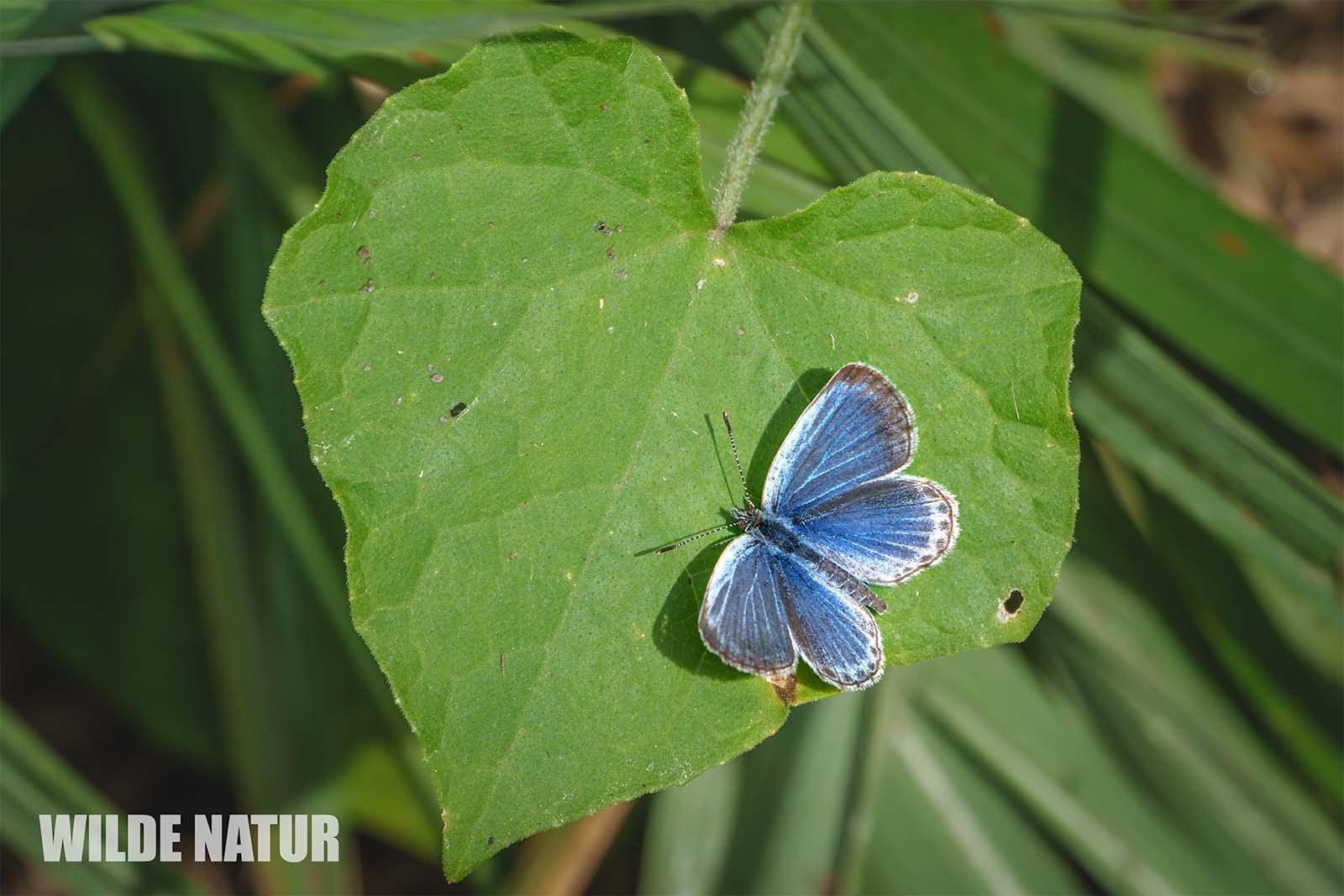
Green Longhorn Beetle (Lepturobosca virens)
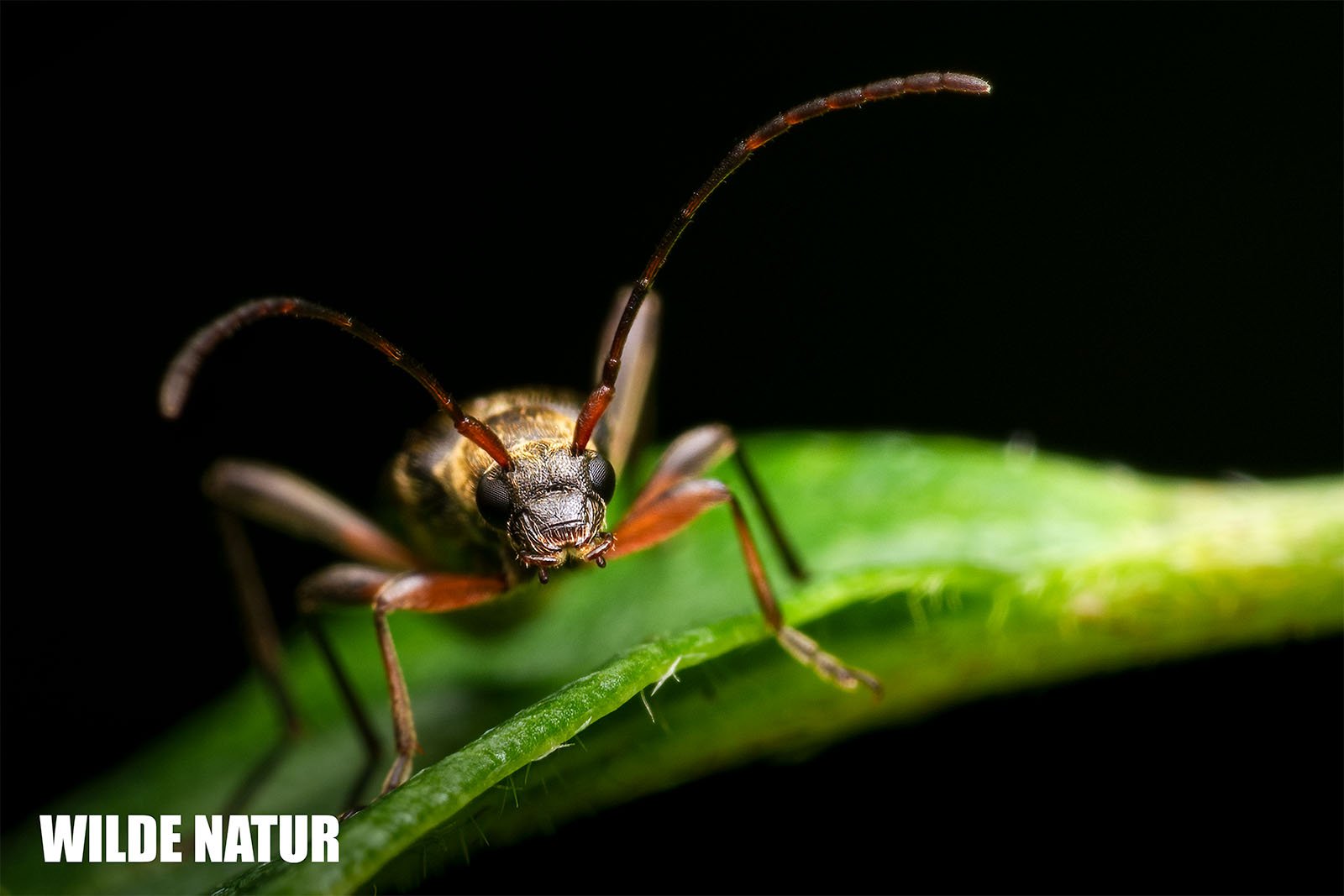
Green Longhorn Beetle (Lepturobosca virens)
Green Longhorn Beetle – A Flower-Visiting Beetle of Ancient Forests
Green longhorn beetle (Lepturobosca virens): A rare, green-shimmering longhorn beetle of old conifer forests. Learn how it lives and why deadwood is vital to its survival.
Key Facts
- The green longhorn beetle is a slender longhorn beetle covered in greenish hairs.
- Adults visit flowers and feed on nectar and pollen.
- The larvae live for several years in the dead sapwood of conifer trees.
- The species mainly occurs in montane and subalpine forests.
- Deadwood is essential for the survival of this rare beetle species.
- Scientific name: Lepturobosca virens
- Family: Longhorn beetles (Cerambycidae)
- Body length: 14–22 mm
- Lifestyle: Wood-dwelling larvae, flower-visiting adults
- Development time: 2–3 years
- Habitat: Old conifer forests with a high amount of deadwood
- Conservation status: Regionally threatened
Table of Contents
- Introduction
- Appearance and Features
- Diet and Way of Life
- Reproduction and Development Cycle
- Seasonal Behavior
- Distribution and Habitat
- Special Traits and Conservation
- FAQ
Introduction
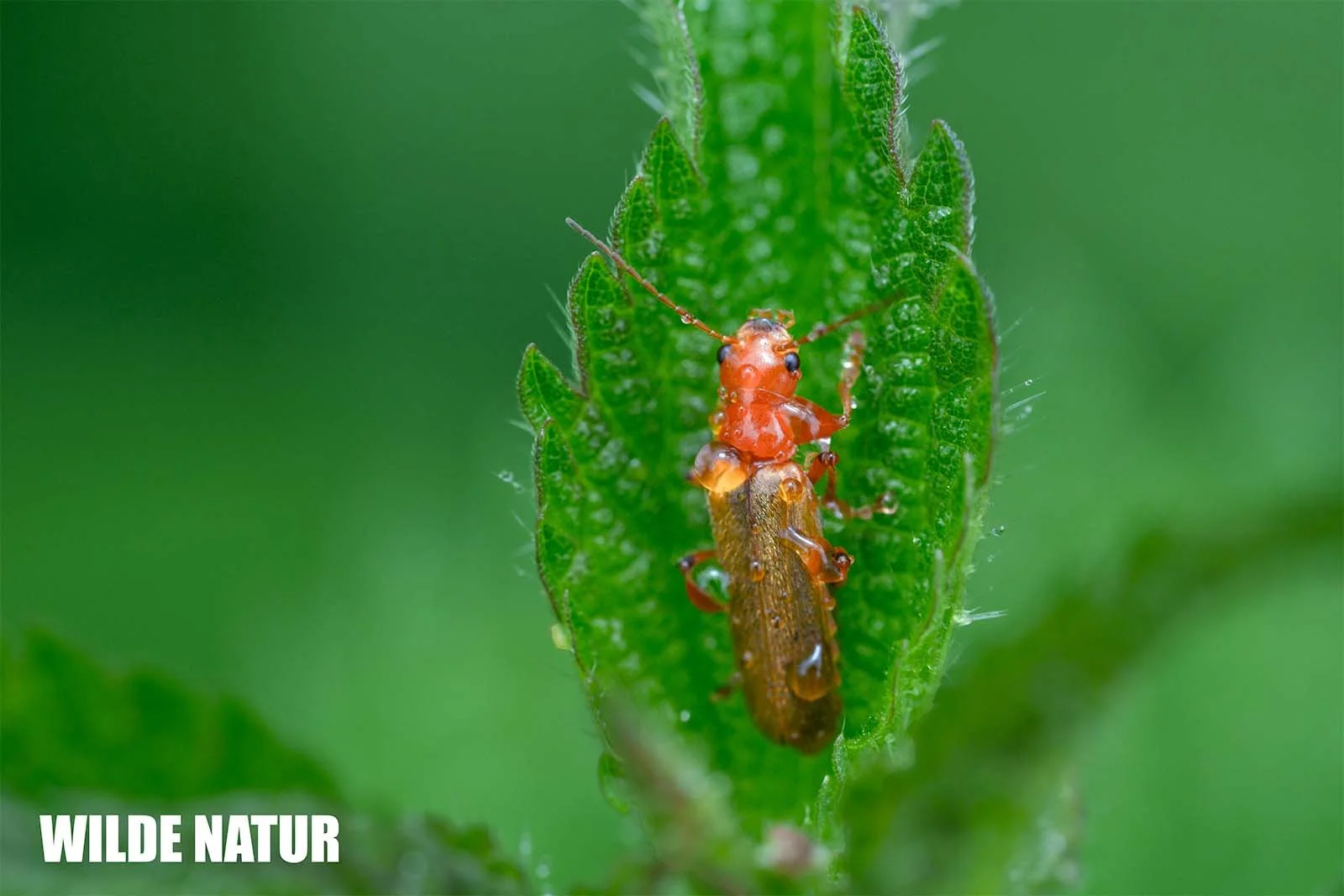
At first glance, it seems inconspicuous – almost like a bit of moss with legs. And that is exactly its strength. The green longhorn beetle is one of those insects that are easy to miss, even when you’re standing right in front of it. Its greenish-gray color, matte coat of hairs, and slender body allow it to blend perfectly into its surroundings.
Yet this beetle tells a much bigger story – the story of ancient forests, dead wood, and time. Lots of time. While many insects complete their life cycle in just a few months, the green longhorn beetle takes years to develop.
If you ever spot one, you know one thing for sure: this forest has a past.
Appearance and Features
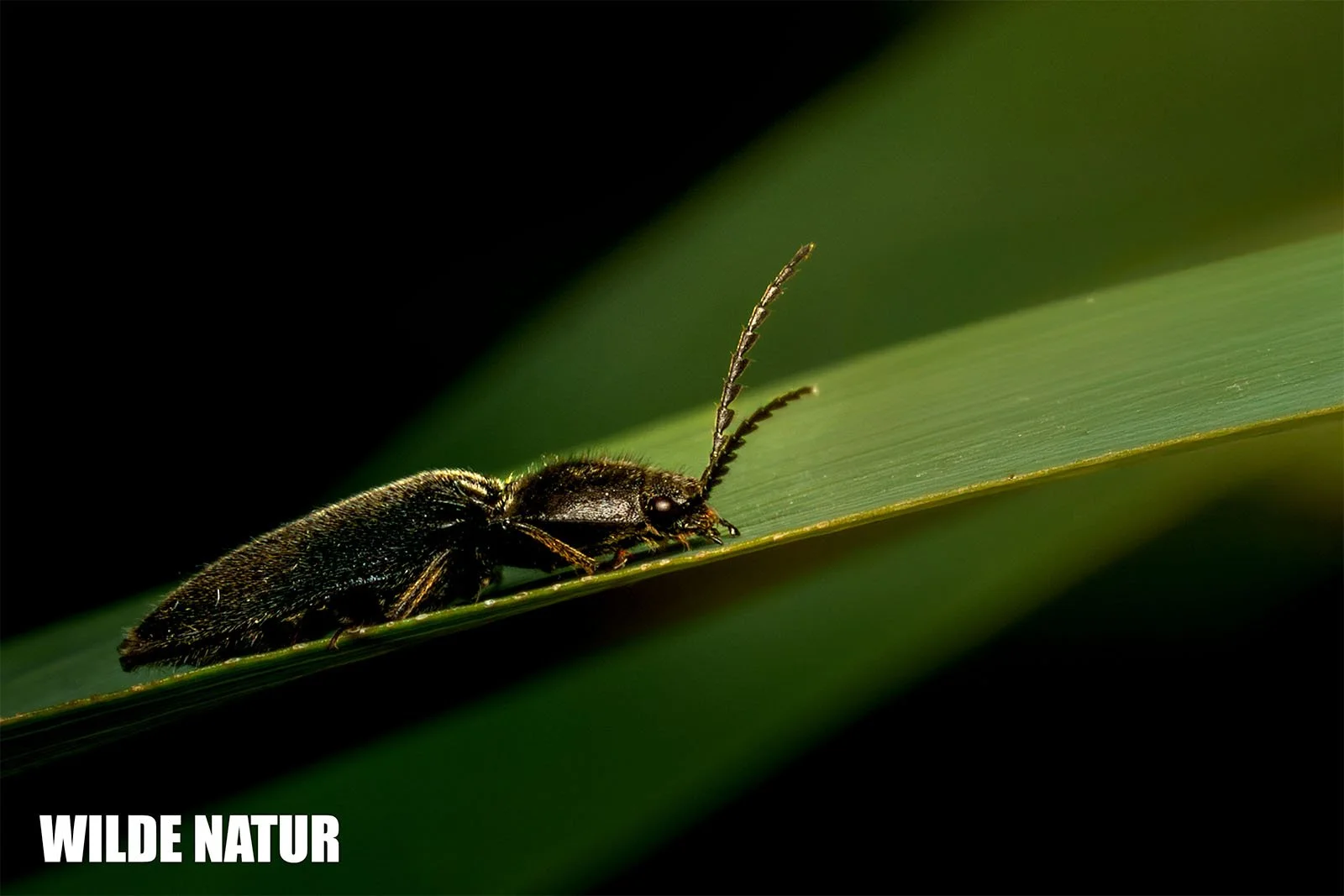
The green longhorn beetle is a typical representative of the slender longhorns, a group of narrow-bodied longhorn beetles.
Distinctive Features:
- Slim, elongated body, slightly tapering toward the rear
- Dense coat of hairs, giving the beetle a matte greenish-gray appearance
- Fine puncturing on the wing covers
- Long antennae, almost as long as the body, faintly ringed
- Small, downward-tilted head with strong mouthparts
The dense hair gives the beetle a soft, almost velvety look. Depending on the light, it appears gray-green, olive, or dull green. This coloration is no coincidence – it provides excellent camouflage on bark, moss, and needles.
Typical behavior: When sitting still on a flower or tree trunk, the beetle almost disappears from view.
Diet and Way of Life
The green longhorn beetle lives in two very different worlds: as a larva deep inside wood, and as an adult beetle among flowers and sunlight.
Adult Beetles:
- Feed on nectar and pollen
- Prefer umbellifers and other open flowers
- Active during the day and relatively easy to observe
- Act as pollinators while feeding
Larvae:
- Live in dead or dying sapwood
- Prefer conifer trees such as spruce, fir, or pine
- Create broad tunnels in the softer wood layers
- Avoid fresh, living wood
The larvae are true wood specialists. They slowly break down dead wood and contribute to nutrient recycling in the forest.
Without beetles like this, dead wood would accumulate, and natural nutrient cycles would slow down.
Reproduction and Development Cycle
Patience is the most important trait in the life of this beetle.
The development cycle lasts two to three years:
- Egg laying: Females lay eggs in cracks and crevices of dead wood.
- Larval stage: Larvae feed in the sapwood for several years.
- Overwintering: Multiple times, at different developmental stages.
- Pupation: In late spring or early summer, inside the wood.
- Emergence: Adult beetles appear from June to September.
The long development time makes the species especially vulnerable. If breeding wood is removed, an entire generation is lost.
Every cleared or removed log can end several years of beetle life.
Seasonal Behavior
Adult green longhorn beetles are summer visitors.
- Active from June to September
- Diurnal, especially in warm weather
- Commonly found on flowers along forest paths or clearings
- Mating takes place on flowers or near breeding trees
After mating, females deliberately lay their eggs on suitable dead wood. Shortly afterward, the brief adult life comes to an end.
Most of the beetle’s life remains hidden inside wood.
Distribution and Habitat
The green longhorn beetle has a Palearctic distribution, ranging from Europe to Siberia, Mongolia, and China.
In Europe:
- Present in many countries
- Absent from parts of Western Europe
- In Central Europe mainly found in montane and subalpine regions
Typical Habitats:
- Old conifer forests
- Mountain forests with little forestry intervention
- Forests rich in deadwood
- Cool, moist locations
A continuous supply of deadwood – standing or lying – is essential.
Where forests are “tidied up,” the beetle disappears.
Special Traits and Conservation
In parts of Germany, the green longhorn beetle is considered rare and threatened. Its decline is closely linked to modern forestry practices.
Main Threats:
- Removal of deadwood
- Shortened logging cycles
- Loss of old-growth forests
- Structurally uniform plantations
The beetle is not a pest. It uses only dead wood and causes no economic damage.
Its presence is a clear indicator of near-natural, healthy forests.
Effective conservation measures are simple:
- Leave deadwood in place
- Preserve old trees
- Avoid “cleaning up” forests
FAQ
1. Is the green longhorn beetle dangerous?
No. It is completely harmless to humans and does not bite or sting.
2. Does it damage trees?
No. The larvae develop exclusively in dead or dying wood.
3. Why is the species threatened?
Because deadwood is removed from many forests and old stands are disappearing.
4. Can it be found in gardens?
Only rarely. Old conifer trees and plenty of deadwood would be required.
5. How can it be reliably identified?
By its dense greenish-gray hair, slender body, and long antennae.