Long-Legged Flies (Dolichopodidae)
Long-Legged Flies (Dolichopodidae)
Long-Legged Flies – Tiny Hunters in Shiny Armor
Long-legged flies (Dolichopodidae): Gleaming mini-predators with long legs, found worldwide and helpful in the garden. Discover their hidden daily life.
Key Facts
- Long-legged flies are small, metallic-looking flies with strikingly long legs.
- Both larvae and adults are mostly predatory – they hunt tiny invertebrates.
- Considered beneficial insects for gardens and natural pest control.
- Found around the world, with hundreds of species in Europe alone.
- Especially active in moist habitats – from meadows to garden ponds.
- Scientific name: Dolichopodidae
- Size: 1.5–7.5 mm in body length
- Lifestyle: Mostly predatory – small-scale hunters
- Habitat: Damp meadows, woodland edges, shorelines, gardens
- Distribution: Worldwide
- Development: Egg → Larva → Pupa → Adult (Imago)
- Ecological role: Contribute to natural control of tiny insects
Table of Contents
- Introduction
- Appearance and Features
- Diet and Behavior
- Reproduction and Development
- Seasonal Activity
- Distribution and Habitat
- Long-Legged Flies and Humans
- FAQ
Introduction
Tiny, quick, and shiny – yet often overlooked. Long-legged flies aren’t among the best-known insects, but they quietly play a starring role in the garden. While one might seem to be just resting on a leaf, it can suddenly lunge at prey – like an aphid or a springtail.
These insects thrive in moist, structurally diverse habitats – from shaded woodland edges to urban gardens. Once you notice them, you’ll see: long-legged flies aren’t pests – they’re valuable allies.
Appearance and Features
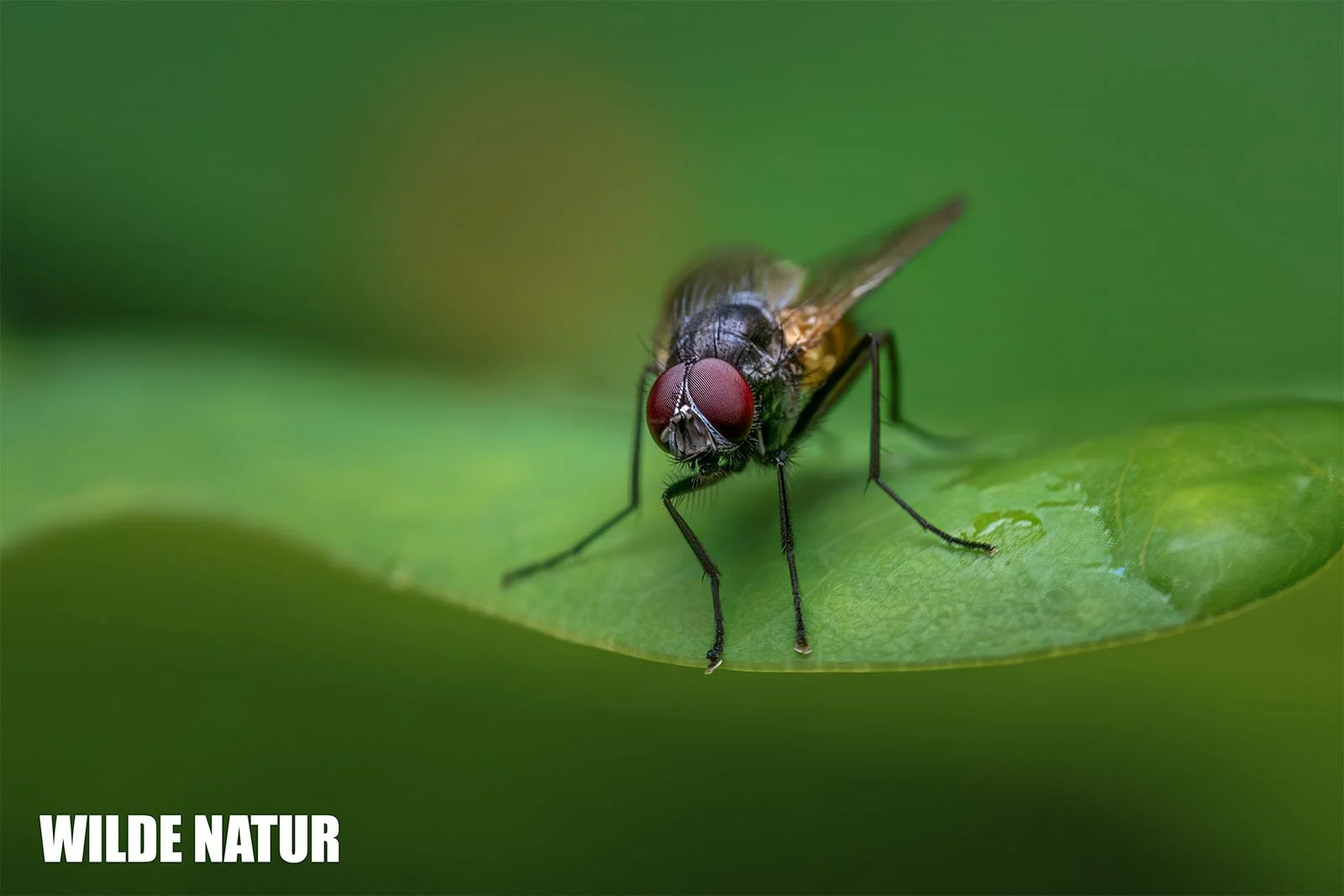
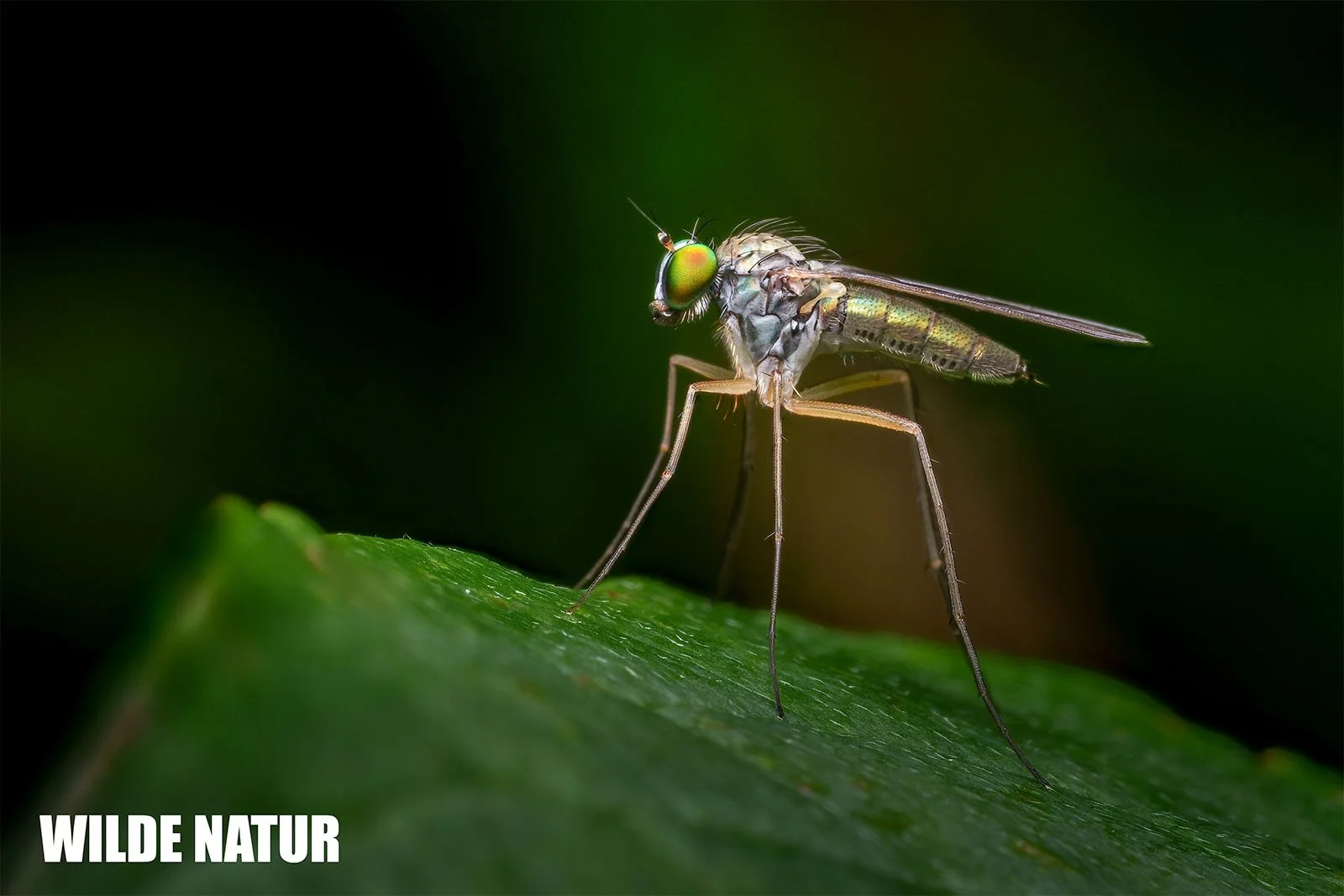
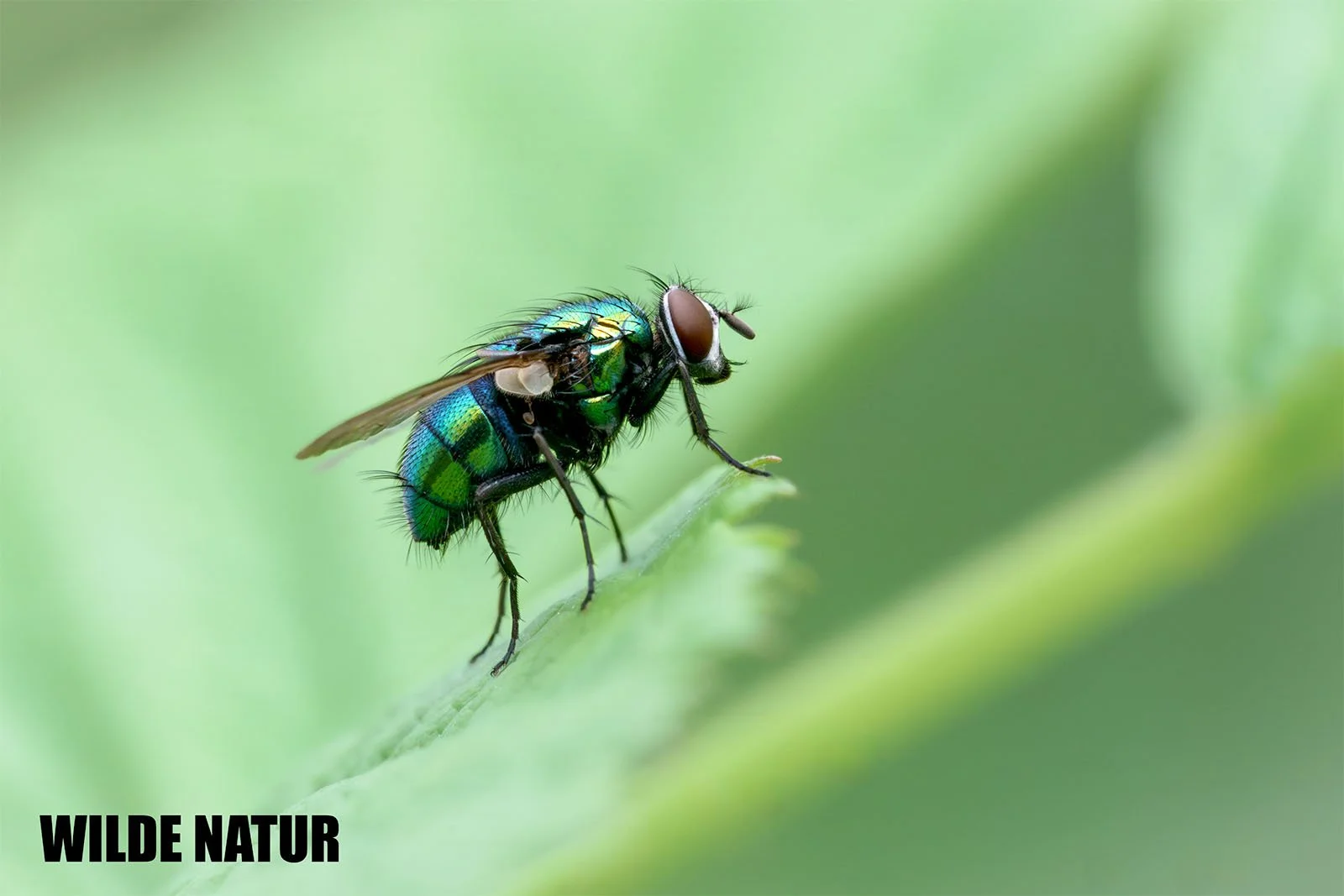
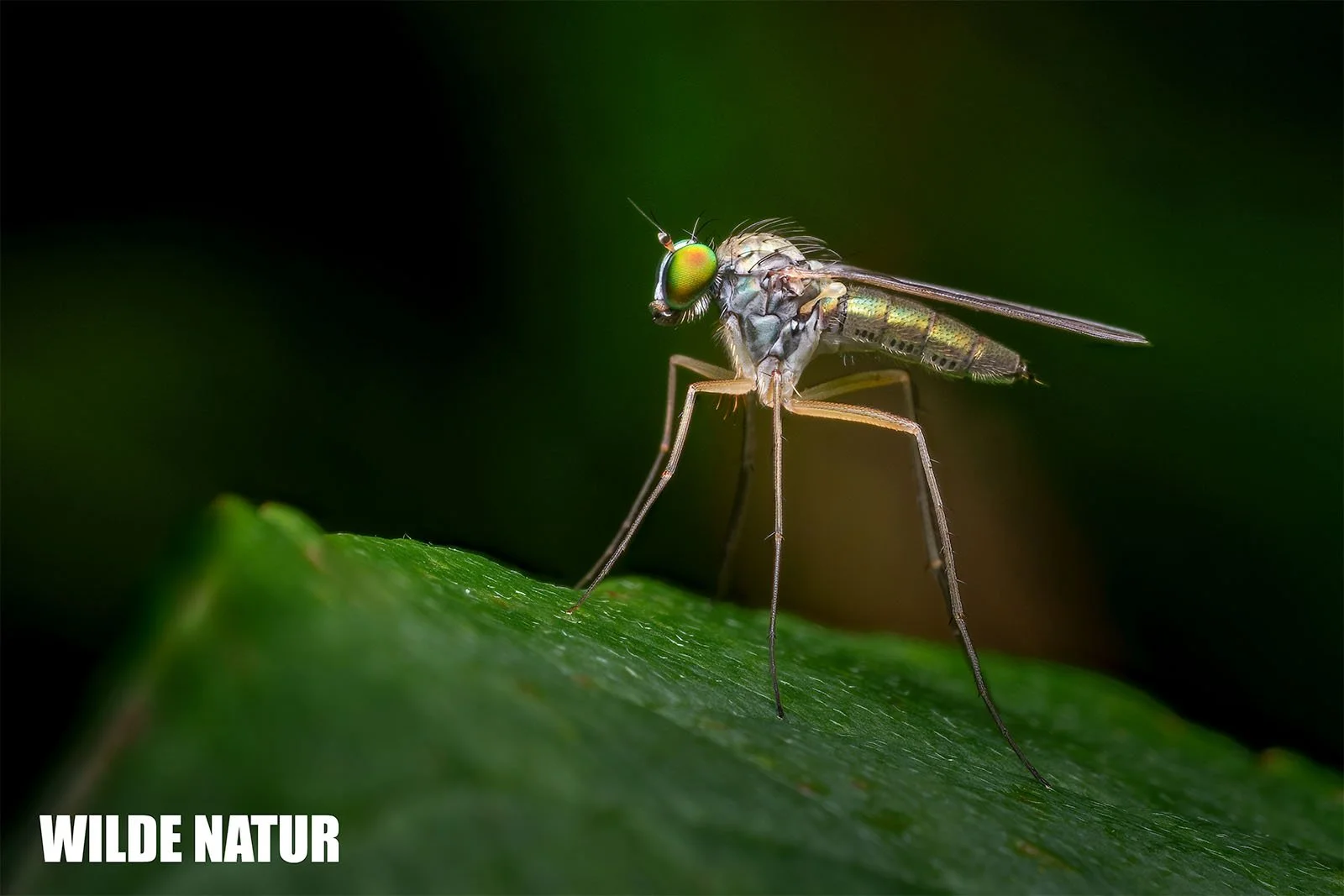
Long-legged flies are tiny two-winged insects with a metallic sheen and long, delicate legs.
Typical Features:
- Body size: 1.5–7.5 mm
- Color: Metallic hues – green, blue, bronze
- Legs: Very long and slender, often bristled
- Wings: Clear or slightly tinted, occasionally with patterns
- Eyes: Large, sometimes iridescent in certain species
- Flight style: Short, jerky, and lightning-fast
Some species feature colorful bristles or wing markings – a detail that especially fascinates entomologists.
Diet and Behavior
Long-legged flies are typically predators – both as larvae and adults.
Adults:
- Hunt small insects like aphids, springtails, mosquitoes, and thrips
- Catch prey directly on leaves, in grass, or along water edges
- Some species also feed on honeydew or nectar
Larvae:
- Live in moist, organic substrates like soil, leaf litter, under bark, or in mulch
- Feed on tiny invertebrates, such as mites and insect larvae
- Usually pale, soft-bodied, legless
- Some species are plant-dwelling – e.g., inside grass stems
Depending on species and stage of development, they play important roles in the ecosystem – as micro-predators or as part of the soil community.
Reproduction and Development
Long-legged flies undergo complete metamorphosis:
Egg → Larva → Pupa → Adult Fly
- Eggs are laid in moist soil, detritus, or beneath bark
- Larvae develop through several stages
- Followed by a pupal resting stage
- The adult fly (imago) emerges quickly under favorable conditions
Development time varies by species and temperature – from a few weeks to several months.
Seasonal Activity
Long-legged flies are typical spring and summer insects:
- Active from spring through fall
- Most abundant in warm, humid weather
- Dart rapidly between leaves, moss, or grasses
- In dry spells, they’re hard to spot – but become active again after rain
Their presence depends heavily on microclimate – moist garden soil increases your chances of seeing them.
Distribution and Habitat
The Dolichopodidae family is found worldwide, with particularly high species diversity in tropical and temperate zones.
Typical Habitats:
- Moist meadows and wetlands
- Woodland edges and leaf litter
- Stream banks, ponds, and drainage ditches
- Garden areas with mulch, compost, and moist soil
Even natural-style urban gardens can host long-legged flies – as long as there’s structure, moisture, and no pesticide use.
Long-Legged Flies and Humans
Long-legged flies are completely harmless to humans – and very helpful.
- They don’t bite or sting
- Don’t spread diseases
- Aren’t attracted to people or lights
- Feed on common garden pests
Their role in natural pest regulation is especially valuable in eco-friendly gardens – even if their work often goes unnoticed.
FAQ
1. Do long-legged flies bite or sting?
No. They don’t have stingers or venom glands.
2. What do they eat?
Adults hunt small insects; larvae feed on soil organisms or plant tissue – depending on species.
3. Are they beneficial?
Yes – many species help keep aphids and other tiny pests in check.
4. How can I recognize them?
They’re small, metallic, with very long legs – often spotted on leaves or close to the ground.
5. How can I support them in my garden?
Create moist areas, leave mulch and leaf litter, and avoid chemical treatments.