European Crane Fly (Tipula paludosa)
European Crane Fly (Tipula paludosa)
European Crane Fly – A Secretive Grassland Resident with a Big Appetite
European crane fly (Tipula paludosa): How this inconspicuous meadow dweller lives, what makes it a lawn pest, and why there's no reason to fear it.
Key Facts
- The European crane fly is a harmless insect that does not bite humans.
- Its larvae, known as leatherjackets, feed on grass roots and can cause significant lawn damage.
- Adult insects live for just a few days in late summer.
- The species is native to Europe and has become established in North America.
- Scientific name: Tipula paludosa
- Size: 16–30 mm (females usually larger)
- Diet: Water and nectar (adults), roots of herbaceous plants (larvae)
- Distribution: Western and Central Europe, North America
- Life cycle: 1 year – with four larval stages
- Notable trait: Larvae are considered major lawn pests
Table of Contents
- Introduction
- Appearance and Features
- Feeding and Behavior
- Reproduction and Development
- Seasonal Behavior
- Distribution and Habitat
- Crane Flies and Humans
- FAQ
Introduction
It looks like an oversized mosquito, wobbles through late-summer gardens, and causes confusion. But don't worry – the European crane fly doesn't suck blood. Its short adult life revolves solely around reproduction. Things get more interesting underground, where its larvae turn into voracious root feeders.
What seems delicate above ground can cause serious lawn damage below. Time to take a closer look – beneath the turf.
Appearance and Features
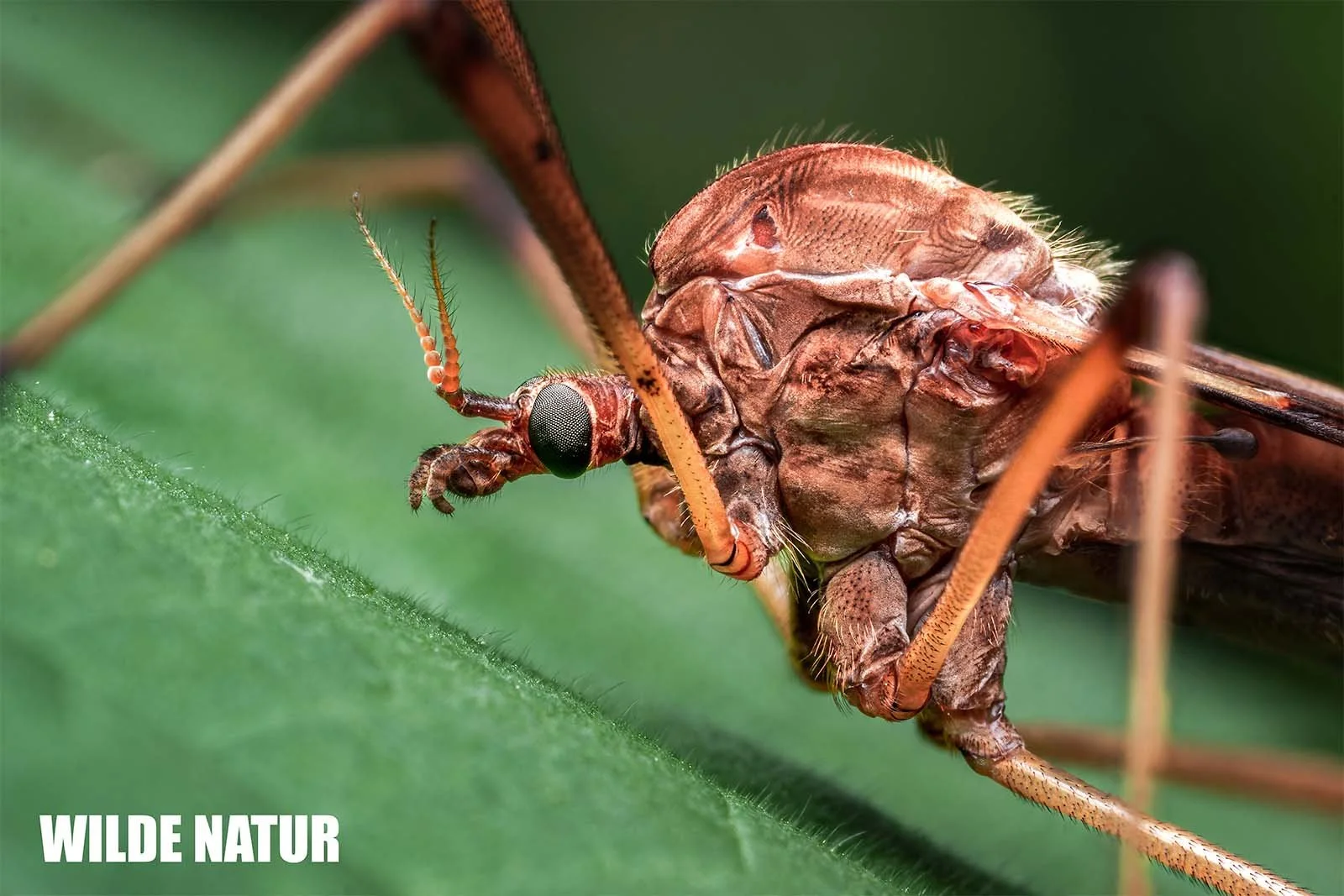
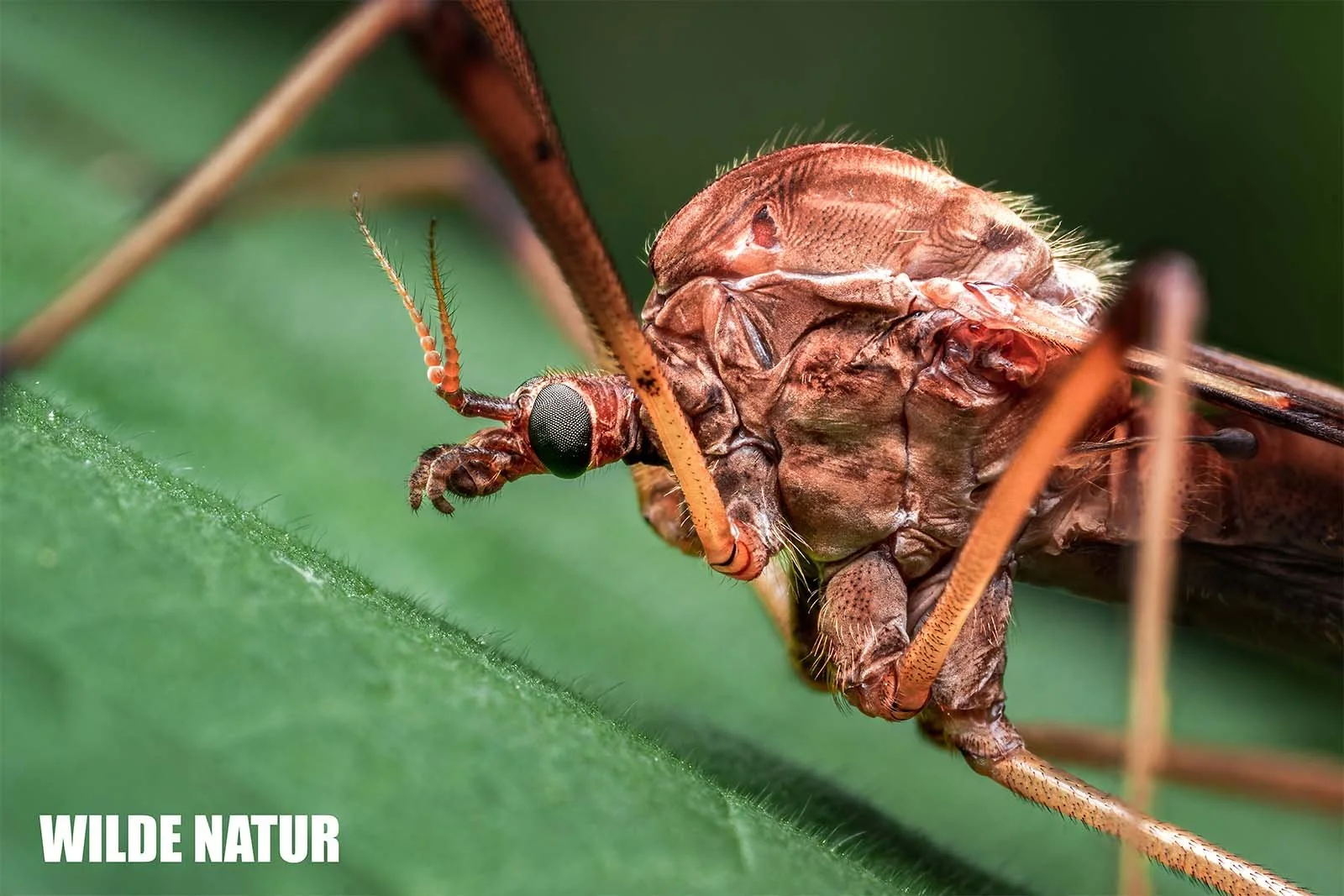
The European crane fly belongs to the Tipulidae family and resembles a mosquito in appearance – but it's significantly larger.
Its body is slender, brownish-grey, and elongated.
The wings are clear or slightly tinted, with no pattern.
A distinctive feature: long, thin legs that break off easily when touched.
The head appears large, with antennae made of 14 segments.
The larvae (leatherjackets) are legless, gray-brown, up to 4 cm long, and have a leathery skin – perfectly adapted for life underground.Identifying tip: Females have an extended abdomen for laying eggs. Their wings often don't reach the end of the body.
Feeding and Behavior
Adult crane flies are undemanding – they only consume water or nectar. Since they live only a few days, they do not actively seek food.
The larvae are a different story:
They feed underground on grass roots and tender stems. Their feeding usually goes unnoticed – until bald patches appear on the lawn in spring or the turf feels loose.
Important: Only the larvae cause plant damage – the adult insects are harmless and do not bite.
Reproduction and Development
In late summer, adult crane flies emerge with one goal: reproduction.
Mating occurs shortly after emergence.
Females lay several hundred eggs in moist soil.
After about 1–2 weeks, the larvae hatch.
They go through four larval stages, all underground.
They overwinter in the third larval stage.
In late spring, they pupate, and a new generation hatches in summer.
The life cycle is annual (univoltine) – just one generation per year.
Seasonal Behavior
Late Summer (August–October): Adults emerge, mate, and lay eggs.
Autumn to Spring: Larvae feed underground, overwinter in the third larval stage.
Spring: Larvae are especially active feeders, pupation begins in May/June.
Summer: Pupae remain dormant underground, new adults hatch from August onward.
Spring damage: Typical lawn damage from intense larval feeding – bare, brown patches and loose turf.
Distribution and Habitat
The European crane fly is native to Western and Central Europe, but has also become established in North America through accidental introduction.
Preferred habitats include:
Moist meadows
Pastures and gardens
Grasslands with well-drained soils
High soil moisture promotes larval development – but they avoid waterlogged conditions.
Crane Flies and Humans
Adult crane flies are:
- harmless to humans,
- do not bite,
- do not transmit diseases.
Only the larval stage is problematic. In large numbers, they can damage lawns and pastures. Wet summers can lead to population booms.
- A natural balance is usually maintained – thanks to predators like birds and hedgehogs. In case of severe infestations, biological methods such as nematodes or soil care can help.
FAQ
1. Do crane flies bite?
No – they don't have piercing mouthparts and are completely harmless.
2. How can I detect larvae in the soil?
Look for loose turf, bare patches, and visible larvae (legless, gray, up to 4 cm long).
3. When does the damage occur?
Mainly in spring – when the larvae are especially active feeders.
4. Do I need to control them?
Only in cases of severe infestation – biological methods like nematodes are ideal.
5. Why do crane flies fly into houses in the evening?
They are attracted to light – much like moths.