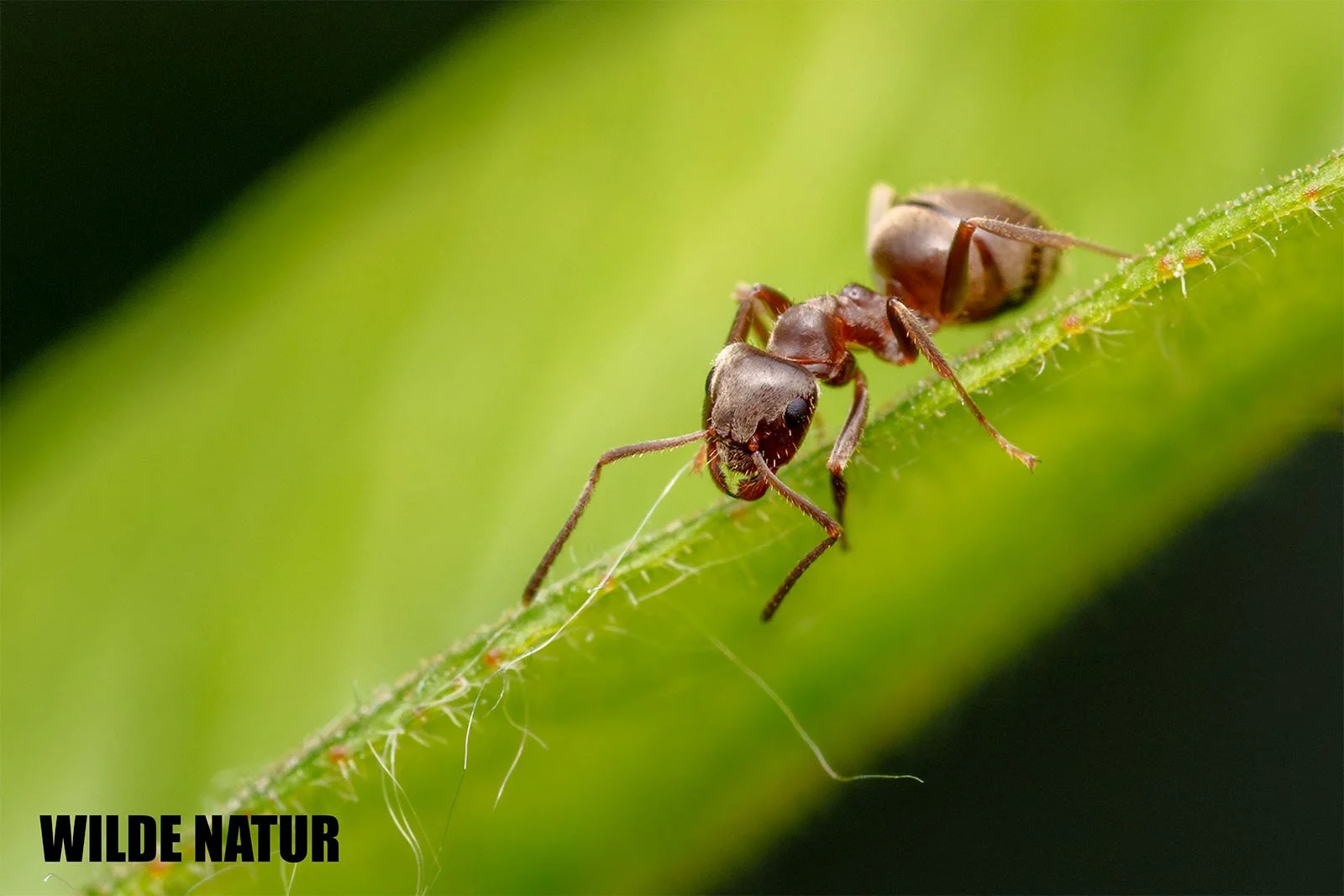
Black Garden Ant (Lasius niger)
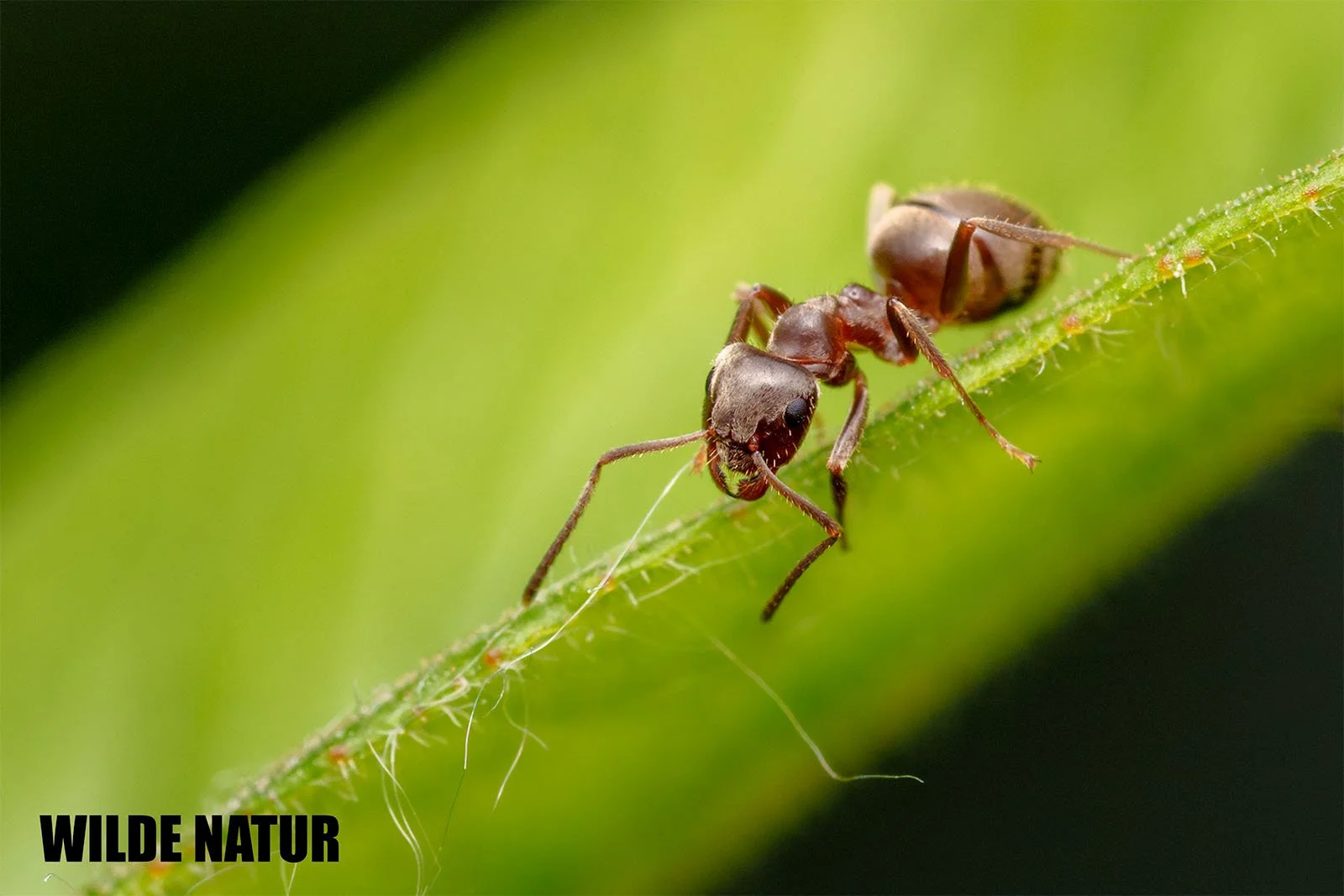
Black Garden Ant (Lasius niger)
Black Garden Ant – A Master of Survival
All about the black garden ant: appearance, nest building, diet, behavior, and why it's so common in gardens. Clearly explained and easy to understand!
Key Facts
- Tiny, but perfectly organized: colonies with thousands of workers
- Functions like a mini-state with defined roles
- Tends aphids like livestock and harvests their honeydew
- Not dangerous – but sometimes a nuisance
- Highly adaptable and successful worldwide
- Species name: Lasius niger
- Size: Workers 3–5 mm, queens 8–9 mm
- Social structure: Single-queen colony (monogynous)
- Diet: Omnivorous – nectar, honeydew, small insects
- Nesting sites: Often under stones, in soil cracks, or pavement
- Distribution: Common in Europe, introduced globally
- Special feature: "Farms" aphids for honeydew
- Interaction with humans: Harmless, but can be annoying
Table of Contents
- Introduction
- Appearance and Anatomy
- Colony Organization
- Nest Building: Between Stones and Pavement Cracks
- Diet: Sugar, Aphids, and Prey
- Reproduction and Development
- Activity Throughout the Year
- Distribution: From Gardens to the Globe
- Contact with Humans
- FAQ on the Black Garden Ant
Introduction
It’s small. It’s black. And it’s just about everywhere. The black garden ant is one of the most successful ant species in Europe – and likely the one you’ve seen most often. Whether in gardens, on patios, or between paving stones: Lasius niger has made itself at home.
But what makes it so special? Why does it live in colonies? And how can it strike a "livestock deal" with tiny aphids?
Let’s answer those questions – in a way that makes sense, even if you're not a biologist.
Appearance and Anatomy
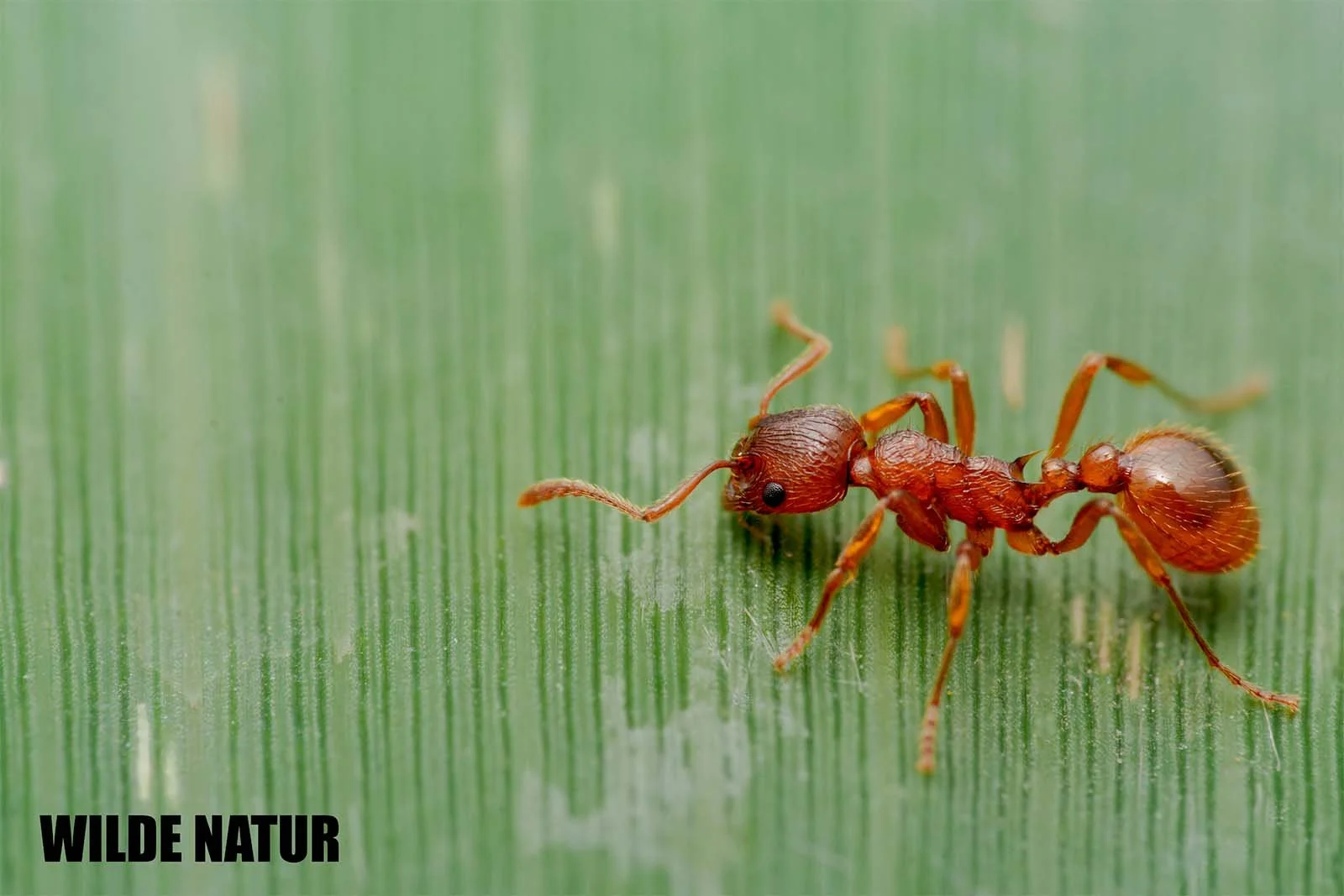
The black garden ant may be tiny, but its body is a marvel of evolution. Its color ranges from black to dark brown, with a slightly glossy appearance thanks to fine body hairs.
Workers measure just 3–5 mm, while queens are noticeably larger at 8–9 mm. A closer look reveals the classic "waist" between the thorax and abdomen – a signature feature of ants.
The antennae are also distinctive: they consist of several segments, with the first segment significantly longer than the rest. While workers are wingless, reproductive ants (males and young queens) grow wings during mating season.
Colony Organization
Like a miniature state, Lasius niger operates with strict roles. A single queen founds the colony and focuses solely on reproduction. Thousands of workers handle construction, foraging, and brood care.
This clear division of labor is efficient – and vital for survival. Communication happens through pheromones, or chemical signals. When a worker discovers food, she leaves a scent trail – and others follow.
Nest Building: Between Stones and Pavement Cracks
Black garden ants prefer to build their nests in places you might not expect: under patio slabs, between stones, in wall crevices, or directly in the soil. From the outside, you may only see a small hole, but below ground lies a sprawling network of tunnels.
The colony expands over time – often with several thousand individuals living together. In some cases, the number can be much higher.
Diet: Sugar, Aphids, and Prey
Lasius niger is a true opportunist – an omnivore. Its main food sources are sugar-rich substances like nectar and the honeydew secreted by aphids.
What’s especially fascinating: the ants "herd" aphids, much like shepherds tend livestock. They protect the aphids from predators and, in return, collect the sweet honeydew. It’s a classic win-win situation.
But protein is also on the menu: small insects, larvae, or dead animals – it all gets put to use.
Reproduction and Development
The black garden ant follows the classic insect life cycle: egg → larva → pupa → adult ant (imago).
One of the most dramatic moments is the nuptial flight in summer, usually in July or August. Thousands of winged males and young queens take to the air – often in many gardens at once.
After mating, the queens land, shed their wings, and start new nests. The first eggs develop into workers, who take over the growth of the colony.
Activity Throughout the Year
The black garden ant is active year-round – at least in warmer climates. In winter, the colony retreats underground. Activity drops off, and the queen enters a kind of hibernation.
Come spring, the cycle starts again: eggs are laid, larvae are fed, the nest expands. In the warm summer months, activity and expansion peak.
Distribution: From Gardens to the Globe
Few ant species are as widespread as the black garden ant. In Europe, it’s found nearly everywhere – from northern Scandinavia to southern Italy.
But it doesn’t stop there. Humans have introduced it to other continents – sometimes on purpose, often by accident. Its adaptability makes it a true global citizen among insects.
In Germany, it’s commonly found in gardens, meadows, parks, and forest edges – as well as in cities, along sidewalks, walls, and paving stones.
Contact with Humans
Although Lasius niger isn’t a pest in the traditional sense, it can be a nuisance when it shows up in large numbers.
In summer, workers often invade homes in search of sugary food. While not dangerous, they can contaminate food, which is unpleasant.
In rare cases, the colony’s underground tunnels may destabilize paving stones or patio areas.
FAQ on the Black Garden Ant
1. How big does a black garden ant get?
Workers measure 3–5 mm, queens are around 8–9 mm long.
2. Is the black garden ant dangerous?
No. It’s harmless to people but can be annoying if it enters homes.
3. What does it eat?
Sugary substances like nectar and honeydew, as well as small insects.
4. How is a new colony formed?
After mating, a young queen founds a new nest and raises the first workers.
5. Where can I find their nests?
In soil, under paving stones, in wall cracks, or between rocks – often well hidden.