Housefly (Musca domestica)
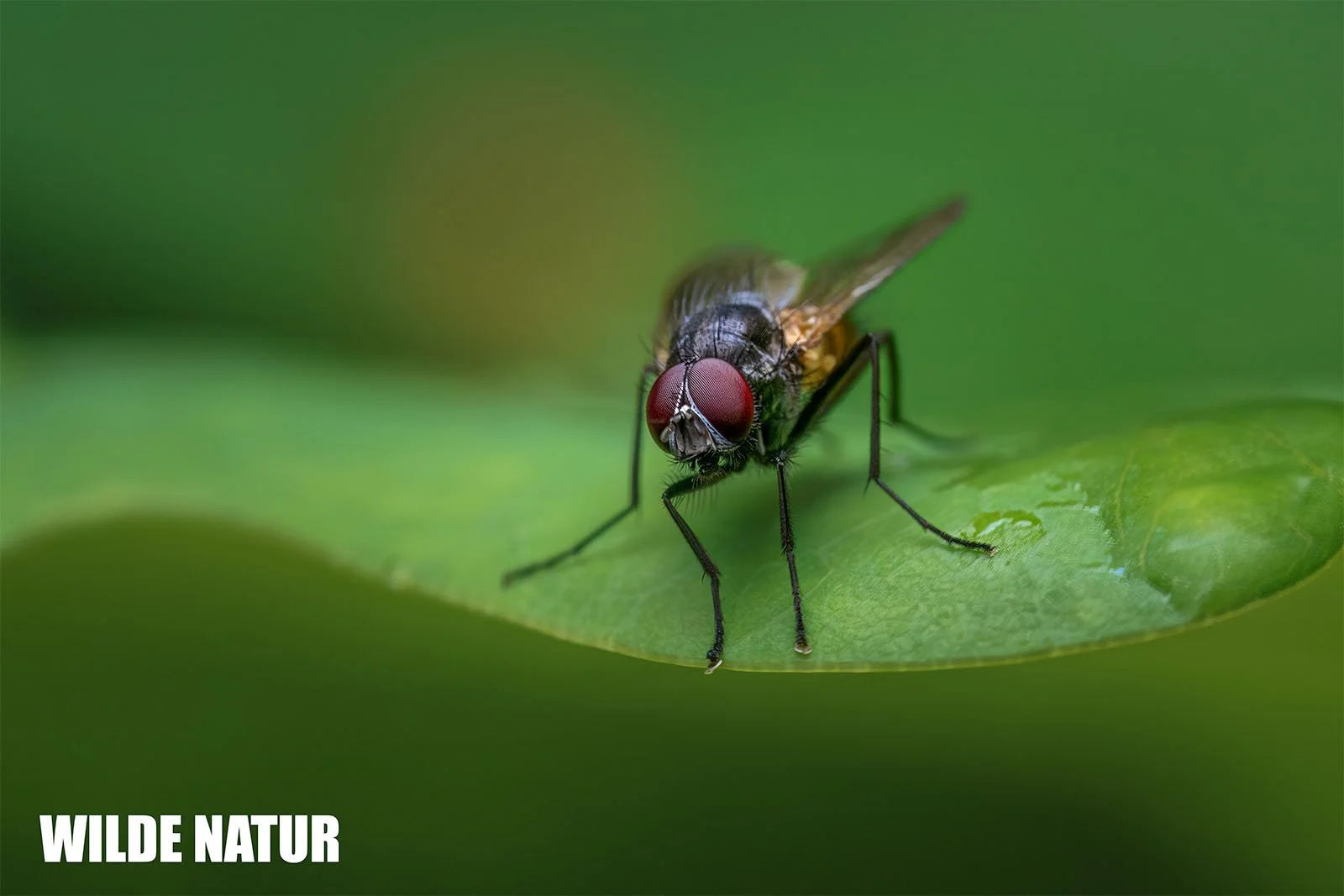
Housefly (Musca domestica)
Housefly – All About Musca domestica
Housefly (Musca domestica): appearance, development, behavior, hygiene risks – an overview of this globally widespread insect species.
Key Facts
- Size: 6–8 mm; wingspan up to 15 mm
- Weight: around 10–15 mg
- Diet: organic liquids – waste, feces, food scraps
- Reproduction: up to 500 eggs; rapid development
- Scientific name: Musca domestica
- Common name (DE): Stubenfliege
- Family: Muscidae (true flies)
- Lifestyle: synanthropic – lives in close association with humans
- Distinctive trait: lacks piercing or biting mouthparts
- Distribution: worldwide – originally Palearctic, now cosmopolitan
Table of Contents
- Introduction
- Appearance
- Key Characteristics
- Diet
- Reproduction and Life Cycle
- Seasonal Behavior
- Habitat and Distribution
- Interaction with Humans
- What You Can Do
- FAQ
- In Summary
Introduction
You know it for sure: the housefly – one of the most recognizable insects worldwide. It lands on your plate, buzzes through kitchens and bakeries, or crawls across the compost bin. But there's more to this tiny insect than meets the eye.
Thanks to its exceptional adaptability, Musca domestica has spread across the globe—almost always in direct proximity to humans. And while it may be annoying, it can also carry germs and disease-causing pathogens. Time to take a closer look at this everyday companion.
Appearance
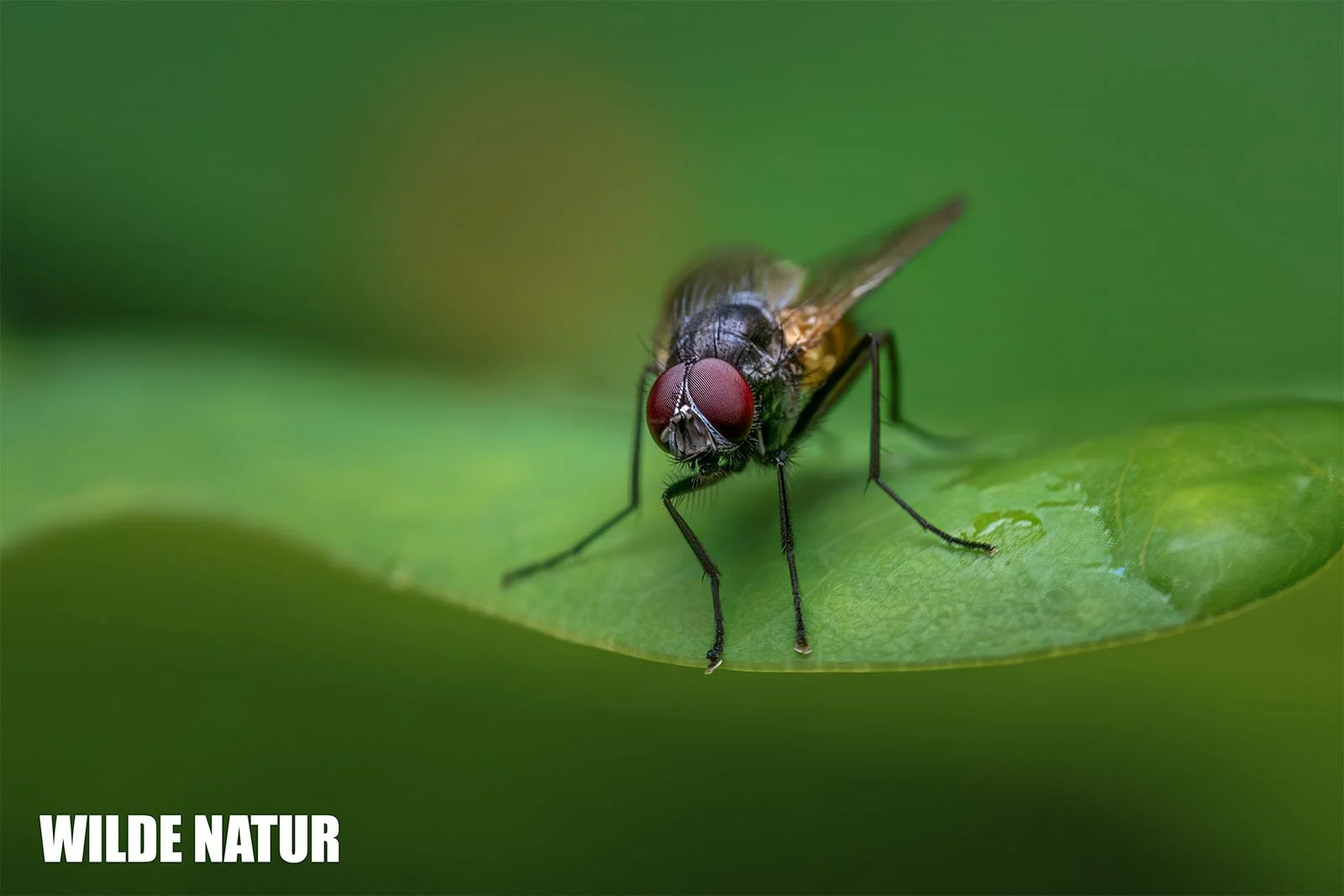
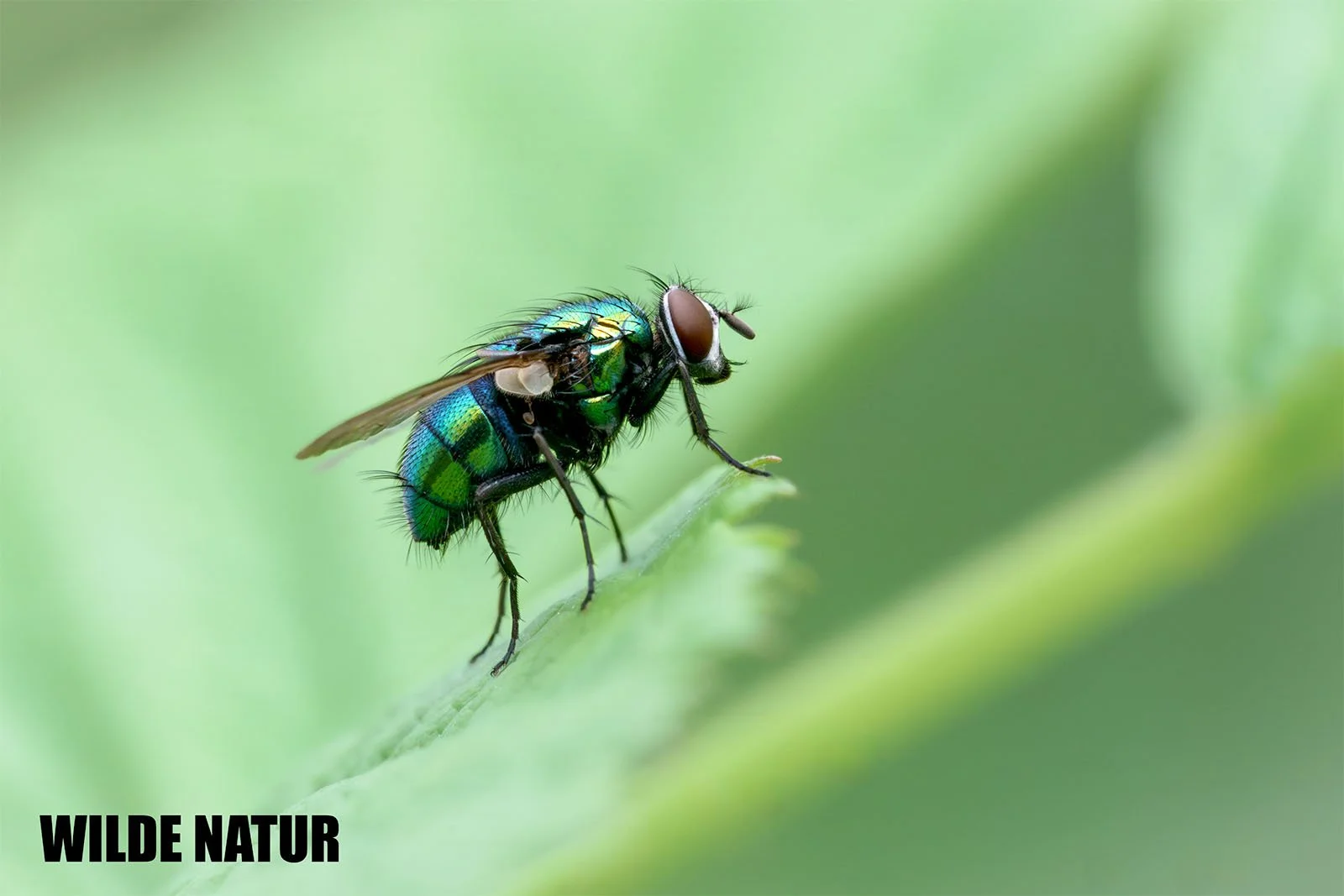
The housefly is a small, compact fly with a typical body structure:
- The thorax is gray with four dark longitudinal stripes
- The abdomen is gray-yellowish with often irregular patterns
- The wings are transparent, slightly shiny, and rest folded back at an angle
- The eyes are large, round, and reddish-brown, made up of thousands of compound lenses
- The antennae are short and bristle-like
- The legs are slender, black, and equipped with adhesive pads and small claws
Most striking: the proboscis—a soft, sponge-like organ used exclusively to suck up liquid or liquefied food.
Key Characteristics
The housefly has several notable biological features:
- Highly adaptable: survives in nearly any environment with organic material
- Rapid reproduction: multiple generations per season; development in just days
- No biting or stinging tools: it cannot bite or sting
- Mechanical germ carrier: spreads pathogens through contact with waste and feces
- Cosmopolitan: originally Palearctic, now found worldwide
These traits make it one of the most successful human-associated insects on the planet.
Diet
Houseflies cannot eat solid food. Everything they consume must be liquid or capable of being liquefied—otherwise it's unusable to them.
Common Food Sources:
- Rotting kitchen waste
- Animal feces and carrion
- Fermented fruit, fruit juices, sugary liquids
- Food scraps and spilled drinks
To make use of solid substances, the fly vomits digestive enzymes onto the surface, pre-digesting it externally—only then can it absorb the dissolved nutrients.
This behavior makes it especially problematic in terms of hygiene, particularly in food processing environments.
Reproduction and Life Cycle
The housefly has an impressively short development time.
Stages of Development:
- Egg – after mating, the female lays up to 500 eggs
- Larva (maggot) – feeds on organic matter, goes through three larval stages
- Pupa – formed after a few days
- Adult fly (imago) – becomes fertile after a short maturation phase
Under optimal conditions (25–30 °C), the entire cycle takes only 7–10 days. This allows for multiple generations per summer—typically 10–12, even more in tropical regions.
Eggs are usually laid on:
- Feces
- Waste heaps
- Compost
- Animal carcasses
Seasonal Behavior
In Central Europe, houseflies are mainly active from spring to autumn:
- Egg-laying begins from 10 °C
- Peak activity occurs above 20 °C
- In heated indoor spaces, they remain active year-round
As temperatures drop, they retreat into stables, homes, and warm corners where they can still find food and breeding sites.
Habitat and Distribution
Houseflies are true cosmopolitans: they occur worldwide, wherever humans live. Originally from the Palearctic region, they’ve been spread across continents by human activity.
Common locations:
- Stables, manure heaps
- Garbage bins, compost sites
- Kitchens, restaurants, bakeries
- Hospitals, care facilities
- Homes, balconies
Their close association with humans makes them a classic synanthropic species – living through, with, and off us.
Interaction with Humans
Houseflies are not aggressive, and they don’t sting or bite. However, they are still considered problematic, and for good reason:
- They crawl over feces, waste, and carrion, spreading germs mechanically
- Pathogens can stick to their legs, wings, and proboscis
- Through vomit and droppings, bacteria and viruses may end up on your food
Their presence is especially critical in:
- Kitchens
- Hospitals
- Food-related businesses
So while not physically harmful, they are a significant hygiene risk.
What You Can Do
Fly on the cake
Expecting guests and a fly lands on the cake? Better cover it—brief contact can leave behind germs.
Garden compost
Open compost piles or organic bins are breeding grounds. Use covers and turn the pile regularly to reduce fly numbers.
Window screens
Simple but effective. Insect screens keep Musca domestica outside—especially important in kitchens.
FAQ
1. Can houseflies sting?
No. They lack stingers or biting mouthparts.
2. How fast do they develop?
At ideal temperatures, just 7–10 days from egg to adult.
3. Are they dangerous to humans?
Not directly—but they can spread disease-causing germs.
4. How can I prevent flies indoors?
Use insect screens, dispose of waste properly, keep bins closed, avoid exposed food.
5. Where do houseflies lay their eggs?
On decaying organic material like manure, garbage, compost, or carcasses.
In Summary
The housefly is a textbook example of how well animals can adapt to human environments—yet it’s a widely underestimated hygiene risk. Though not directly harmful, its lifestyle allows it to spread pathogens into our daily lives. With its explosive reproductive potential, proximity to humans, and near-unstoppable survival skills, it’s a true urban survivor—and one insect you don’t want getting too close.