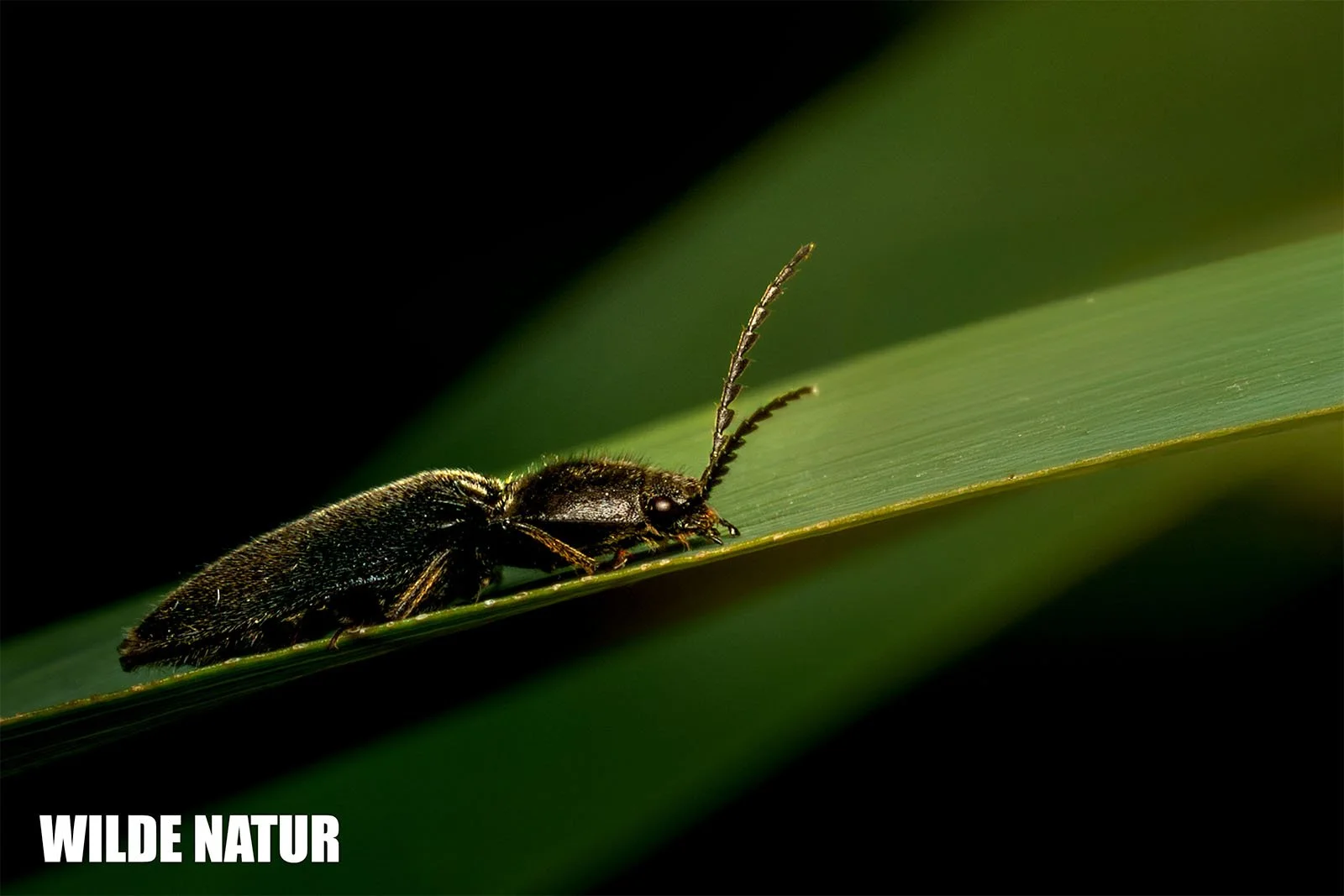
Black click beetle (Hemicrepidius niger)
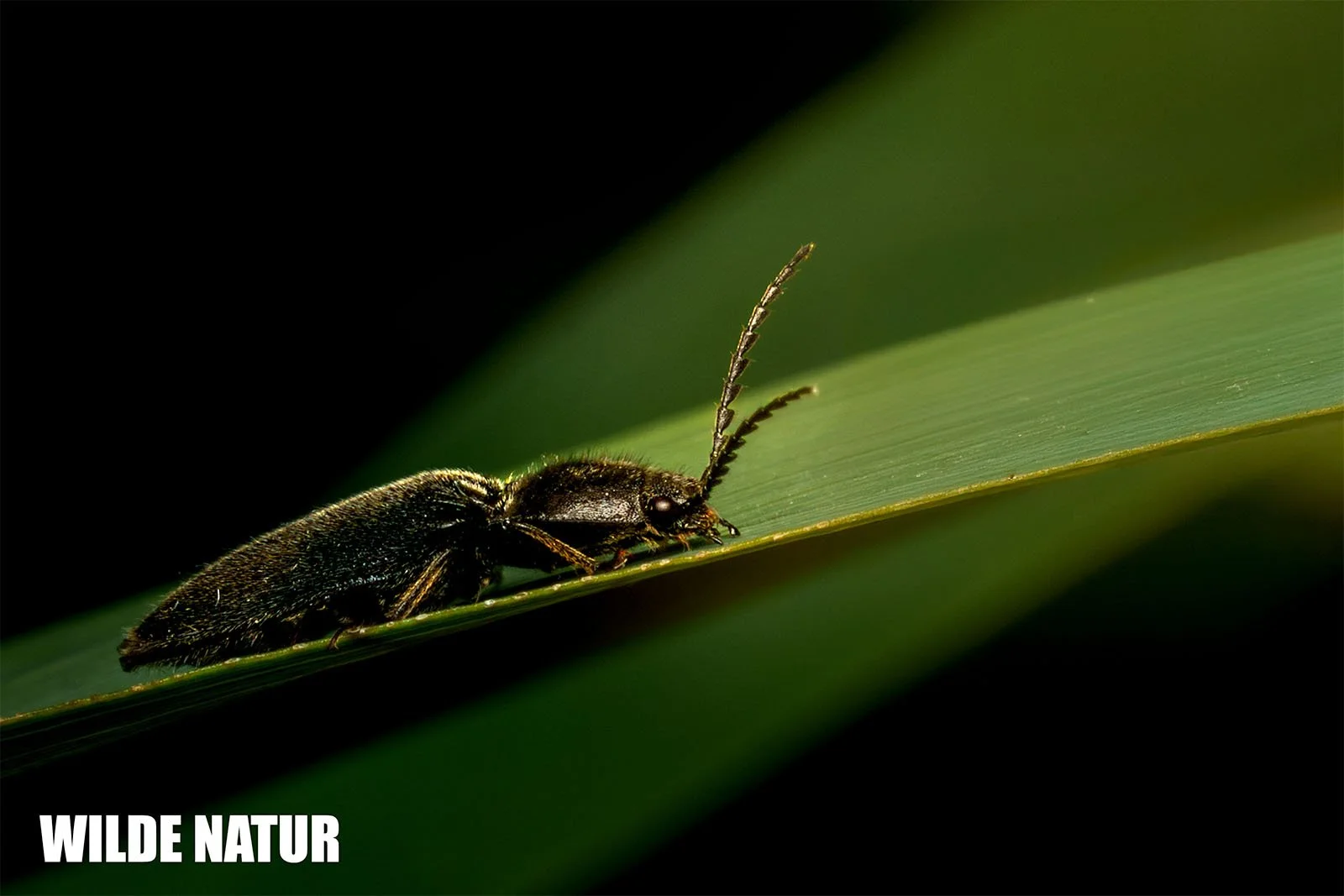
Black click beetle (Hemicrepidius niger)
Black Click Beetle – Profile of a Subtle Jumping Acrobat
Black click beetle (Hemicrepidius niger): characteristics, behavior, development, distribution & more – everything about this shiny, elusive jumper.
Key Facts
- Size: 10–14.5 mm, slender build
- Coloration: Deep black, shiny, no markings
- Special trait: Jumping mechanism via click organ
- Larvae (wireworms) live underground, feed on roots
- Distribution: Europe, Caucasus, East Asia – prefers deciduous forests
- Scientific name: Hemicrepidius niger
- Common name (DE): Schwarzer Rauhaarschnellkäfer
- Family: Click beetles (Elateridae)
- Diet: Plant-based (adults); roots and organic matter (larvae)
- Active period: Late spring to summer, diurnal
- Special feature: Jumps using a snapping mechanism when threatened
Table of Contents
- Introduction
- Appearance
- Distinctive Features
- Diet
- Reproduction and Development
- Seasonal Behavior
- Habitat and Distribution
- Interaction with Humans
- Field Observations
- FAQ
- Summary
Introduction
You may have seen an insect suddenly catapult itself into the air when disturbed – like it was spring-loaded. What looks like a reflex is actually a fascinating mechanical trick used by click beetles, which also gives them their name.
The black click beetle is one of these acrobatic insects. A member of the Elateridae family, it is known for its "click mechanism." Despite this impressive skill, it often goes unnoticed – shiny black, slender, and lacking flashy coloration.
But its ecological role shouldn't be underestimated: the larvae – known as wireworms – live in the soil and influence root systems and soil structure. The adult beetle is a typical species of moist forests and meadow edges.
This article provides a practical and clear overview of the life and behavior of Hemicrepidius niger.
Appearance
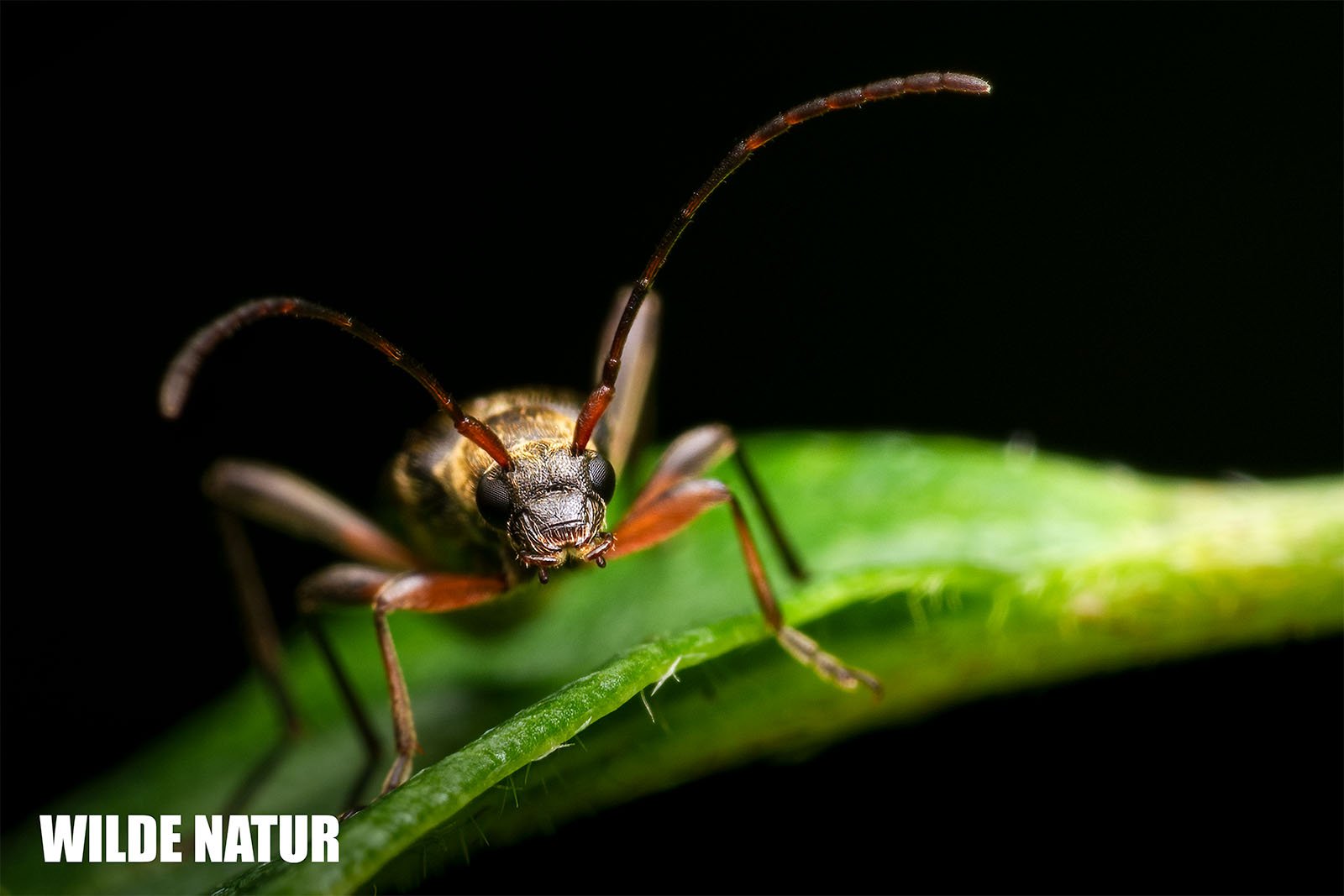
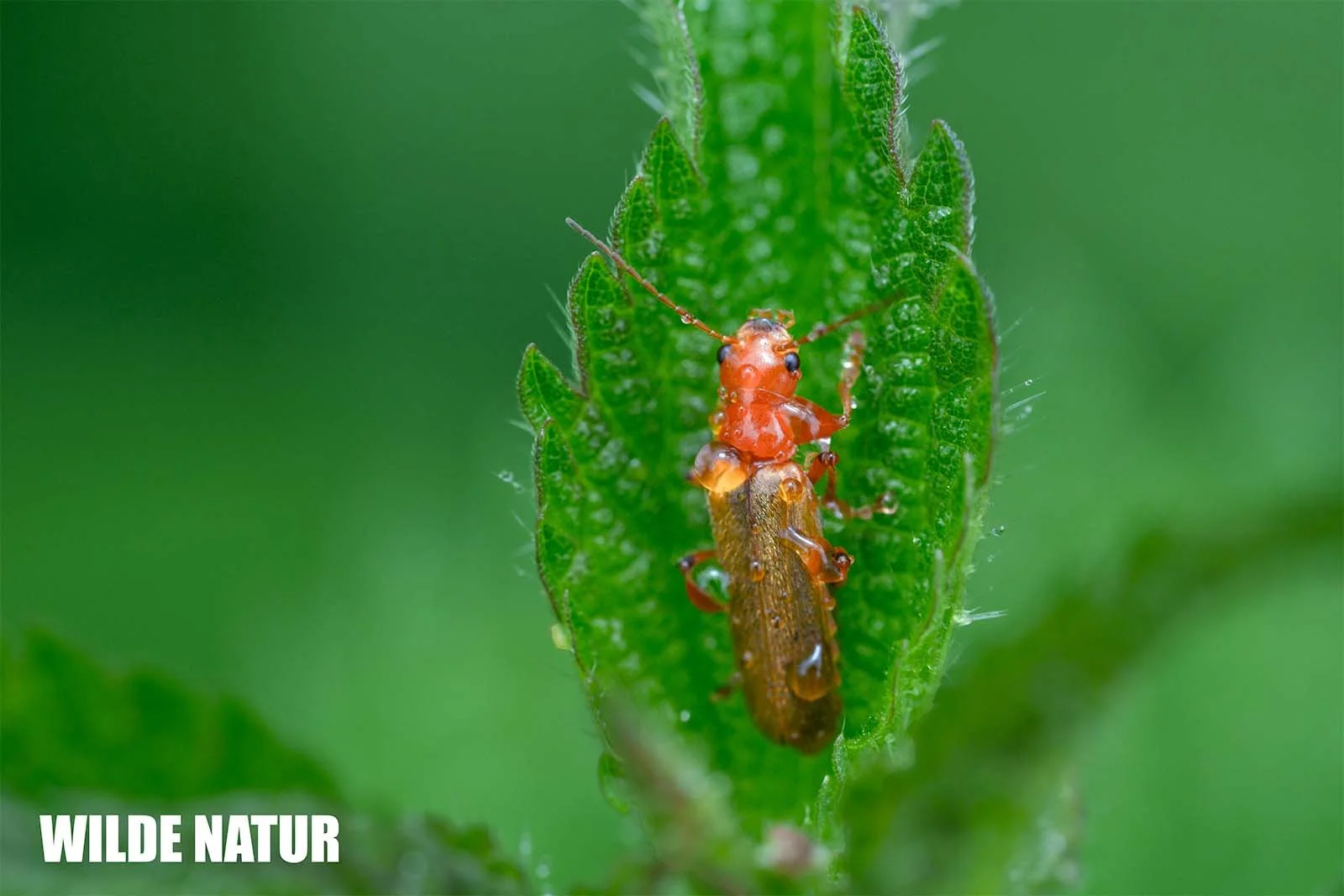
Like many of its relatives, the black click beetle has an elongated, sleek body and a rather slender silhouette.
- Color: Uniform deep black, glossy, without any markings
- Body shape: Elongated and flat – typical of click beetles
- Antennae: Simple, 10-segmented; slightly longer and more delicate in males
- Legs: Strong and sturdy – suited for movement on plants and ground
- Pronotum: Smooth and shiny, covered with forward-facing bristles, giving the species its German name
- Elytra (wing covers): Completely cover the abdomen; finely punctured, hard and glossy
Overall, it appears plain, but a closer look reveals a well-adapted, purpose-built design for navigating forest litter, leaves, and soil.
Distinctive Features
The black click beetle isn't just any beetle – it's part of a family of insect jumping specialists:
- Click mechanism: Like all click beetles, Hemicrepidius niger has a snap organ between its thorax and abdomen. When placed on its back or threatened, it launches itself into the air with an audible "click" – sometimes several centimeters high.
- Hairy pronotum: The forward-facing bristles on the pronotum are a key trait and inspiration for its name.
- Look-alikes: It can be confused with Hemicrepidius hirtus, another dark click beetle – experts distinguish them by differences in antenna structure and pronotum shape.
- No warning colors: Unlike ladybugs, this beetle relies on the strategy: stay hidden – and jump if necessary.
Diet
Adult Beetles
Adults are often found on flowering plants, likely feeding on:
- Pollen
- Plant sap
- Soft plant tissues
The exact diet of adults is not fully documented, but observations suggest a plant-based diet.
Larvae (Wireworms)
The larval stages develop in soil. These shiny, wire-like larvae feed on:
- Fine roots of young plants
- Organic matter in the soil
- Occasionally on decaying plant parts
Wireworms are generally known in agriculture – but in the case of Hemicrepidius niger, no major damage has been reported. Nonetheless, the larvae play an important role in the soil ecosystem.
Reproduction and Development
- Mating season: Begins in late spring and continues into mid-summer
- Egg-laying: Females deposit eggs in the upper soil layers, where larvae later hatch
- Larval development: Wireworms grow through several molts over several months
- Pupation: Takes place underground, often in late autumn
- Overwintering: Usually as larvae or pupae – well protected in the soil
- Adult emergence: Mature beetles appear in late spring the following year
Most of their life cycle occurs underground, with adults visible for just a few weeks.
Seasonal Behavior
The black click beetle is a seasonal insect with distinct phases:
- May–August: Peak adult activity – visible on flowers, in meadows, along forest edges
- Summer: Mating and egg-laying
- Autumn–Winter: Larval development and overwintering in soil
- Spring: New beetles emerge, beginning the cycle anew
They are diurnal but prefer warm, dry weather. Still, they are well adapted to moist environments—especially as a habitat for their larvae.
Habitat and Distribution
Hemicrepidius niger is found across a wide geographic range:
- Central Europe (including Germany, Austria, Switzerland)
- Northern Europe
- Caucasus region
- Parts of East Asia
It is considered common in Central Europe, especially in:
- Deciduous forests
- Moist meadow valleys
- Forest edges
- Humus-rich woodland soils
This species is not endangered, but its local presence depends on soil type, moisture, and vegetation.
Interaction with Humans
The black click beetle is a harmless companion:
- No biting or stinging tools
- No toxic secretions
- No health risk to humans or pets
- No major economic damage
Larvae may occasionally nibble on vegetable roots or seedlings, but such damage is minimal. Unlike some close relatives, it is not considered a significant pest.
Field Observations
Spotted at the forest edge
In early summer, you spot a sleek black beetle resting on a daisy. It sits still, antennae twitching—this could be Hemicrepidius niger. A closer look at the pronotum will help confirm.
Jumping trick in a magnifying cup
Place a click beetle on its back, and it may "click" itself upright—no magic trick, just its built-in survival tool. A fascinating example of biomechanical adaptation.
Found in garden soil
While digging in fall, you find a shiny, yellowish-white larva—a wireworm. These soil-dwellers are part of the natural ecosystem. Unless you're seeing heavy feeding damage, there's no need to intervene.
FAQ
Is the black click beetle dangerous?
No. Neither the beetle nor its larvae pose any threat to people or pets.
What does it eat?
Adults likely consume pollen and plant sap; larvae feed on roots and organic matter in the soil.
Where does it live?
Prefers deciduous forests, moist meadows, and forest edges—especially with humus-rich soils.
How do I recognize it?
Glossy black, slender body, hairy pronotum, elongated shape.
Does it really jump?
Yes! Its trademark jump is a defense mechanism—unique among beetles.
Summary
The black click beetle may not be an insect world superstar, but it’s undeniably fascinating. With its rapid snapping jump, hidden underground larval life, and quiet existence in the forest shadows, it’s a creature of remarkable adaptation.
Next time you're walking through a damp forest or working in the garden, keep your eyes open—you might meet one of these silent acrobats and know exactly who’s sitting in front of you.