Green Immigrant Leaf Weevil (Polydrusus formosus)
Green Immigrant Leaf Weevil (Polydrusus formosus)
Green Immigrant Leaf Weevil – Appearance, Behavior & Habitat
The Green Immigrant Leaf Weevil (Polydrusus formosus): characteristics, life cycle, diet, distribution, and its ecological role in gardens and nature.
Key Facts
- Size: 5–7 mm
- Coloration: metallic green sheen, reddish legs
- Diet: leaves and buds (adults), roots (larvae)
- Active period: April to August
- Overwintering: as larvae in the soil
- Distribution: Europe to southern Scandinavia, also North America
- Scientific name: Polydrusus formosus
- Common name (DE): Seidiger Glanzrüssler
- Family: Curculionidae (weevils)
- Feeding type: phytophagous (plant-eating)
- Development: egg → larva → pupa → adult
- Distinctive feature: densely scaled, shiny green appearance
Table of Contents
- Introduction
- Appearance
- Distinctive Characteristics
- Diet
- Reproduction and Life Cycle
- Seasonal Behavior
- Habitat and Distribution
- Interaction with Humans
- Where to Spot It
- FAQ
- Conclusion
Introduction
Sometimes, a green shimmer in the foliage catches the eye—almost like a tiny gem. But look closer: it's not jewelry, but a beetle—the Green Immigrant Leaf Weevil (Polydrusus formosus). With its metallic sheen, it's one of the most striking native weevils, yet it often goes unnoticed.
Why? Because it's small, quiet, and blends perfectly into its surroundings. You’ll only notice it when semi-circular feeding marks appear on leaves or several beetles gather on young shoots. This article shows you how to identify this weevil, how it lives, and what role it plays in gardens and landscapes.
Appearance
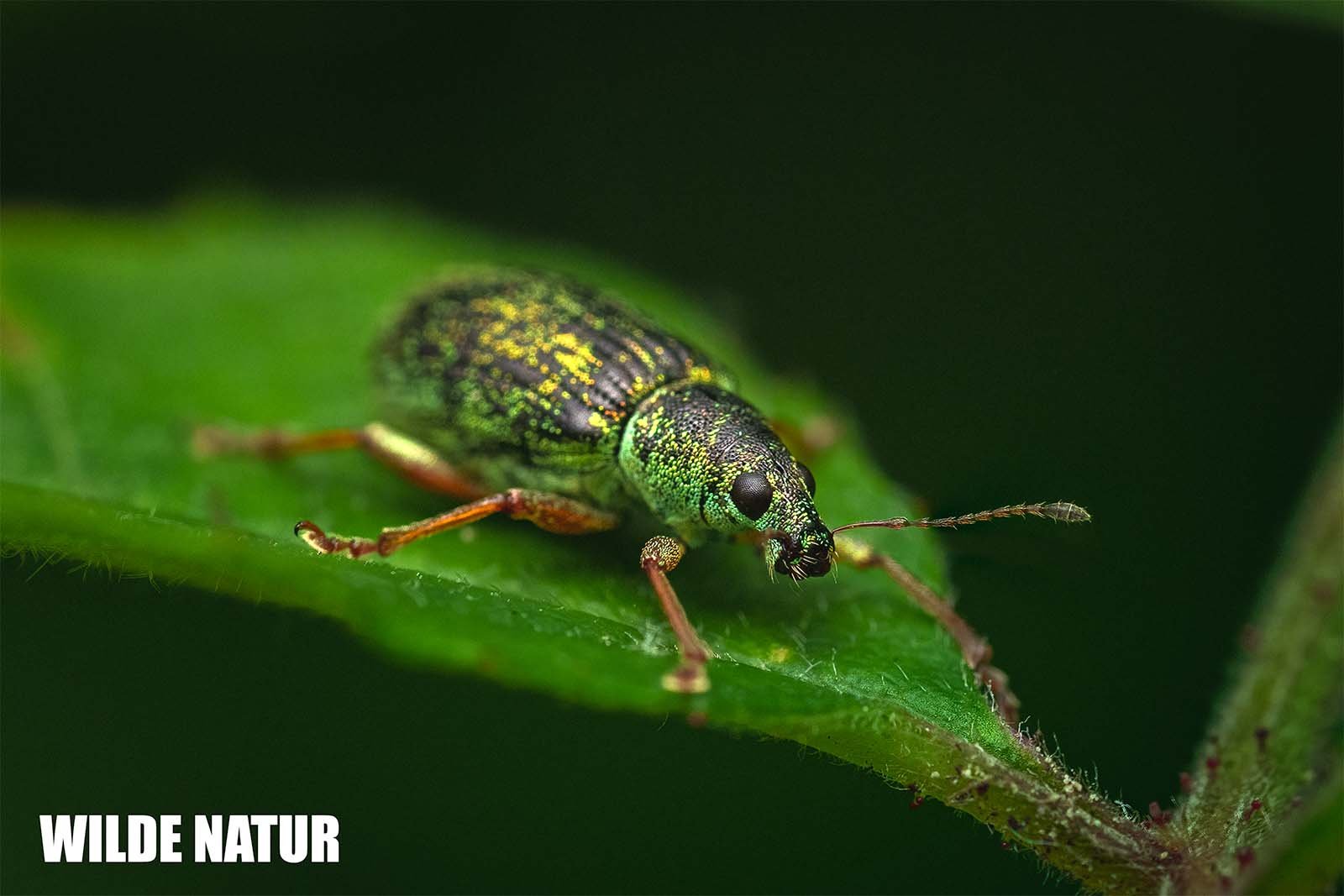
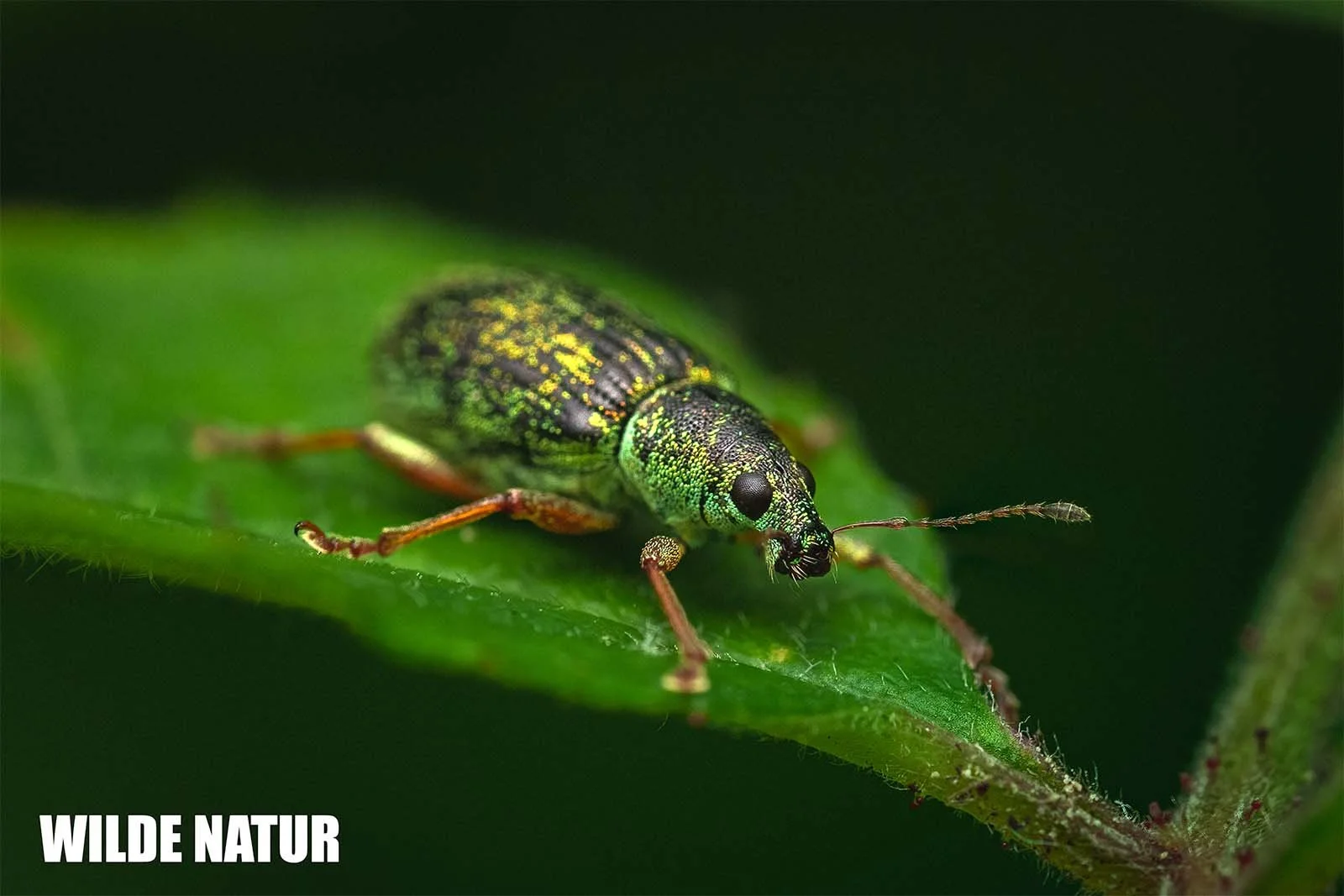
The Green Immigrant Leaf Weevil is a small, oval-shaped beetle from the weevil family. Its most distinctive feature is the dense scaling on its upper side.
The entire body is covered with metallic green shimmering scales, giving it a silky, glossy look that can appear bright green to slightly golden depending on the light. As these scales wear off over time, a darker, matte body becomes visible underneath.
The elytra (wing covers) have clearly visible longitudinal grooves (striae), adding structure to the body. The rostrum (snout) is short and typical of the Polydrusus genus.
Other noticeable features are the reddish to yellow-red legs and antennae. The antennae end in a darker club, clearly distinct from the lighter shaft.
Distinctive Characteristics
You can identify the Green Immigrant Leaf Weevil by several key traits:
- Body length around 5–7 mm
- Oval, elongated body shape
- Upper side fully covered with shiny green scales
- Short, stout snout typical of weevils
- Antennae with a dark club
- Reddish legs and antennae
- Elytra with fine, parallel longitudinal grooves
This combination of color, shine, and body shape makes the species fairly easy to recognize, though it can be confused with other green-shimmering weevils at first glance.
Diet
The Green Immigrant Leaf Weevil is a plant-feeding beetle, with different diets at different life stages.
Adult Diet
Adult beetles feed on leaves, buds, and young shoots of various deciduous trees and shrubs, including:
- Oak (Quercus)
- Hazel (Corylus)
- Birch (Betula)
- Apple (Malus)
Feeding damage appears as notched, scallop-shaped marks along the leaf edges. These are usually superficial and do not significantly harm healthy plants.
Larval Diet
Larvae live hidden in the soil, where they feed on the roots of their host plants. This underground lifestyle protects them from predators and weather but makes them hard to observe.
Reproduction and Life Cycle
The Green Immigrant Leaf Weevil undergoes complete metamorphosis:
Egg → Larva → Pupa → Adult
Adults typically emerge between April and August, and this is when mating occurs. Eggs are laid in or near the soil.
After hatching, the larvae develop underground, feeding on plant roots over several months. They grow slowly and overwinter as larvae.
The following spring, they pupate in the soil, and soon after, new adults emerge to resume feeding on leaves.
Seasonal Behavior
This weevil’s activity is closely tied to the seasons:
- Spring (April–May): adult beetles emerge, start feeding
- Early summer: mating and egg-laying
- Summer (until August): peak adult activity
- Autumn: larval development underground
- Winter: larvae overwinter in soil
- Spring: pupation and new generation emerges
The beetle is easiest to spot in spring and early summer, when it rests on leaves during the day.
Habitat and Distribution
The Green Immigrant Leaf Weevil is widespread across much of Europe, from southern to central regions up to southern Scandinavia and the British Isles.
It has also been introduced to North America, where it’s now established, especially in parks, gardens, and along urban trees.
Preferred habitats include:
- Deciduous forests
- Forest edges
- Parks and gardens
- Tree-lined streets and hedgerows
What’s crucial is the presence of suitable deciduous trees and loose soils for larval development.
Interaction with Humans
The Green Immigrant Leaf Weevil is completely harmless to humans. It doesn’t bite, sting, or release any irritating substances.
In large numbers, it may cause minor feeding damage to young trees or shrubs, especially in orchards or newly planted areas. However, this damage is usually cosmetic and rarely impacts healthy plants long-term.
Where to Spot It
In Your Garden
If you notice semi-circular notches on apple or hazel leaves in spring, take a closer look. With luck, you might spot a Green Immigrant Leaf Weevil resting in the sun.
Urban Parks and Street Trees
This beetle often appears on young deciduous trees in parks. It’s easy to photograph since it sits openly on leaves during the day.
Ecological Role
The Green Immigrant Leaf Weevil is part of the natural food web. Birds and predatory insects feed on it, while it helps regulate plant growth.
FAQ
1. Is the Green Immigrant Leaf Weevil a pest?
Generally, no. Feeding damage is usually minor and not a serious threat to healthy plants.
2. Can it be confused with other species?
Yes, especially with other green-scaled weevils. The reddish legs and silky sheen help tell it apart.
3. Where does it overwinter?
As a larva in the soil, protected from frost and weather.
4. Is it a protected species?
No, the Green Immigrant Leaf Weevil has no special protection status.
5. When is it most commonly seen?
Between April and June, when adults are actively feeding on leaves.
In Conclusion
The Green Immigrant Leaf Weevil is a quiet presence with a striking appearance. Its shimmering green body, calm lifestyle, and close ties to deciduous plants make it a typical species of structurally diverse landscapes. Spotting one isn't a cause for concern, but rather a reminder of the richness and balance of our native insect life.