Funnel web spider (Allagelena opulenta)
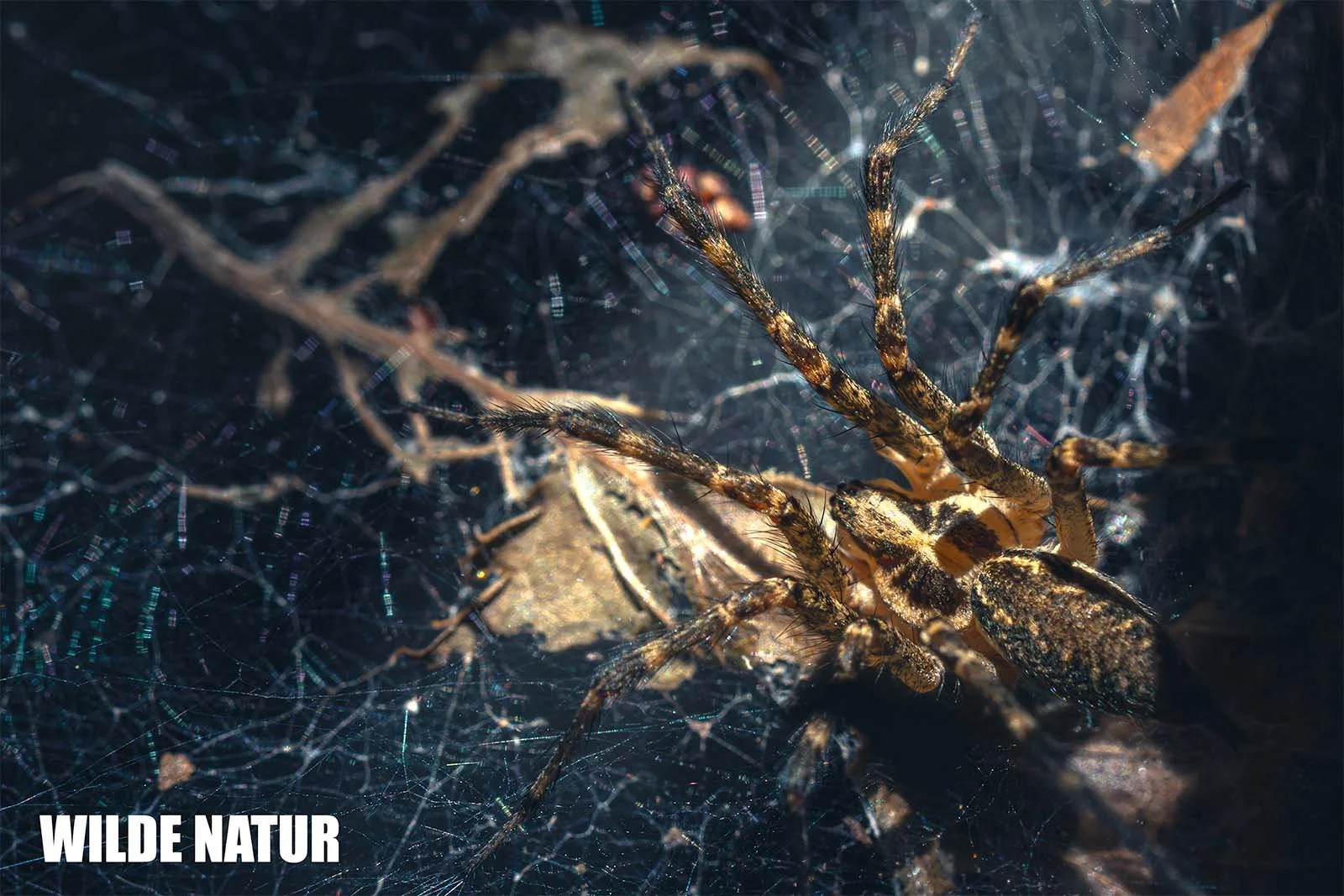
Funnel web spider (Allagelena opulenta)
Funnel web spider Allagelena opulenta: Fast, shy, and completely harmless
The East Asian funnel web spider Allagelena opulenta lives in gardens, meadows, and shrubs. Learn all about its appearance, behaviour, web structure, and yearly cycle – and why it is harmless to humans.
Key Facts
- Size: females 10–12 mm, males 8–10 mm
- Leg span: up to about 4 cm
- Features: elongated body, dark central stripe, banded legs
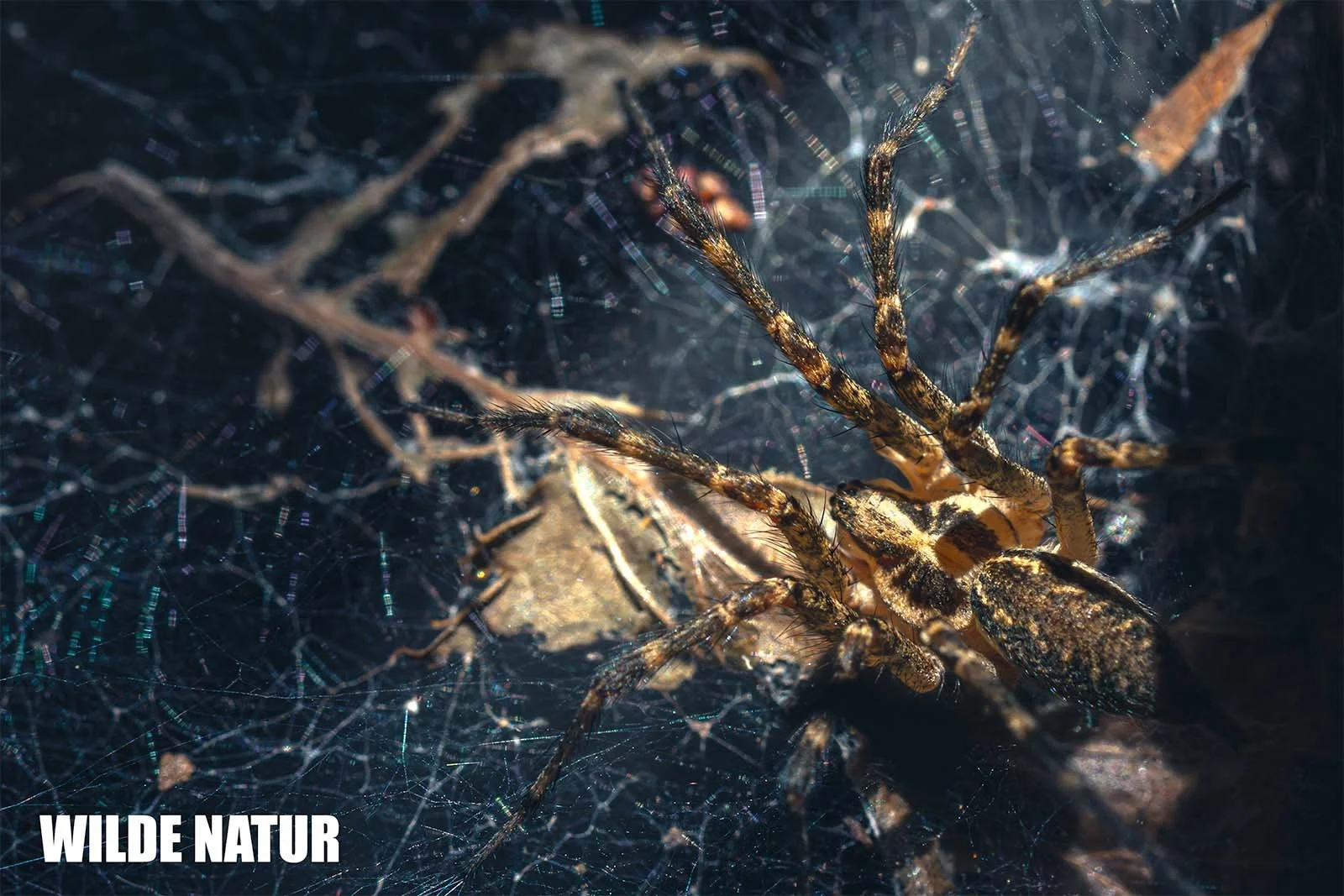
- Web: broad sheet web with a lateral funnel
- Diet: flies, mosquitoes, ants, small insects
- Active: spring to autumn
- Overwintering: juvenile stage
- Distribution: Japan, Korea, China
- Family: funnel web spiders (Agelenidae)
- Danger to humans: absolutely harmless
1. Introduction: Silent and lightning fast
Allagelena opulenta is one of those species you notice before you actually see it. It sits deep inside the funnel of its web and only reacts when an insect steps onto the sheet surface. Then it darts out in a split second, grabs its prey, and vanishes back into the funnel. Despite these rapid movements, it poses no danger to humans.
2. Appearance: How to recognise the funnel web spider
Body characteristics
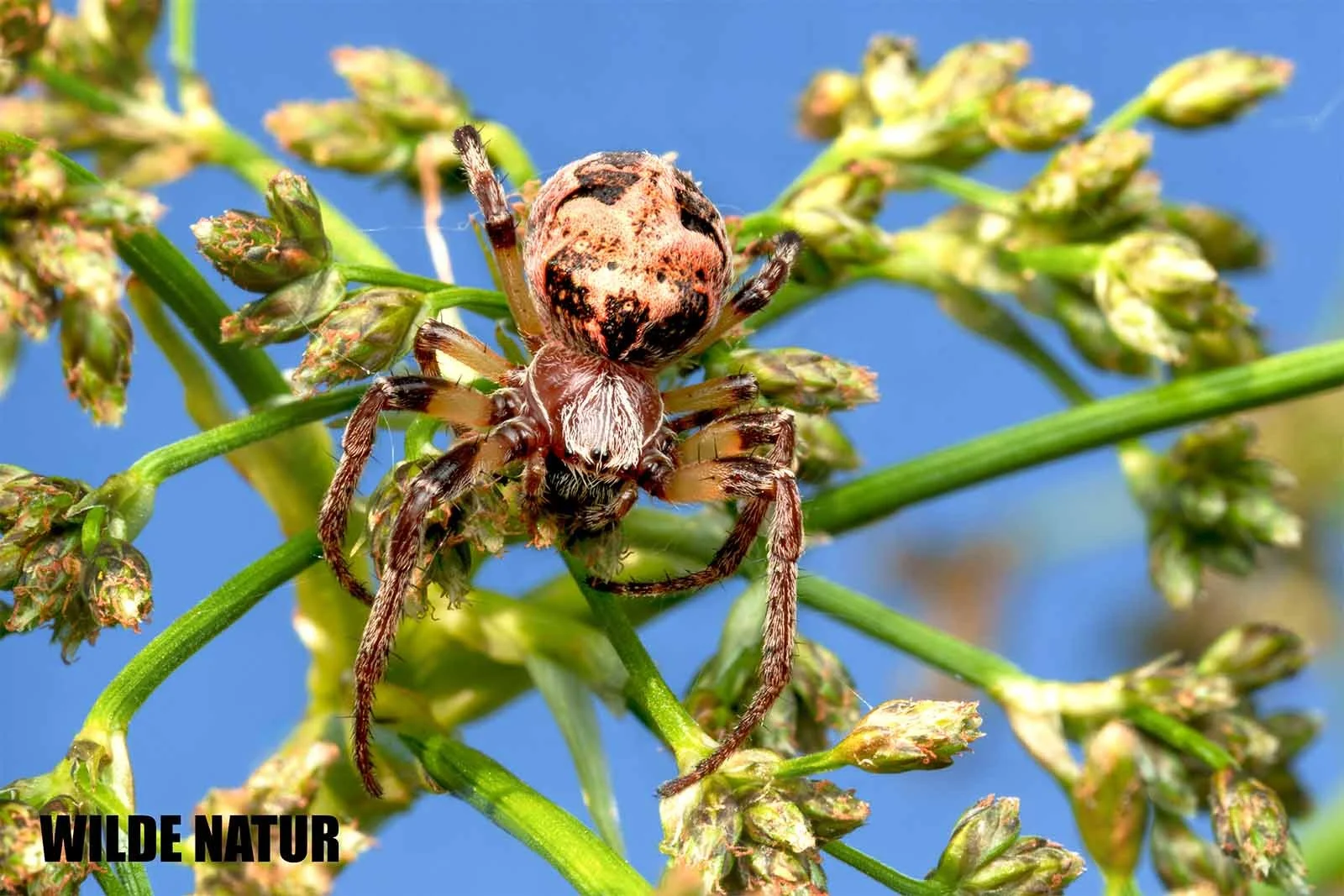
- Cephalothorax: yellowish to reddish-brown with a distinct dark central stripe
- Abdomen: grey-brown to yellowish with jagged longitudinal markings
- Legs: long, slender, light brown with darker rings
- Eyes: eight eyes arranged in two slightly curved rows
- Chelicerae: compact, darker at the front
Size
- Females: 10–12 mm
- Males: 8–10 mm
- Leg span: up to approx. 4 cm
Its camouflage makes it nearly invisible on leaves, soil, or wood.
3. Key features: What makes this species special
- extremely fast runner
- low, elongated body shape
- typical sheet web with a characteristic funnel
- very shy – flees instantly
- harmless to humans
- excellent camouflage in natural habitats
4. Hunting behaviour: Life in the funnel web
Web structure
- Capture web: horizontal, dense sheet
- Funnel: on one side or at the rear, used as a retreat
- Placement: in shrubs, on the ground, on slopes, or in tall grass
Hunting technique
- Vibrations are detected through the wide sheet surface
- The spider sprints out
- Prey receives a quick bite
- The spider retreats into the funnel with its catch
Typical prey includes flies, mosquitoes, small grasshoppers, and ants.
5. Reproduction: From late summer to spring
- Mating season: late summer
- Courtship: careful approach, subtle web signals
- Egg-laying: round egg sac in or near the web
- Hatching: spiderlings emerge after several weeks
- Overwintering: juvenile stage, hidden in leaf litter or vegetation
6. Yearly cycle: Active in summer, hidden in winter
Activity phases
- Spring: juveniles begin building webs
- Summer: growth, hunting, web expansion
- Late summer: mating
- Autumn: egg-laying, retreat
- Winter: juveniles remain still and protected
In midsummer, their webs are often visible due to dew or sunlight.
7. Distribution: Where the species occurs
Allagelena opulenta is native to East Asia.
Countries
- Japan
- Korea
- China
Habitats
- hedges
- shrubs
- forest edges
- gardens and parks
- slopes
- meadows with dense vegetation
It requires vegetation structures that support its web—bare areas are avoided.
8. Case studies: Where it can be found
Example 1: Garden hedge in Japan
A large sheet web stretches between twigs and herbs. The spider sits at the entrance of the funnel and reacts to even the slightest movement.
Example 2: Vegetation strip at a field edge
Several funnel webs are clustered along a natural slope—ideal conditions for many juveniles.
9. FAQ
Is it venomous?
Yes—but only to insects. Harmless to humans.
Can it bite?
Only in extreme situations, and the bite is mild.
How big does it get?
Up to 12 mm body length in females.
Does it occur in Europe?
No, it is strictly an East Asian species.
How long does it live?
Usually one year, overwintering as a juvenile.
10. Colour traits at a glance
- Cephalothorax: yellowish to reddish-brown, dark central stripe
- Abdomen: grey to yellowish with jagged longitudinal patterns
- Legs: elongated, banded
- Eyes: two curved rows
- Web: horizontal sheet web with a distinct funnel