Common Red Ant (Myrmica rubra)
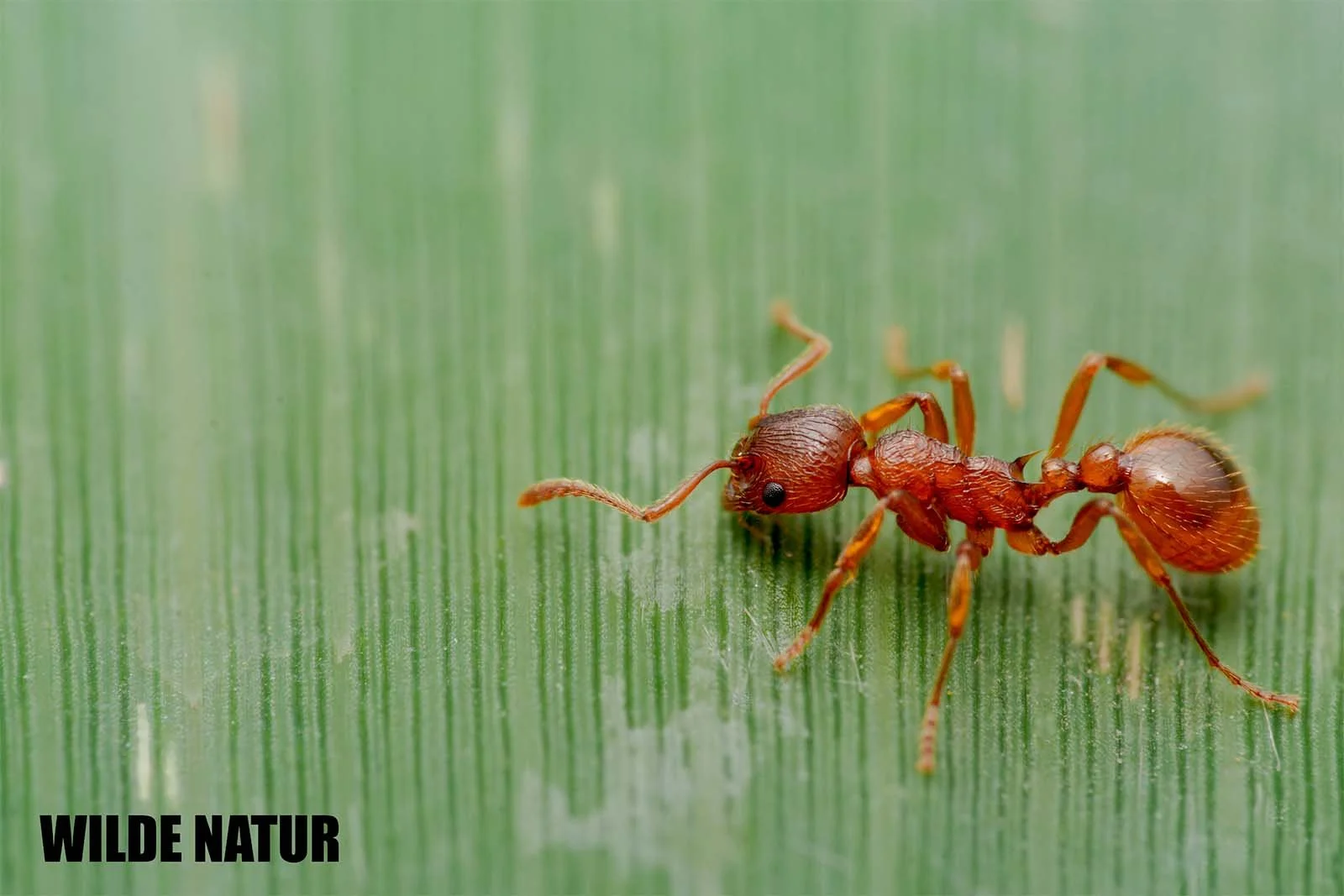
Common red ant (Myrmica rubra)
Common Red Ant – Behavior, Characteristics & Interaction
The common red ant (Myrmica rubra): traits, colony structure, diet, reproduction, and why it’s frequently found in gardens.
Key Facts
- Size: Workers 4–6 mm, queens up to 7.5 mm
- Color: Reddish-brown with a darker head
- Diet: Omnivorous – honeydew, nectar, insects, carrion
- Nest sites: Soil, under stones, wood, moss – prefers moist areas
- Colony structure: often multiple queens
- Distinctive feature: equipped with a venomous sting
- Scientific name: Myrmica rubra
- Common name (DE): Rote Gartenameise
- Family: Formicidae (ants)
- Subfamily: Myrmicinae (knot ants)
- Lifestyle: social, colony-forming
- Distribution: Europe to western Siberia; introduced outside Europe
Table of Contents
- Introduction
- Appearance
- Key Characteristics
- Diet
- Reproduction and Life Cycle
- Seasonal Behavior
- Habitat and Distribution
- Interaction with Humans
- Where Can You Spot Them?
- FAQ
- Summary
Introduction
Few ant species are as widespread in Central Europe as the common red ant. Whether in gardens, at forest edges, or on damp meadows – Myrmica rubra ranks among the most common ant species. It is also one of the few native ants capable of actively stinging, giving it a somewhat notorious reputation.
But behind this small reddish insect lies a highly organized social system with complex structures. The common red ant is not only an efficient forager but also plays a crucial role in many ecosystems. This article explores how it lives, why it is so adaptable, and how you might encounter it in daily life.
Appearance
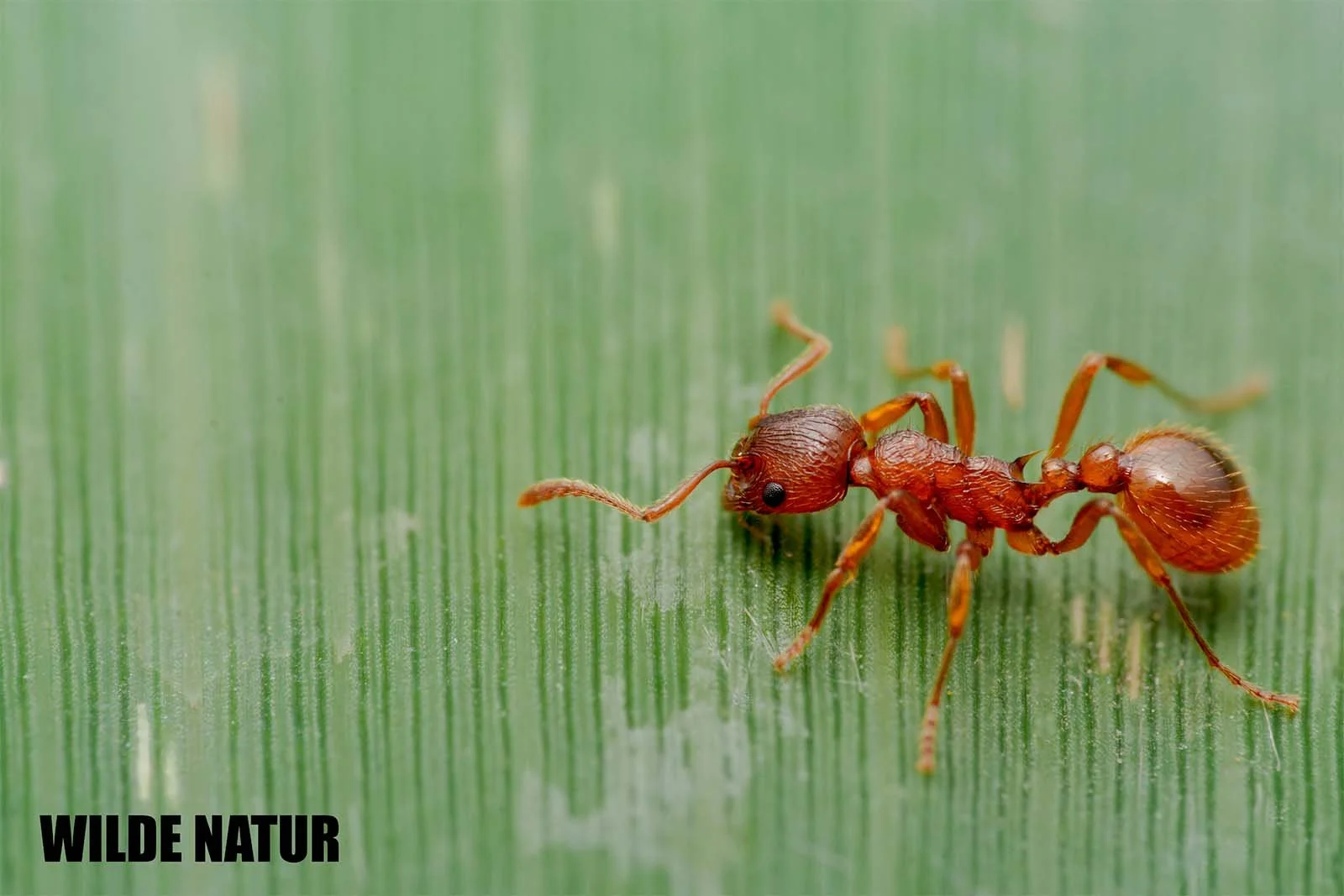
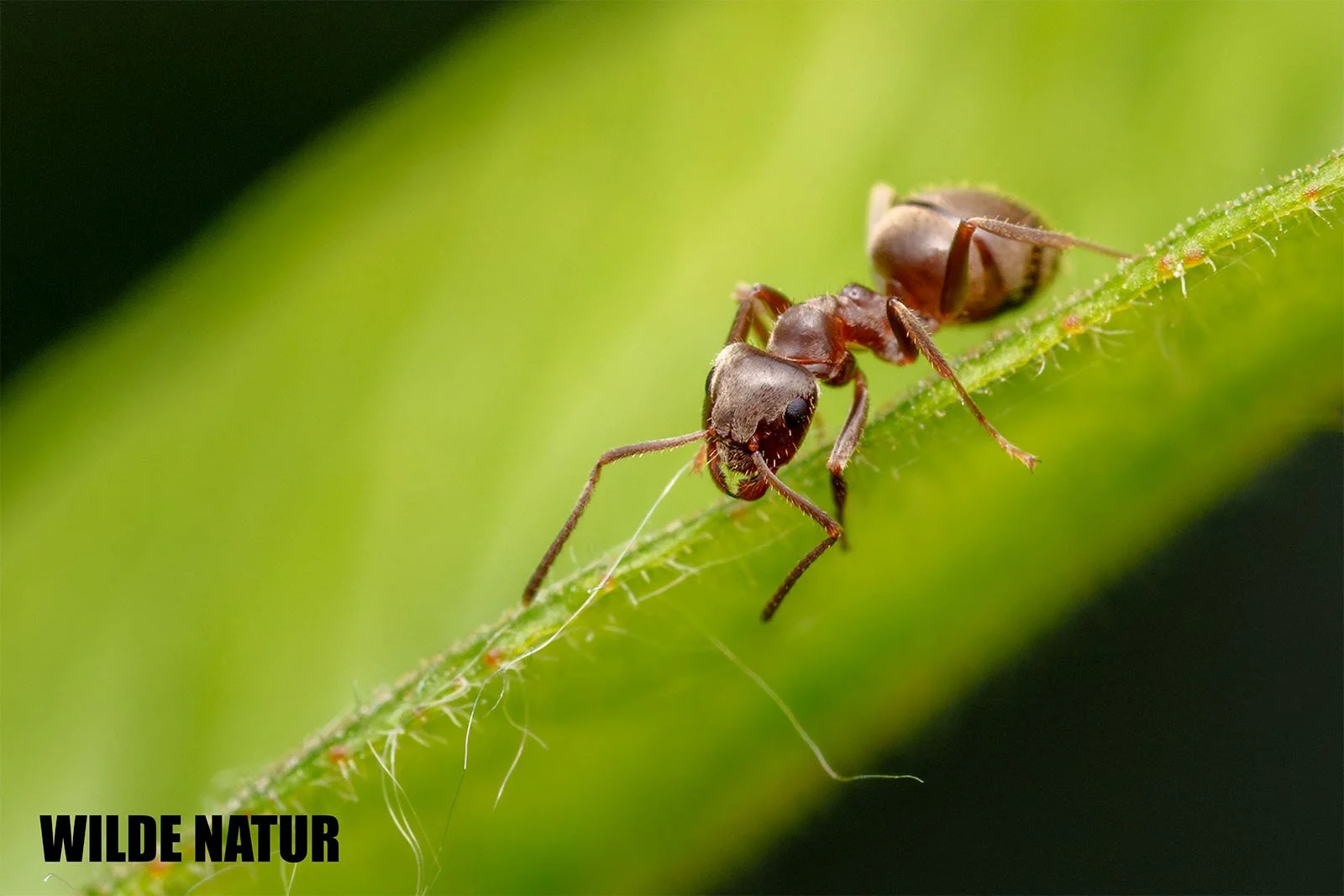
The common red ant has a slim, flexible body, typical of knot ants. A standout feature is the two-segmented petiole connecting the thorax and abdomen—a key trait of the Myrmica genus.
Workers are mostly reddish-brown, with the head often darker than the rest of the body and the abdomen slightly shiny. Legs and antennae are lighter in color and highly mobile.
The antennae have 12 segments, ending in a four-segmented club used for sensing and navigation.
Queens are more robust and slightly larger than workers. Males are usually darker, more slender, and winged during the mating season.
Key Characteristics
You can confidently identify the common red ant based on several features:
- Two-segmented petiole, typical of knot ants
- Reddish-brown body coloration
- Polygyny: colonies may include multiple queens
- Large colonies with hundreds to thousands of workers
- Nest sites in moist, semi-shaded areas
- Venomous sting present in workers and queens
In some cases, colonies can grow extremely large, with over 20,000 workers and several hundred queens.
Diet
The common red ant is omnivorous and highly adaptable in its diet—a key factor in its success.
Main Food Sources
- Honeydew from aphids and scale insects
- Nectar and plant juices
- Carrion and dead insects
- Actively hunted invertebrates, including small insects
A particularly important strategy is trophobiosis with aphids: ants "tend" the aphids, protect them from predators, and harvest their sugar-rich honeydew. This provides a stable energy supply.
This behavior often gives Myrmica rubra a competitive edge over other ant species.
Reproduction and Life Cycle
Reproduction follows a clear seasonal cycle.
Mating Flights
Reproductives – males and young queens – usually leave the nest for nuptial flights in late August to September. Mating occurs either in the air or on the ground.
After mating:
- Queens shed their wings,
- overwinter either inside or outside the nest,
- and start new colonies the following spring.
Polygyny as a Success Strategy
Often, multiple queens remain in the same nest. This secondary polygyny allows rapid colony growth and increases survival chances.
Seasonal Behavior
The red ant’s activity is highly dependent on temperature and moisture.
- Spring: activity increases, nest expansion
- Summer: intense foraging, brood care, colony growth
- Late summer: mating flights
- Autumn: declining activity
- Winter: resting phase inside the nest
Dry conditions can significantly slow colony development, which is why they prefer moist habitats.
Habitat and Distribution
Myrmica rubra is widespread across Europe, from Portugal to western Siberia. In Central Europe, it is among the most common ant species.
Preferred habitats include:
- Gardens and parks
- Moist meadows
- Forest edges
- Disturbed and urban areas
Outside Europe, the species has been introduced and is considered invasive in parts of North America, where it can outcompete native ants.
Interaction with Humans
The common red ant is generally harmless, but may become defensive if its nest is disturbed. Its sting:
- causes a burning sensation,
- is unpleasant,
- but is not medically dangerous.
In gardens, it is often found where aphids are present. Its territorial nature means it actively defends its foraging areas.
Where Can You Spot Them?
Ants in the Garden
In natural gardens with perennials, shrubs, and moist areas, Myrmica rubra is almost always present—often near aphid colonies.
Nests under stone slabs
Look under paving stones, rocks, or wood pieces—moist conditions attract nesting.
Observing mating flights
On warm late summer days, mating flights can be witnessed—an impressive natural spectacle.
FAQ
1. Are common red ants dangerous?
No. Their sting is painful but usually not a medical concern.
2. Why do some nests have so many queens?
This species is polygynous—multiple queens boost colony growth and stability.
3. How can I tell them apart from other red ants?
By their two-segmented petiole, reddish color, and ability to sting.
4. Should I tolerate them in my garden?
Yes. They are part of the natural ecosystem, but avoid disturbing their nests.
5. When are they most active?
During warm, moist summer months.
Summary
The common red ant is a prime example of adaptability and social organization. Its success lies in a flexible diet, polygynous colonies, and the ability to thrive in diverse habitats. While its sting may be unpleasant, its ecological value far outweighs the discomfort. Observing it in the garden reveals a complex insect society—right on your doorstep.