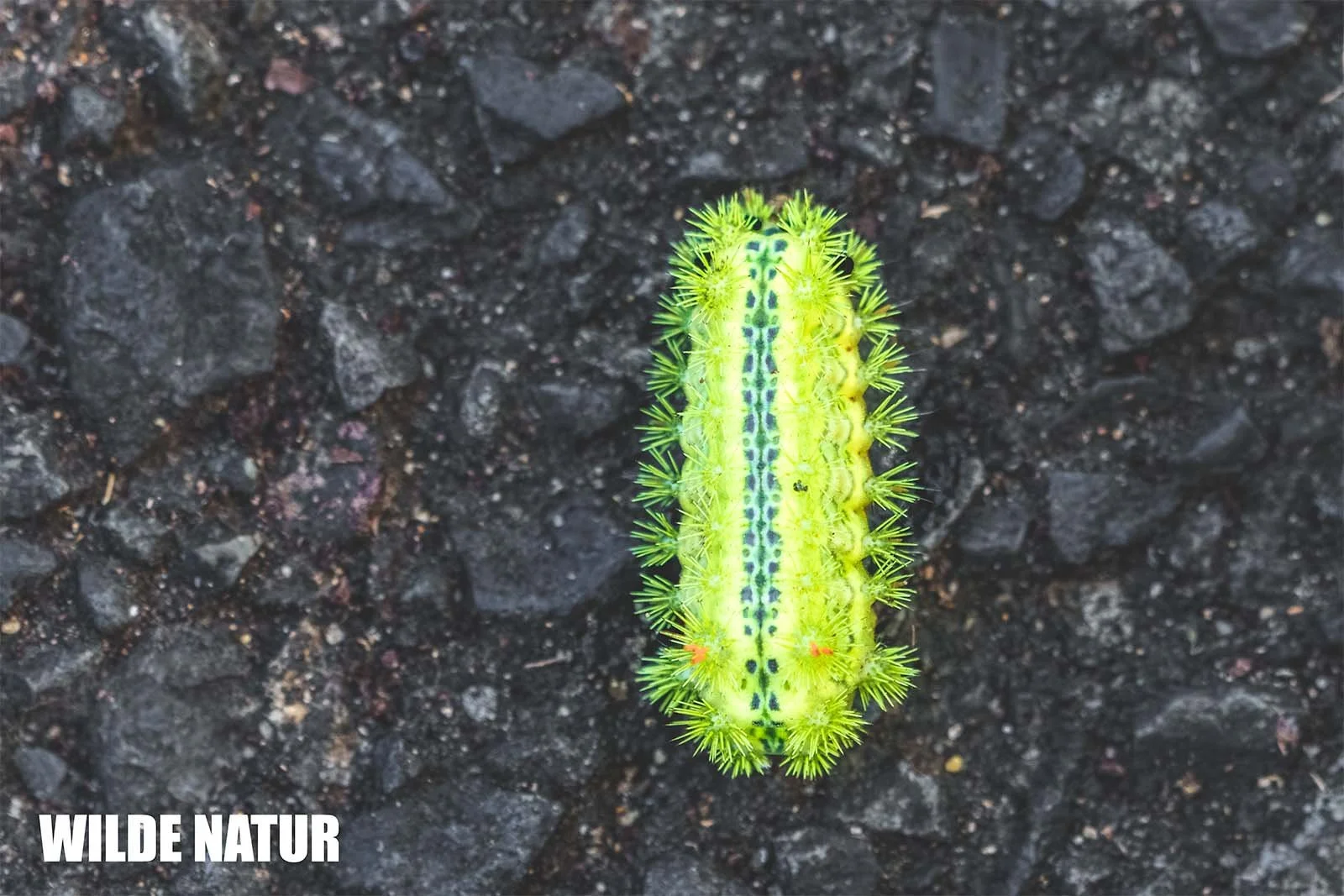
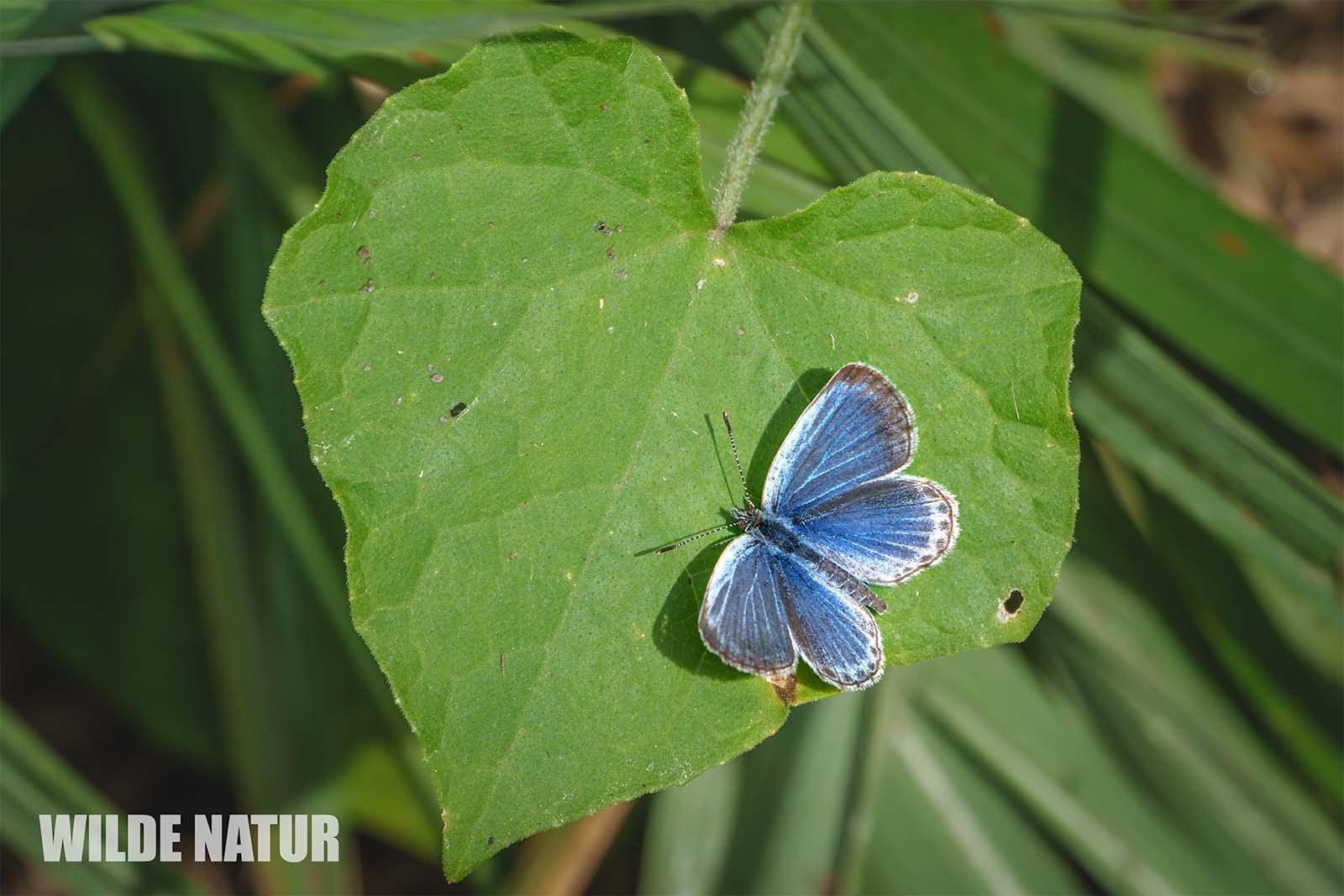
Blue-striped nettle grub (Parasa lepida)
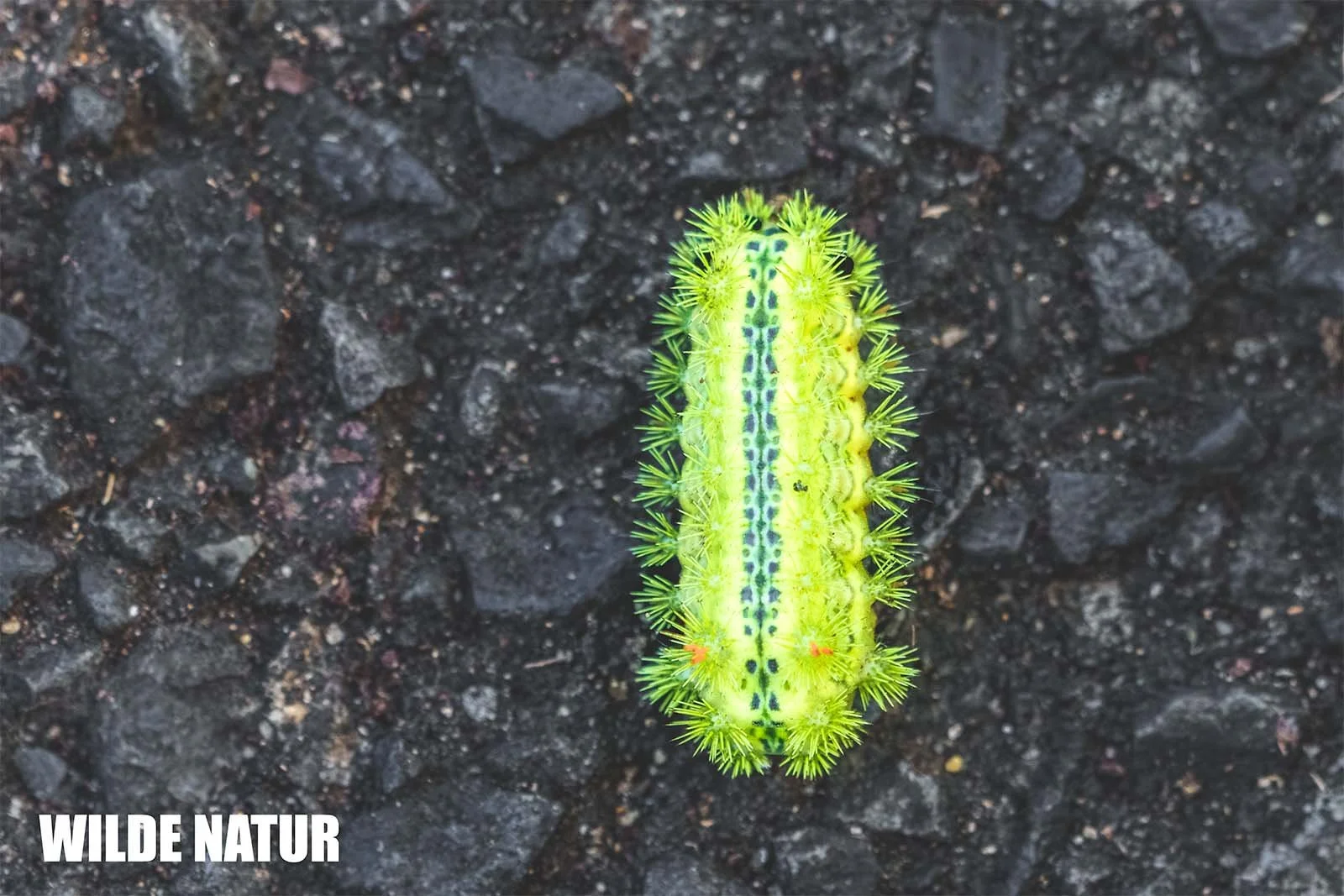
Blue-striped nettle grub (Parasa lepida)
Blue-striped nettle grub: Tropical stinging danger
How to identify and understand Parasa lepida: the green-yellow nettle grub from Asia with irritating spines, a wide host-plant range, and high damage potential.
—
Key Facts
- Size: up to 40 mm in length
- Colour: light green to yellow-green, often with reddish spine tips
- Movement: gliding, no visible legs
- Special feature: urticating hairs → skin irritation on contact
- Food plants: polyphagous – coconut, mango, palms, bananas, ornamentals
- Life cycle: egg → grub (caterpillar) → cocoon → nocturnal moth
- Occurrence: tropical Asia, especially active in the wet season
- Species: Parasa lepida
- Order: Lepidoptera (butterflies and moths)
- Family: Limacodidae (slug caterpillars)
- Body shape: slug-like, flat-oval
—
Table of Contents
- Introduction: A grub that burns
- Appearance: Slug-like body with spines
- Key features: What makes Parasa lepida dangerous
- Diet: What this grub feeds on
- Reproduction and development: From egg to moth
- Seasonal activity: When it is active
- Distribution: Where you’d better not go barefoot
- Case studies: Stinging contact and plantation damage
- FAQ: Questions about the blue-striped nettle grub
- Colour traits at a glance
—
1. Introduction: A grub that burns
It is flat, soft, bright green—and it burns. The grub (caterpillar) of Parasa lepida looks harmless, almost cute. But anyone who touches it quickly realises how painful such a small body can be. Its spines release irritating substances—a brief touch is enough to cause red streaks, swelling, and itching.
This species lives in the tropics and loves plants with soft leaves. Palms, bananas, mango—anything green and juicy. And it doesn’t just nibble quietly: in plantations, mass outbreaks cause severe damage. No surprise that it is feared in many regions.
2. Appearance: Slug-like body with spines
This grub belongs to the so-called slug caterpillars (Limacodidae). The name says it all: the body is flat, broad-oval, and gliding—like a tiny fringed slug.
Shape and colour
- Length: up to 35–40 mm
- Width: around 10–12 mm
- Body: smooth, compact, no visible pairs of legs
- Colour: light green to yellow-green
- Pattern: often a slightly darker stripe along the back
- Body edges: lined with clusters of spines, whose tips often show a reddish sheen
Legs?
The legs are not visible. The true legs are reduced and hidden. Movement is gliding—like a snail. It looks as though the grub is floating across the leaf.
Pupa and moth
The grub pupates in an oval, papery cocoon, usually attached to leaves, bark, or in the soil. The moth that emerges later is small, brownish, inconspicuous—and strictly nocturnal.
3. Key features: What makes Parasa lepida dangerous
This grub does not carry venom in the classic sense. But it has spines—and in them urticating hairs that release substances on contact, causing burning, itching, and red marks on the skin.
What happens on contact
- Skin irritation
- Swelling
- Redness
- Itching
- In some cases: allergic reactions
The stinging hairs sit in small tufts along the sides. Even brief contact can be enough to trigger a reaction. In plantation regions of Asia, almost everyone knows these animals—and avoids them.
Why “blue-striped”?
The German name is misleading. A truly blue-striped form does not reliably exist. What sometimes looks like a blue stripe is an optical effect—depending on light, age, or region. The typical colour is green with lighter or darker areas along the back—not genuinely blue.
4. Diet: What this grub feeds on
Parasa lepida is polyphagous—it feeds on many different plants, especially tropical species with soft leaves. Some examples:
- Oil palm (Elaeis guineensis)
- Coconut palm
- Banana plants
- Mango
- Rubber/fig species (Ficus spp.)
- Alfalfa and other legumes
- Ornamental shrubs and hedges
- Garden plants in warm regions
Feeding behaviour
The grubs mostly eat leaves and flower heads. During mass outbreaks they can defoliate entire shrubs or young trees. In plantations this can be economically serious.
5. Reproduction and development: From egg to moth
The life cycle is fast and efficient—and repeats several times a year.
1. Egg
- Size: small, rounded
- Location: underside of leaves
- Laid: singly or in groups
- Hatching time: a few days
2. Grub (caterpillar)
- Duration: 3–4 weeks
- Food: young, soft leaves
- Moults: several, depending on temperature
- Behaviour: mostly solitary, quiet, unobtrusive
3. Pupa
- Location: in a flat papery cocoon
- Position: on plant parts or in the soil
- Colour: brownish
- Duration: variable, depending on climate
4. Adult moth
- Activity: at night
- Appearance: small, brown, inconspicuous
- Lifespan: short—focused on reproduction
6. Seasonal activity: When it is active
In tropical climates there is no real winter break. The grubs are active all year round, especially in wet weather.
Activity pattern
- Tropics: year-round
- Rainy season: most sightings, frequent mass outbreaks
- Dry zones: fewer grubs, pupae remain dormant
- Subtropics: overwintering as pupa during cooler periods
The species has several generations per year—one key reason it can quickly become a serious pest under favourable conditions.
7. Distribution: Where you’d better not go barefoot
Parasa lepida is native to large parts of Asia. It lives where it is warm, humid, and green.
Regions
- Southeast Asia: Thailand, Malaysia, Indonesia, Philippines
- South Asia: India, Sri Lanka, Bangladesh
- East Asia: southern China, Taiwan
- Elsewhere: occasionally introduced through the plant trade
Habitats
- Gardens
- Plantations (oil palm, mango, coconut)
- Parks and urban green spaces
- Forest edges and clearings
- Agricultural land
In its home regions the grub is well known—and feared. For tourists it is often a painful surprise.
8. Case studies: Stinging contact and plantation damage
Example 1: Skin contact in Thailand
A tourist leans against a bush and soon feels a burning sensation on the arm. Small red welts appear—the diagnosis: contact with a nettle grub. No doctor needed, but definitely unpleasant.
Example 2: Coconut plantation in South India
After an especially wet rainy season, farmers report yield losses. Whole rows of palms show feeding damage. A closer look reveals hundreds of Parasa lepida grubs—a mass outbreak.
What to do
- Do not touch—not even dead grubs
- Wear gloves and long sleeves when gardening
- Keep children away where grubs are visible
- In agriculture: early monitoring and reporting
9. FAQ: Questions about the blue-striped nettle grub
1. Is the grub dangerous?
Yes—not life-threatening, but painful. Skin contact can cause strong irritation.
2. Why is it called “blue-striped”?
The name is not entirely accurate. The typical colour is green—reliable blue striping is rare to non-existent.
3. What should I do after skin contact?
Cool the area, avoid scratching, and use antihistamines or soothing creams if needed. In severe cases: consult a doctor.
4. Where does it occur?
In tropical and subtropical Asia, especially in rainy, warm conditions.
5. What does it eat?
Many plants: mango, bananas, palms, ornamental shrubs—especially young leaves.
10. Colour traits at a glance
- Base colour: light green to yellow-green
- Back: with darker or lighter zones
- Spine tips: often reddish
- Underside: smooth, inconspicuous
- Cocoon: papery, brown
- Moth: small, brown, inconspicuous