Bloodsucker (Cantharis cryptica)
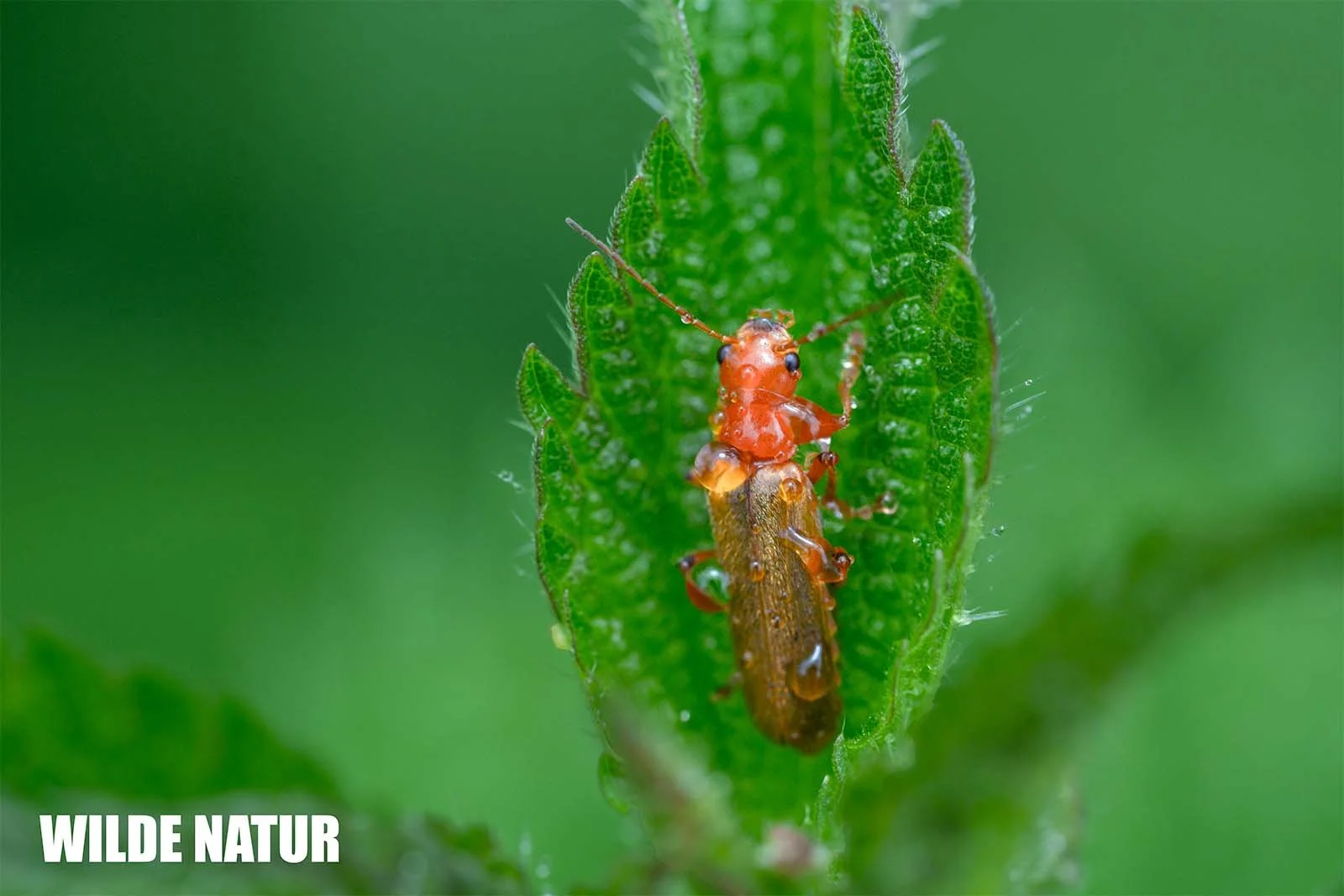
Cantharis cryptica – The hidden yellow soldier beetle
Cantharis cryptica is a rarely noticed yellow-orange soldier beetle with distinctive features. Learn how to distinguish it safely from C. pallida and C. rufa.
Key facts
- Size: 7–8.5 mm
- Colouration: Yellow-orange to reddish; no black on head or elytra
- Features: Double set of hairs, yellow palps, dark “knees”
- Distribution: Northern & Central Europe
- Similar species: Cantharis pallida, Cantharis rufa
- Flight period: May to July
- Species name: Cantharis cryptica
- Family: Soldier beetles (Cantharidae)
- Described by: Ashe, 1947
- Status: Often overlooked, little known
- Identification: Only reliably separable for a few years
Contents
- Introduction: A hidden species
- Appearance: A soldier beetle without black
- Key characters: How to recognise C. cryptica
- Similar species: pallida or cryptica?
- Diet and behaviour
- Reproduction and life cycle
- Seasonal activity
- Distribution and habitat
- FAQ
1. Introduction: A hidden species
Cantharis cryptica, sometimes referred to in English as the hidden “bloodsucker” (a colloquial name used for yellow Cantharis species), belongs to the yellow-orange soldier beetles that look remarkably similar at first glance.
For decades it was confused with Cantharis pallida until G.H. Ashe formally described it as a distinct species in 1947.
Despite its bright colour, it remains poorly known and often overlooked—a fitting match for the name cryptica (“hidden”).
2. Appearance: A soldier beetle without black
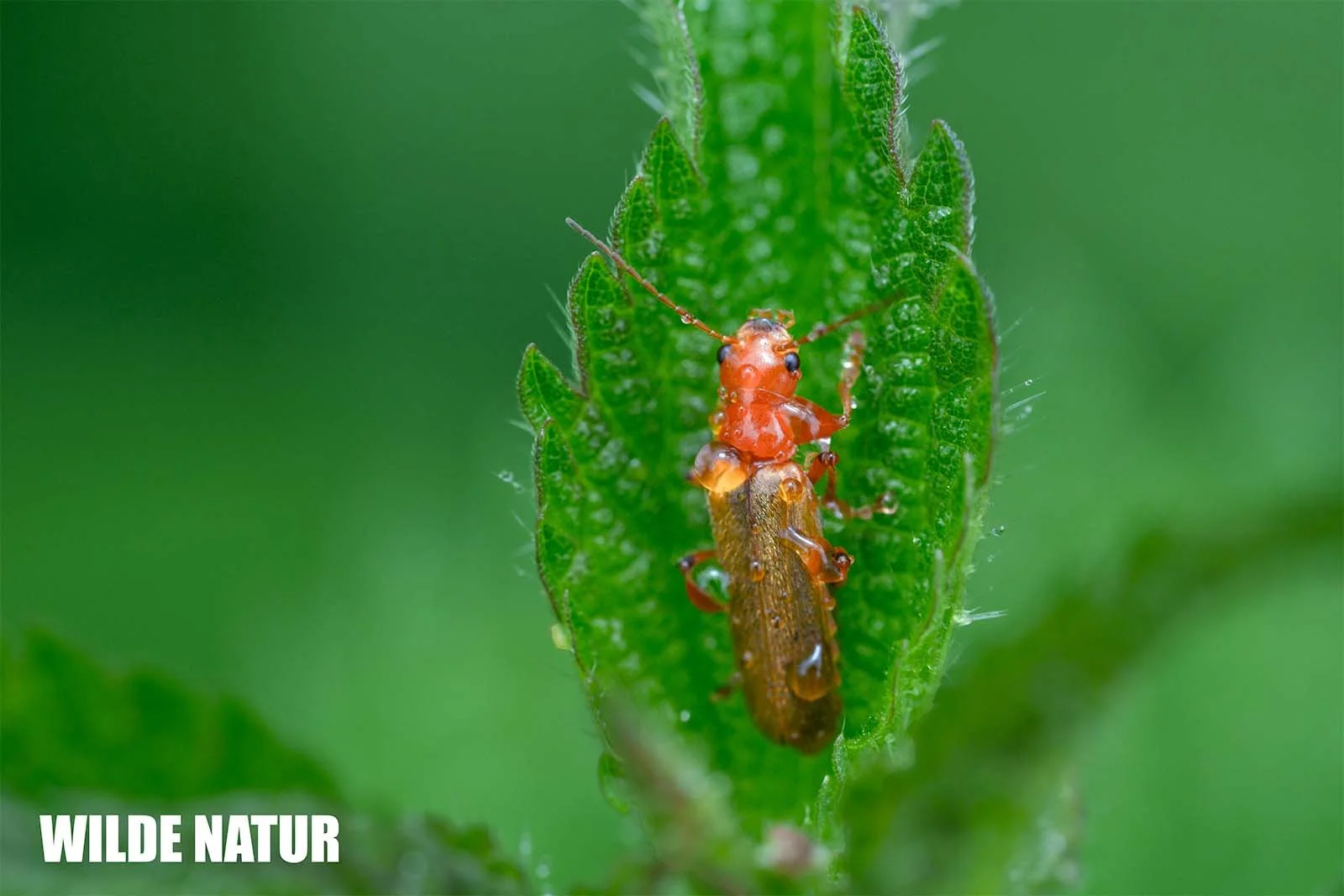
Unlike older descriptions suggested, C. cryptica shows no black on the elytra or head. It is uniformly yellow-orange to reddish.
Diagnostic appearance
- Head: pale reddish to testaceous, never black
- Pronotum: orange to reddish, unpatterned
- Elytra: orange-red to pale brown, without dark zones
- Legs: yellow; the darkened “knees” (femur tips) are characteristic
- Palps: entirely yellow (in pallida often dark-tipped)
- Hair: double structure – fine, appressed hairs + longer erect bristles
3. Key characters: How to recognise C. cryptica
Identification features
- Double hair layer:
- fine, silky, appressed hairs
- plus scattered longer, upright bristles
→ C. pallida only has the long bristles
- Yellow palps:
- uniformly pale in cryptica
- darkened tips common in pallida
- Leg pattern:
- yellow legs with dark femur tips
- Body length:
- 7–8.5 mm
Without magnification, identification is difficult. Under a microscope the double hair layer is clear.
4. Similar species: pallida or cryptica?
a) Cantharis pallida
- similar size and colour
- only upright bristles, no fine hair
- palps often dark-tipped
- knees usually fully yellow
b) Cantharis rufa
- more robust
- darker head
- longer elytra
- frequents slightly moister habitats
Tip: Knee colour + palps + hair type = reliable identification.
5. Diet and behaviour
Adults
Predatory:
- small insects
- aphids
- tiny caterpillars
- other soft-bodied arthropods
Larvae
- live in soil or leaf litter
- hunt:
- insect larvae
- worms
- small soil arthropods
The species is diurnal, active and fast-moving on flowers, grasses and foliage.
6. Reproduction and life cycle
- Mating: May–June
- Egg-laying: in soil, leaf litter or grass clumps
- Larval stage: several months, predatory
- Pupation: in summer near the soil surface
- Adult emergence: the following spring
Adults survive only a few weeks.
7. Seasonal activity
- Adults: May–July (rarely into August)
- Larvae: active year-round, overwinter in soil
Sightings are most common in warm, sunny weather at meadow edges or bushy paths.
8. Distribution and habitat
Cantharis cryptica occurs in Northern and Central Europe, but its exact range is still under-recorded due to frequent misidentification.
Confirmed regions
- Great Britain
- Scandinavia
- Netherlands
- Germany
- Czech Republic
- Alpine foothills, central European uplands
Preferred habitats
- flower-rich meadows
- sunny forest edges
- hedgerows and field margins
- verges, banks, fallow land
- moderately dry to lightly moist habitats
9. FAQ
Is Cantharis cryptica common?
Probably more common than assumed, but overlooked.
Is it harmful?
No—harmless, no bite, no defensive chemicals.
Can I find it in my garden?
Yes, especially on wildflowers and grasses.
Why is it so hard to identify?
Because yellow Cantharis species look nearly identical. Only fine structural details give certainty.