Red-Tailed Bumblebee (Bombus lapidarius)
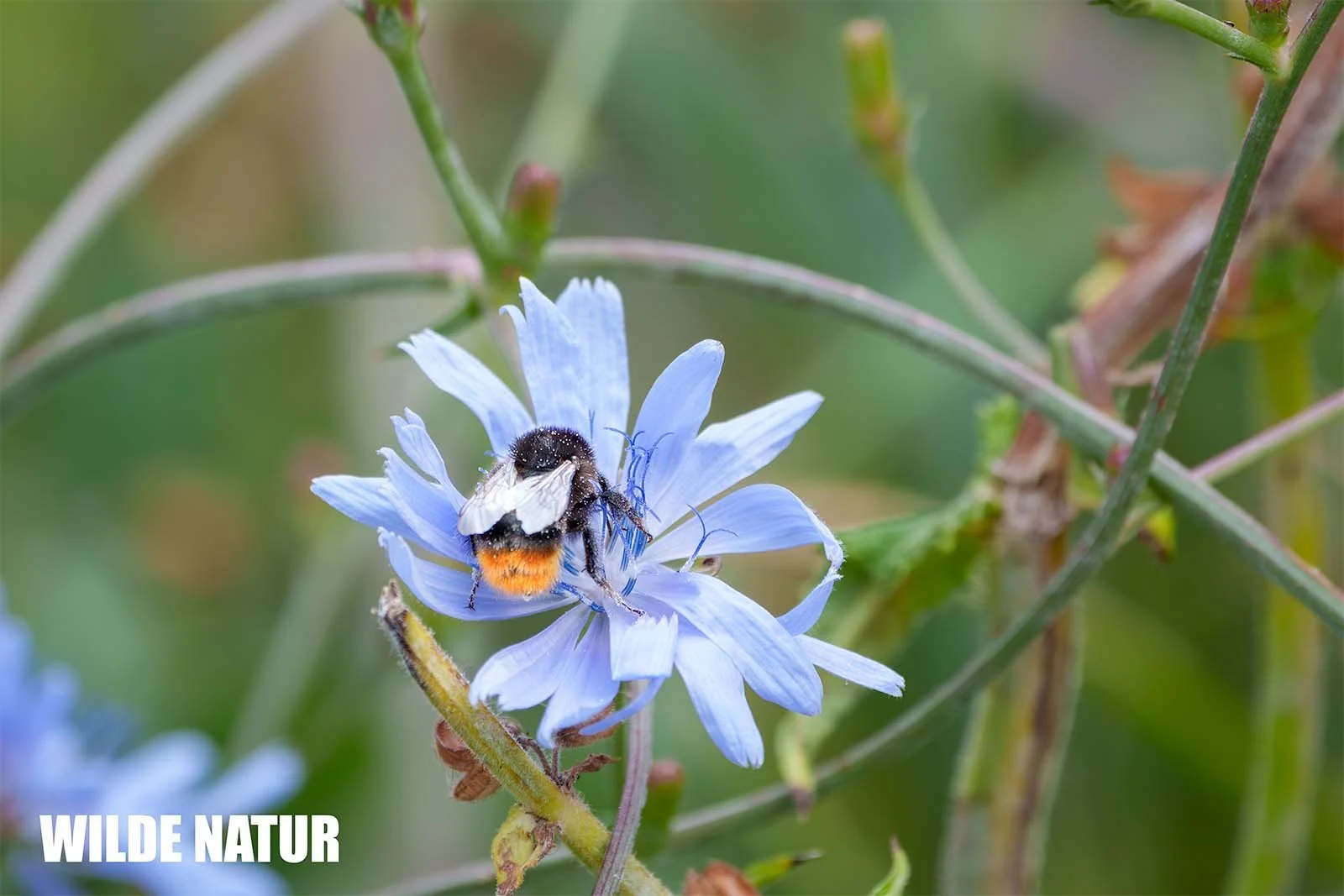
Red-Tailed Bumblebee (Bombus lapidarius)
Red-Tailed Bumblebee – Identification, Behavior & Role in the Garden
The red-tailed bumblebee (Bombus lapidarius) is a common bumblebee species with a striking red abdomen. Learn all about its appearance, life cycle, and ecological importance.
Key Facts
- Size: Queen 20–22 mm, males & workers 12–16 mm
- Coloration: Black with a red-orange abdominal tip
- Diet: Nectar & pollen; important pollinator
- Nest sites: Underground or in stone crevices
- Flight period: Spring to autumn
- Distribution: Throughout Central Europe; common in gardens
- Scientific name: Bombus lapidarius
- Common name (DE): Steinhummel
- Family: Apidae (true bees)
- Distinctive feature: Colony founded by a solitary queen
Table of Contents
- Introduction
- Appearance
- Distinctive Characteristics
- Diet
- Reproduction and Life Cycle
- Seasonal Behavior
- Habitat and Distribution
- Interaction with Humans
- How Can You Support Them?
- FAQ
- Final Thoughts
Introduction
If you see a black, furry bumblebee with a bright red tail in summer, chances are you've spotted a red-tailed bumblebee. This striking species is one of the most common and recognizable bumblebees in Central Europe—and a welcome visitor to gardens.
The red-tailed bumblebee lives in colonies founded by a single queen, supported by workers and drones. Its ability to fly even in cooler temperatures makes it a vital pollinator of both wild and cultivated plants. This article covers everything you need to know: identification, nesting habits, life cycle, and how to help this bee thrive in your garden.
Appearance
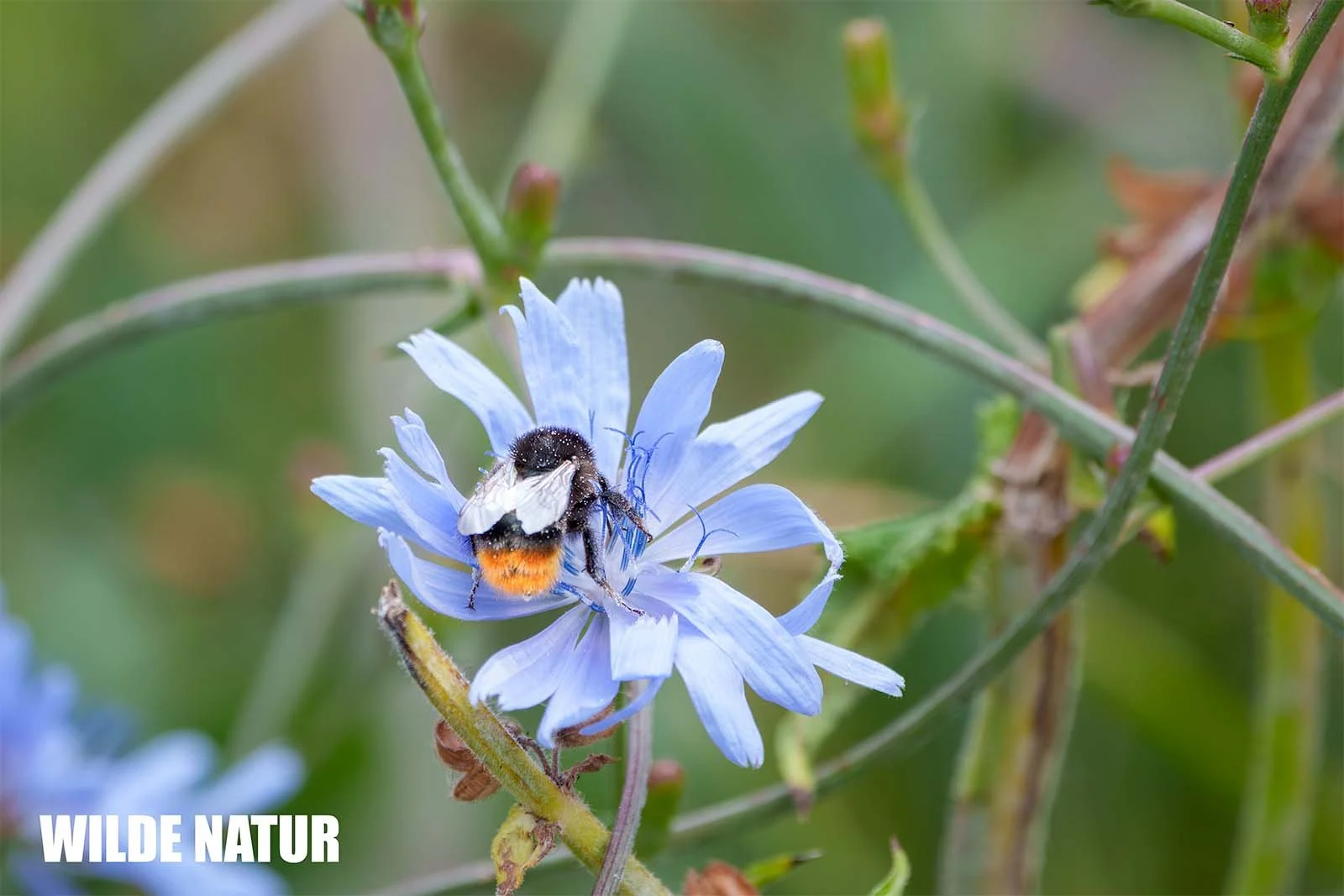
The red-tailed bumblebee is compact, robust, and distinctly hairy. Its signature color pattern features black and red:
- Thorax and front part of the abdomen are deep black
- The tip of the abdomen is bright orange to red
- Wings are dark but translucent
- Head has short antennae and large compound eyes
This color pattern is consistent among females (queens and workers), while males additionally have yellow hairs on the head and a yellow band across the thorax.
Distinctive Characteristics
The red-tailed bumblebee is easy to distinguish from other species:
- Fluffy black body
- Red-orange tip of the abdomen (in females)
- Yellow head hairs and thorax band (in males only)
- Flight season from spring to autumn
- Nests in stone piles or underground cavities
It belongs to the group of eusocial bumblebees, meaning it lives in summer colonies with division of labor and well-defined roles.
Diet
Red-tailed bumblebees feed exclusively on nectar and pollen:
- Nectar provides energy
- Pollen is collected as a protein source for larvae
They visit a wide range of flowering plants and are especially active on:
- Thistles, clover, viper’s bugloss, dead nettles
- Berry shrubs, wild roses, and herbs
- Garden plants like lavender, thyme, and sage
Because they stay active even in cool weather, red-tailed bumblebees provide essential pollination services when other insects are inactive.
Reproduction and Life Cycle
A solitary queen overwinters in a sheltered spot and emerges in early spring.
- Nest founding: She searches for a suitable site—such as an abandoned mouse hole or cavity under stones
- First brood: The queen collects pollen and nectar, lays eggs, and warms them by vibrating her flight muscles
- Worker phase: After a few weeks, the first workers hatch and take over foraging and nest duties
- Colony growth: The colony grows to 100–300 individuals
- Next generation: In late summer, drones and new queens emerge
- Colony decline: The old queen and workers die; only fertilized young queens survive the winter
This annual cycle is typical of many one-season bumblebee colonies in Central Europe.
Seasonal Behavior
Red-tailed bumblebees are active from April to October:
- Spring (April/May): Queens emerge and start nests
- Summer: Colony reaches peak size; intense foraging
- Late summer: Mating and emergence of new queens
- Autumn: Colony dies off
- Winter: New queens hibernate in soil
Remarkably, they can fly even at temperatures below 10°C. They generate body heat through muscle vibrations, giving them an evolutionary edge over other pollinators.
Habitat and Distribution
The red-tailed bumblebee is widespread across Central Europe. It is highly adaptable (euryecious) and inhabits a wide range of environments:
- Gardens and parks
- Meadows, field margins, hedgerows, embankments
- Clearings and forest edges
- Urban and disturbed areas
They especially favor warm, dry locations with a rich diversity of flowers.
Interaction with Humans
Red-tailed bumblebees are peaceful and shy. They will only sting when seriously threatened, such as when their nest is disturbed. Their behavior is non-aggressive, and they can be easily observed while foraging.
As important pollinators, they are considered beneficial insects and should be welcomed in any garden.
How Can You Support Them?
Provide nesting sites
If you want to support bumblebees in your garden, leave stone piles or bare ground undisturbed. Abandoned mouse holes are also popular nesting sites.
Plants for red-tailed bumblebees
Flowering plants such as lavender, sage, dead nettle, viper’s bugloss, and brambles provide ample nectar and pollen—from spring through fall.
Observing them in daily life
You can often recognize them by their deep, soft buzz and red abdominal tip, especially as they visit flowers or hover low among the plants.
FAQ
1. How can I tell red-tailed bumblebees apart from other species?
The best indicator is their black fur with a bright red tail—a clear identifying feature.
2. Can I build a nesting aid for red-tailed bumblebees?
Yes. Try an upside-down flowerpot with a small entrance hole, or a loose pile of stones to mimic natural nest sites.
3. Are red-tailed bumblebees dangerous?
No. They are not aggressive and will only sting in self-defense.
4. What should I do if there’s a bumblebee nest in my garden?
Leave it undisturbed. The colony will naturally die off in the fall, and the nest won't be reused.
5. Which plants are especially attractive to red-tailed bumblebees?
Sage, dead nettle, bramble, lavender, clover, thistle—open flowers are ideal.
Final Thoughts
The red-tailed bumblebee is not only a beautiful insect but also ecologically essential. Its early emergence makes it one of the first pollinators for many spring flowers. If you create a natural, bee-friendly garden, you’ll be supporting this species—and enjoy the benefit of its hard-working presence.
With a little attention, you'll soon spot it in your garden: a quiet, fuzzy visitor with a fiery red tail.