Sony a7 V – Hands on Test at Sony Tokyo
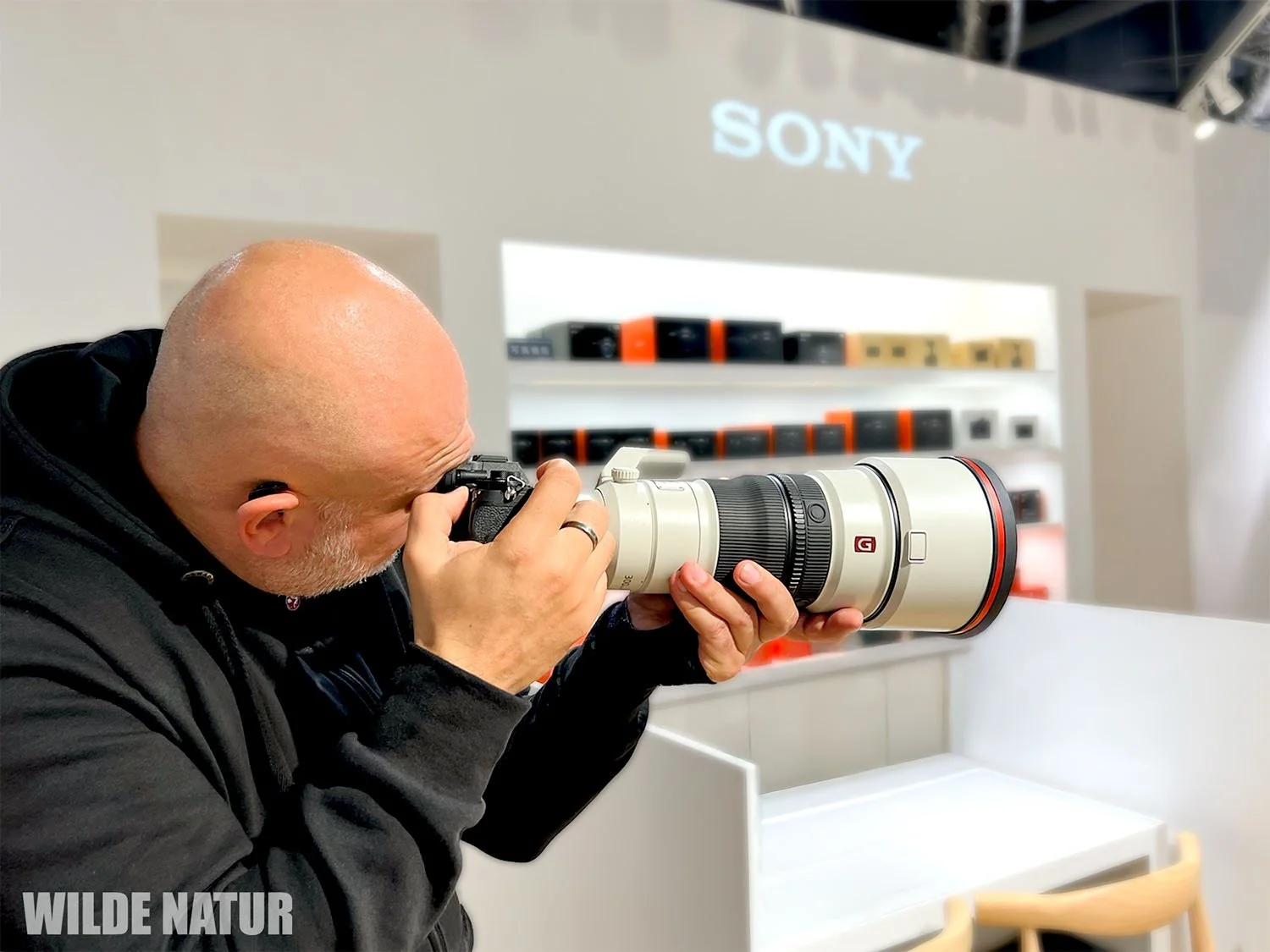
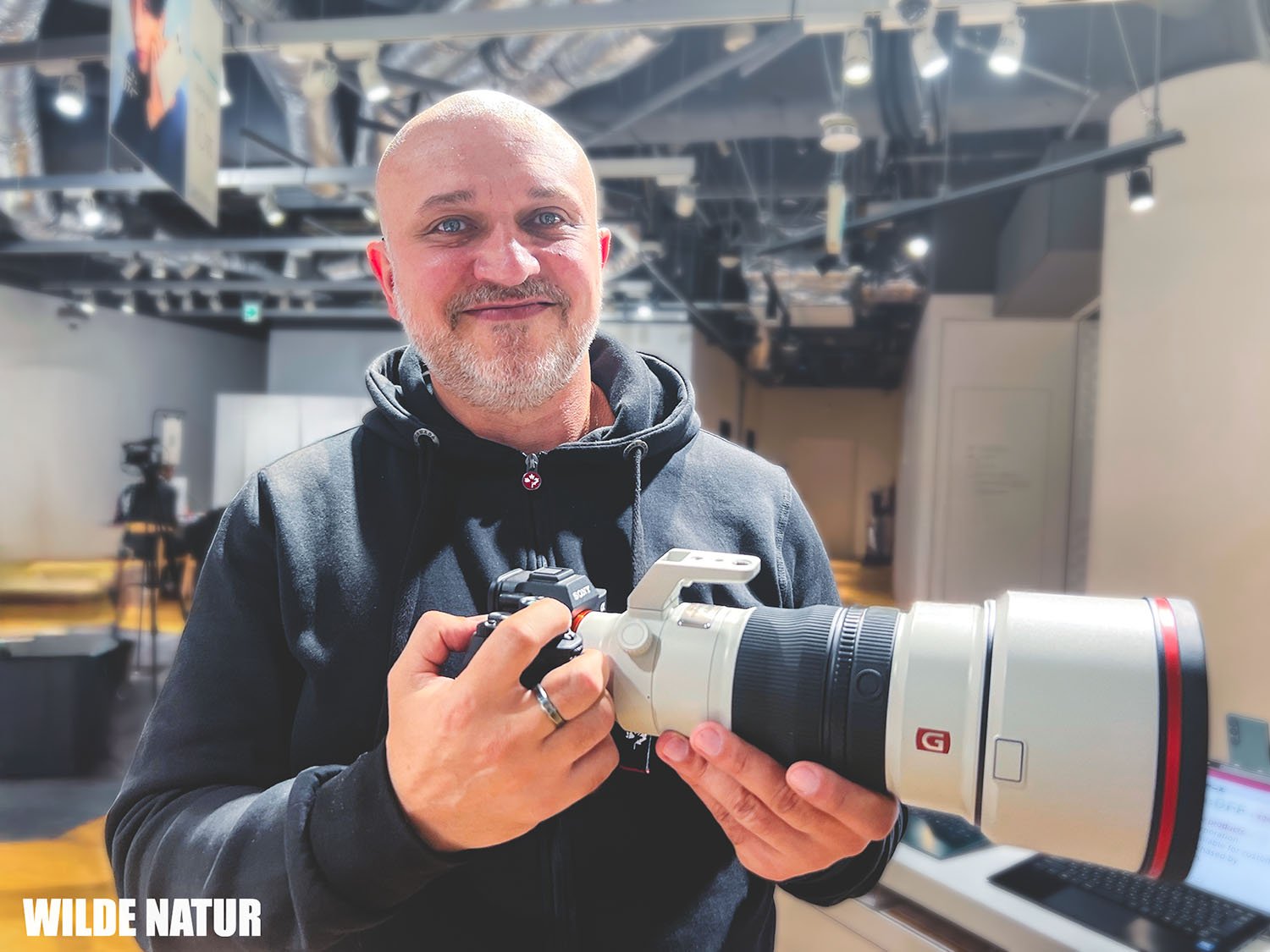
Sony a7 V + 300 mm f/2.8 GM OSS at Sony Tokyo
First Impressions of the Sony a7 V
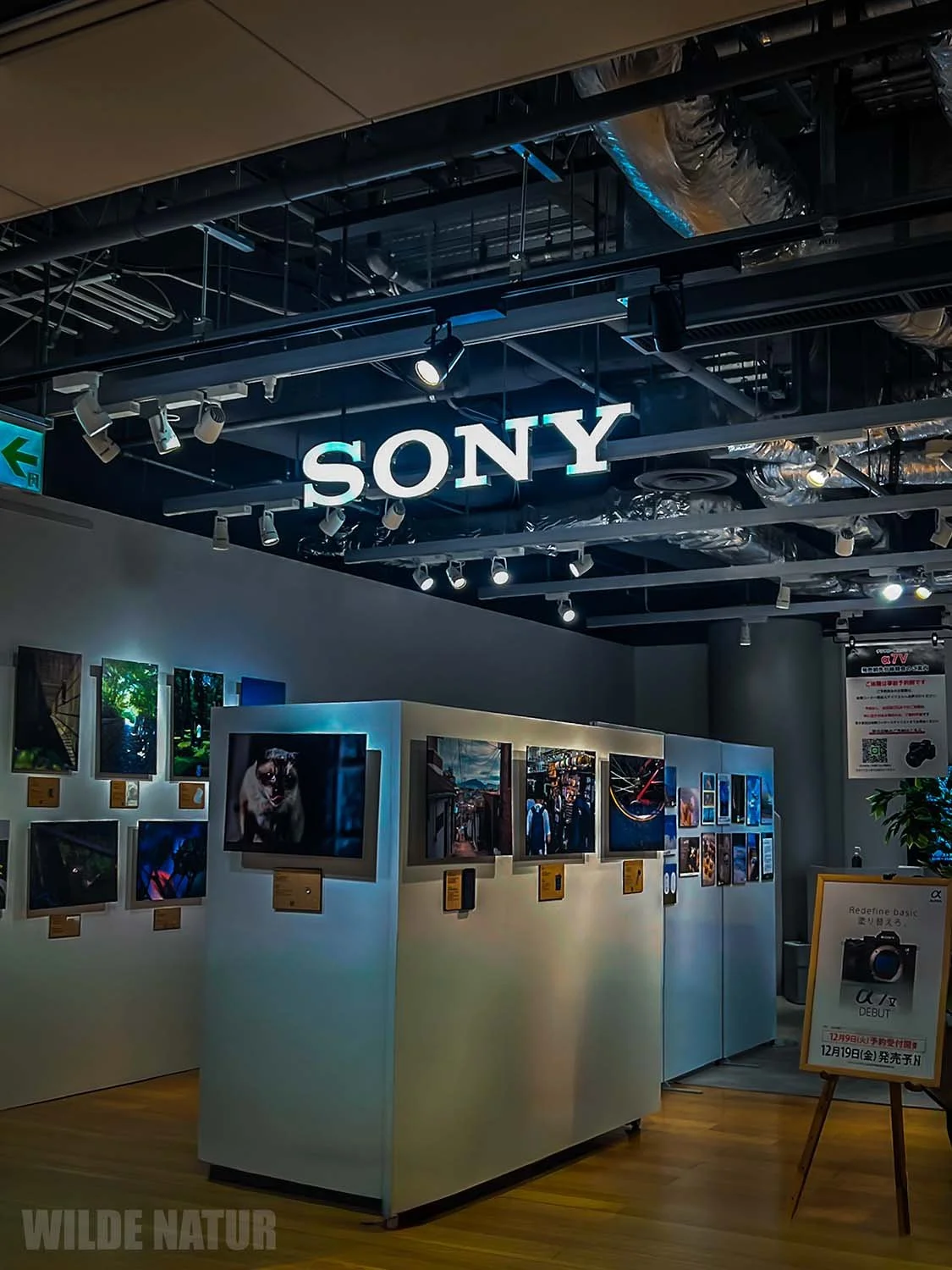
On December 2, 2025, Sony introduced its latest mid-range camera, the Sony a7 V, as I already reported in my previous article (Sony a7 V – Wildlife camera or flop?).
On paper, it is a major upgrade from the Sony a7 IV. The improvements spark curiosity—especially when it comes to real-world performance. For wildlife photography, the new partially stacked sensor and 30 frames per second with the electronic shutter make it particularly exciting.
Table of Contents
- Visiting Sony Tokyo
- Not a Full Review – but a First Impression
- What I Wanted to Test on the Sony a7 V
- Fun Fact: Launch Date in Japan
- Prices: Japan vs. Germany
- Short Price Comparison
- Burst Shooting: The a7 V Kicks Off
- Rolling Shutter
- Body & Handling of the a7 V
- Sony 300 mm f/2.8 GM – A Dream Lens for Photographers Over 50
- JPG vs. RAW on the a7 V
- My First Impression
Visiting Sony Tokyo
I was very happy to be a guest to Sony Tokyo to get a first hands-on impression of the new Sony a7 V.
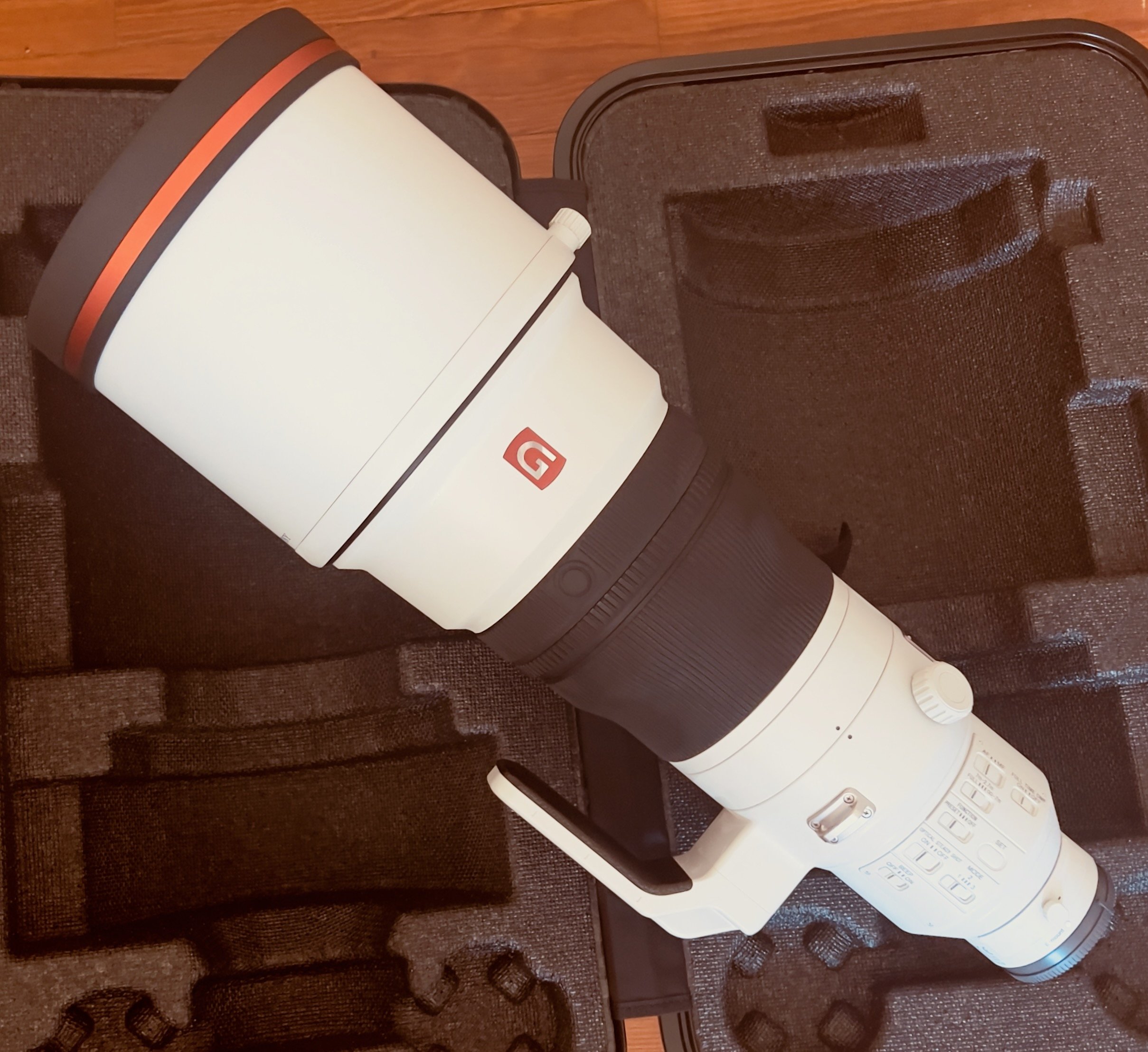
Before the visit, I had to book an appointment and select a lens to test with the camera. The choice was easy – I’ve had my eye on the Sony 300 mm f/2.8 GM for quite a while.
The reason? The weight—only 1,750 g (with tripod collar) and compact dimensions make it, for me, the perfect wildlife lens for photographers over 50. I love my Sony 400 mm f/2.8 GM, but at nearly 2.9 kg, it has become a guaranteed recipe for back pain.
But this article is not about back issues — it's about the Sony a7 V.
Not a Full Review – but a First Impression
To be clear: This was not a test I would describe as “realistic.” It was truly just a general first impression. And since RAW files currently cannot be opened in Lightroom or other editors, we’ll have to wait on that front.
What I Wanted to Test on the Sony a7 V
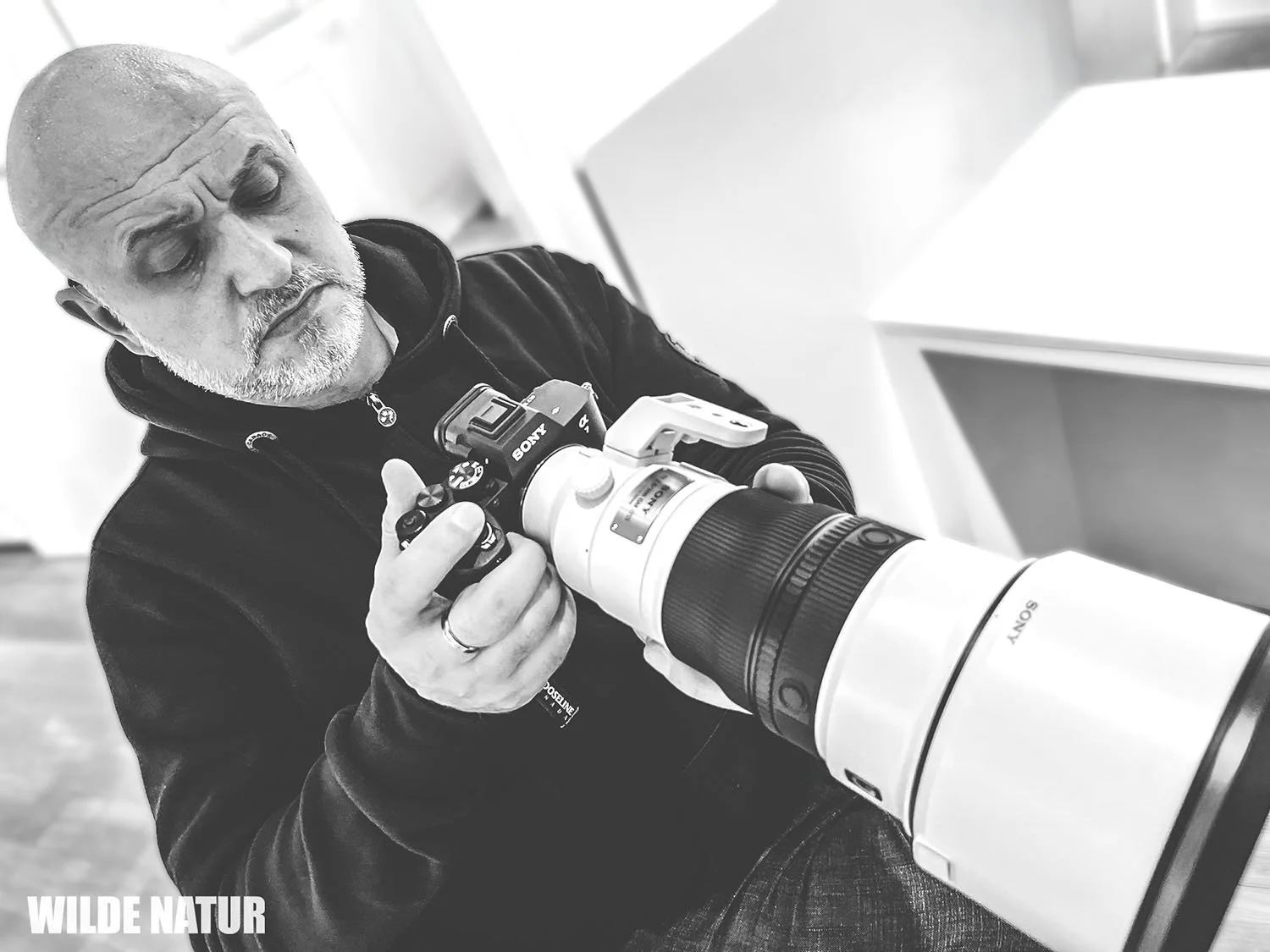
My three focus areas:
- Rolling shutter
- Burst speed & buffer performance
- Dynamic range
There wasn’t enough time for more, and the environment was not suitable for anything even remotely close to wildlife photography.
Fun Fact: Launch Date in Japan
While first units have already been delivered in Germany (10.12.2025), sales in Japan won’t begin until December 19, 2025. That genuinely surprised me.
Prices: Japan vs. Germany
A quick look at the prices:
In Germany, the Sony a7 V currently costs 2,999 €.
In Japan, it is priced at 416,900 yen, which — due to the weak yen — equals roughly 2,291.25 €.
The Sony 300 mm f/2.8 GM shows a similar pattern:
Its regular price in Japan is around 5,314 €, with a current Sony promotion lowering it to about 4,500 €.
In comparison, the German price is about 6,699 €.
Short Price Comparison
Sony a7 V:
- Germany: 2,999 €
- Japan: 416,900 yen ≈ 2,291 € (as of December 2025)
Sony 300 mm f/2.8 GM:
- Japan: approx. 4,500–5,300 € (depending on promotion)
- Germany: approx. 6,699 €
Important note:
Equipment purchased for the Asian market does not include warranty coverage in Germany. There is also no 2+1-year warranty extension as offered by Sony Germany. In addition, according to Sony Japan, the first cameras sold in Japan do not include an English-language menu. Attractive pricing, yes, but in case of warranty issues, you’re on your own unless you travel to Japan regularly.
Burst Shooting: The a7 V Kicks Off
Finally: e-shutter capability and 30 fps in the mid-range lineup!
Many wildlife photographers will be thrilled.
I set the camera to record JPG + RAW. When holding down the shutter, it immediately began firing at full speed. I used an SD card(Kingston 128 GB SDR2/128, 300 MB/s) and instantly wondered why I hadn’t brought my CFexpress card. The a7 V now includes one CFexpress slot plus the two familiar SD card slots.
The buffer filled quickly, and it was immediately clear: to take full advantage of the burst rate, you should definitely use a CFexpress card. Once the buffer was full, the camera took quite some time to clear its data to the SD card.
No Dual Recording on SD + CFexpress Type A
Important:
If recording simultaneously to a slower SD card, the camera adjusts to the slower write speed — canceling out any advantage of the CFexpress card. This is the same behavior seen with two SD cards of different speeds.
30 fps with Third-Party Lenses such as SIGMA, Tamron & Others
With third-party lenses (e.g., SIGMA, Tamron), Sony limits the frame rate to 15 fps via software. So if you want the full speed of the camera, you must use native Sony lenses.
By the way: this limitation also applies to Sony’s flagship bodies like the Sony A1 and a9 III.
Rolling Shutter
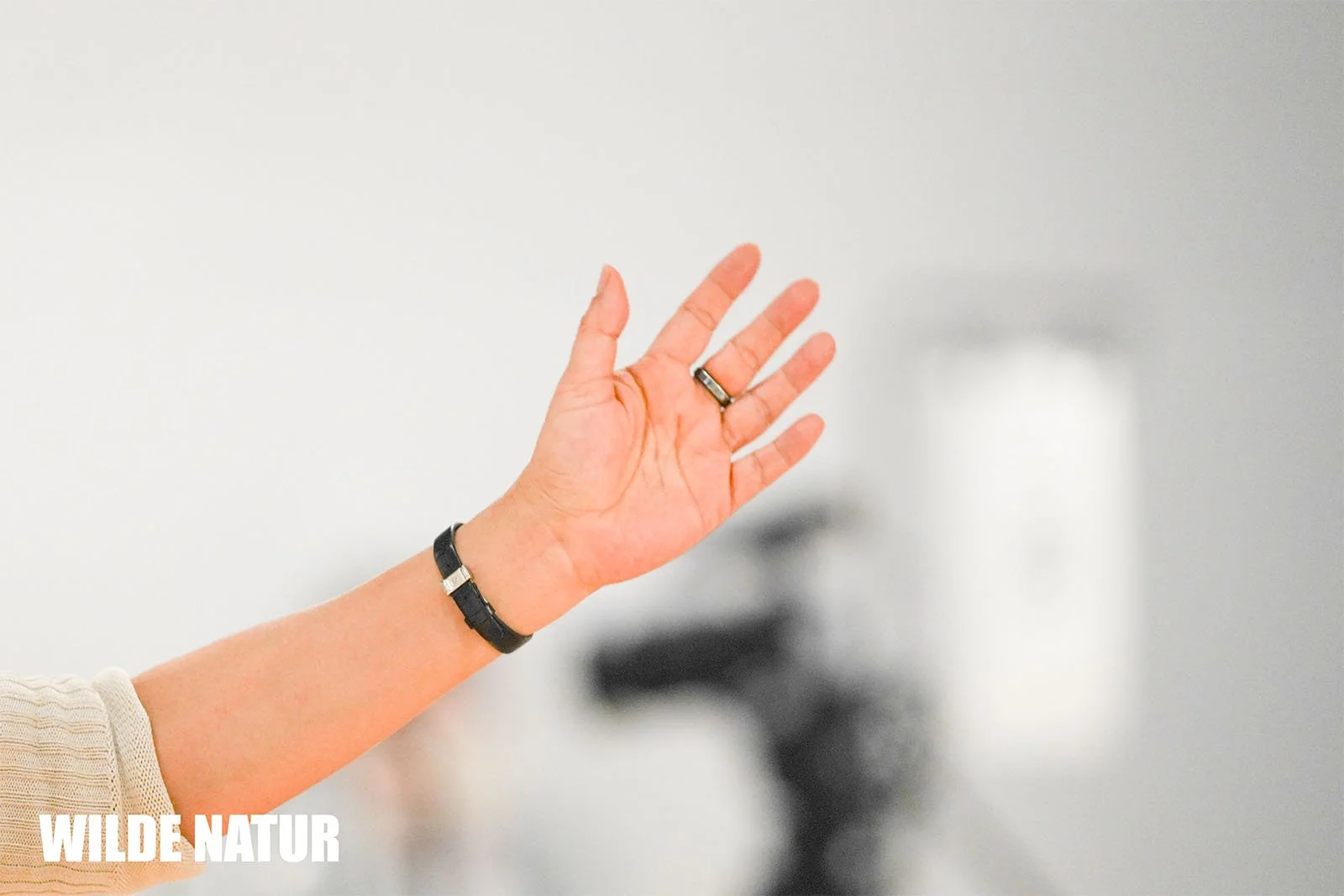
My wife briefly acted as my arm waving model so I could check the rolling-shutter effect.
Short conclusion:
With a sensor readout speed of 15 ms, rolling shutter is sometimes visible but not severe. How noticeable it will be in real wildlife situations remains to be seen. I’m excited for the first field results — especially from colleagues like Felix of
feelxphotography.com
, who will get the camera in the coming days. Take a look at his site; real outdoor samples will be posted soon.

Sony a7 V with the new tilt-and-swivel mechanism
Body & Handling of the a7 V
There are fewer changes here; the body design follows the a7R V.
Buttons are well placed and tactile — ideal when shooting with your eye at the viewfinder.
However, one familiar Sony issue remains: if you have large hands, you may not know where to put your little finger.
But I don’t see this as a real problem. It allows me to use a compact, powerful camera — and when I need more battery life or grip, I simply attach a battery grip.
Sony 300 mm f/2.8 GM – A Dream Lens for Photographers Over 50
Even though I didn’t intend to review the lens in this article: it is outstanding.
Compact, lightweight, powerful — also with the 2× teleconverter.
I was surprised at how well it performs wide open with the converter — better, at first impression, than my 400 mm f/2.8 GM in that setup.
But again: only real - world testing will give a final verdict.
JPG vs. RAW on the a7 V
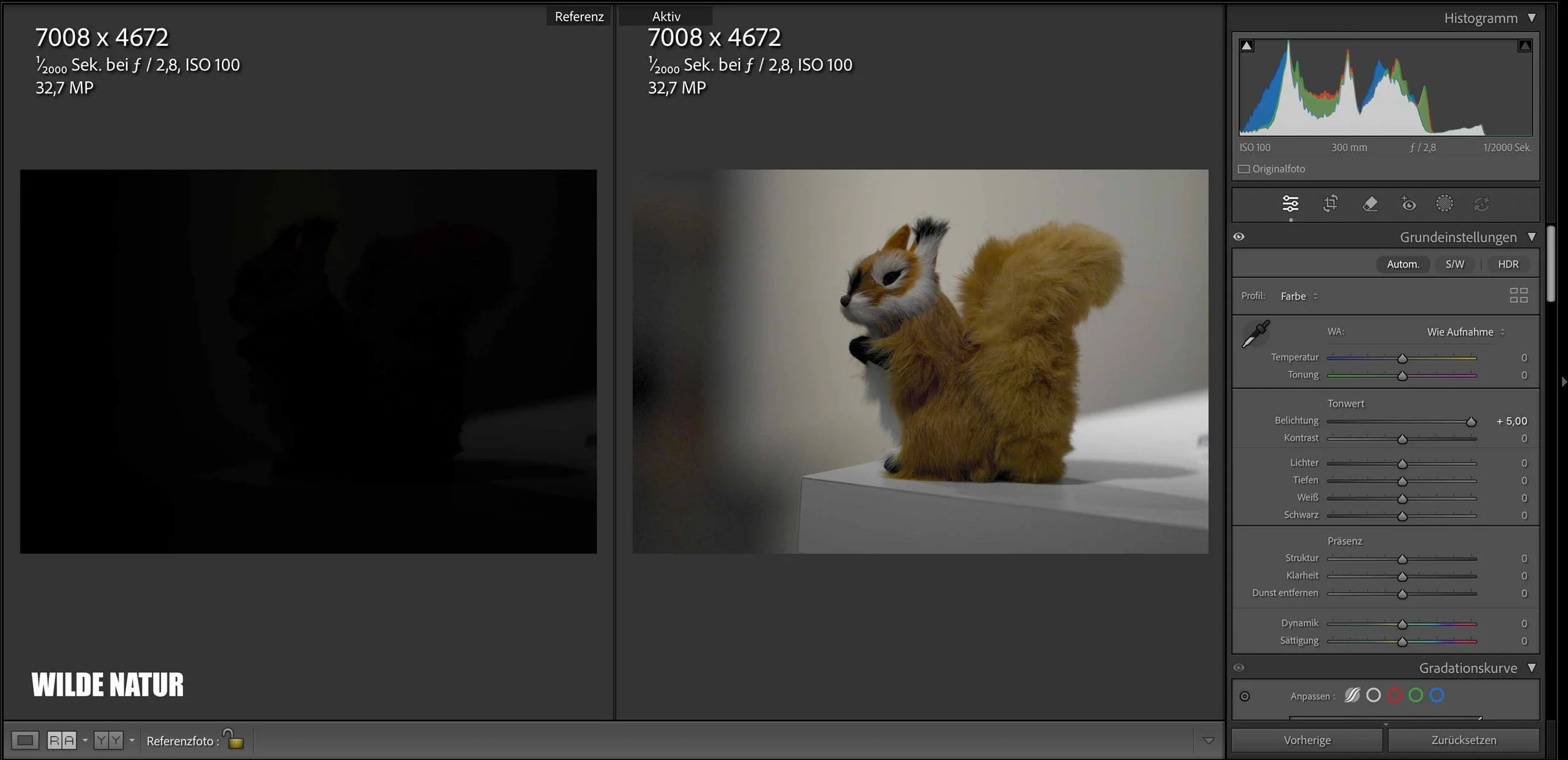
Strongly underexposed, yet even in the JPG the exposure can still be pushed significantly
Since the RAW files cannot yet be opened in Lightroom, I can’t say much about image quality. The JPGs straight out of the camera look good, but they are already compressed, leaving limited room for editing.
Even so, I deliberately took several underexposed shots and was surprised by how much exposure recovery the JPGs allowed without becoming unusable — even at higher ISO values.

Sony a7 V + 300 mm f/2.8 GM – my model on that day – photo in JPG format straight from the camera
From a technical standpoint, I am very eager to test the a7 V thoroughly in the wild. With 30 fps in e-shutter mode, reduced rolling shutter, and high - end performance at an entry - level wildlife price — especially for bird photography — it is a compelling camera.
For anyone still working with the a6000 series, the a7 III, or a7 IV—and who does not want to switch to the a1 or a9 III—the Sony a7 V will likely be a strong, modern solution. Time will tell how well it performs for nature photographers in the field.
It remains exciting!
FAQ About the Sony a7 V
1. Who is the Sony a7 V best suited for?
The Sony a7 V is aimed at ambitious hobby photographers and professional users who want a powerful camera for nature, wildlife, and bird photography without stepping into flagship pricing.
2. Is the Sony a7 V suitable for wildlife photography?
Yes. Thanks to 30 fps in electronic shutter mode, the new partially stacked sensor, and improved rolling-shutter performance, it is very well suited for fast-moving subjects. How it performs in practice is still uncertain at this point.
3. Does the Sony a7 V support 30 fps with all lenses?
No. The full 30 fps is only available with native Sony lenses. With third-party lenses, the frame rate is limited to 15 fps.
4. Which memory cards does the Sony a7 V support?
The camera features one CFexpress Type A slot and two SD card slots.
5. Can you record to both SD and CFexpress simultaneously?
Yes, you can. However, the camera will operate at the speed of the slower SD card, nullifying the advantage of CFexpress.
6. How strong is the rolling shutter on the Sony a7 V?
With a readout speed of about 15 ms, rolling shutter is present but noticeably reduced. In practical wildlife use, it is unlikely to be very disruptive.
7. Can the a7 V’s RAW files currently be opened in Lightroom?
At the time of testing, no. Lightroom and other software typically add support later through updates.
8. Are there warranty differences between Japan and Germany?
Yes. Cameras intended for the Asian market do not include warranty coverage in Germany and lack the 2+1-year warranty extension offered by Sony Germany.
9. Is the Sony 300 mm f/2.8 GM a good match for the a7 V?
That depends on your needs. The question is more: does the 300 mm fit your photography style?
With a weight of approx. 1,750 g, it is excellent for handheld wildlife photography.
10. Is it worth upgrading from the Sony a7 III or a7 IV to the a7 V?
For users who will benefit from higher burst rates, better rolling-shutter behavior, and newer technology, the upgrade is worthwhile in many cases.