Japanese Raccoon Dog (Nyctereutes procyonoides)
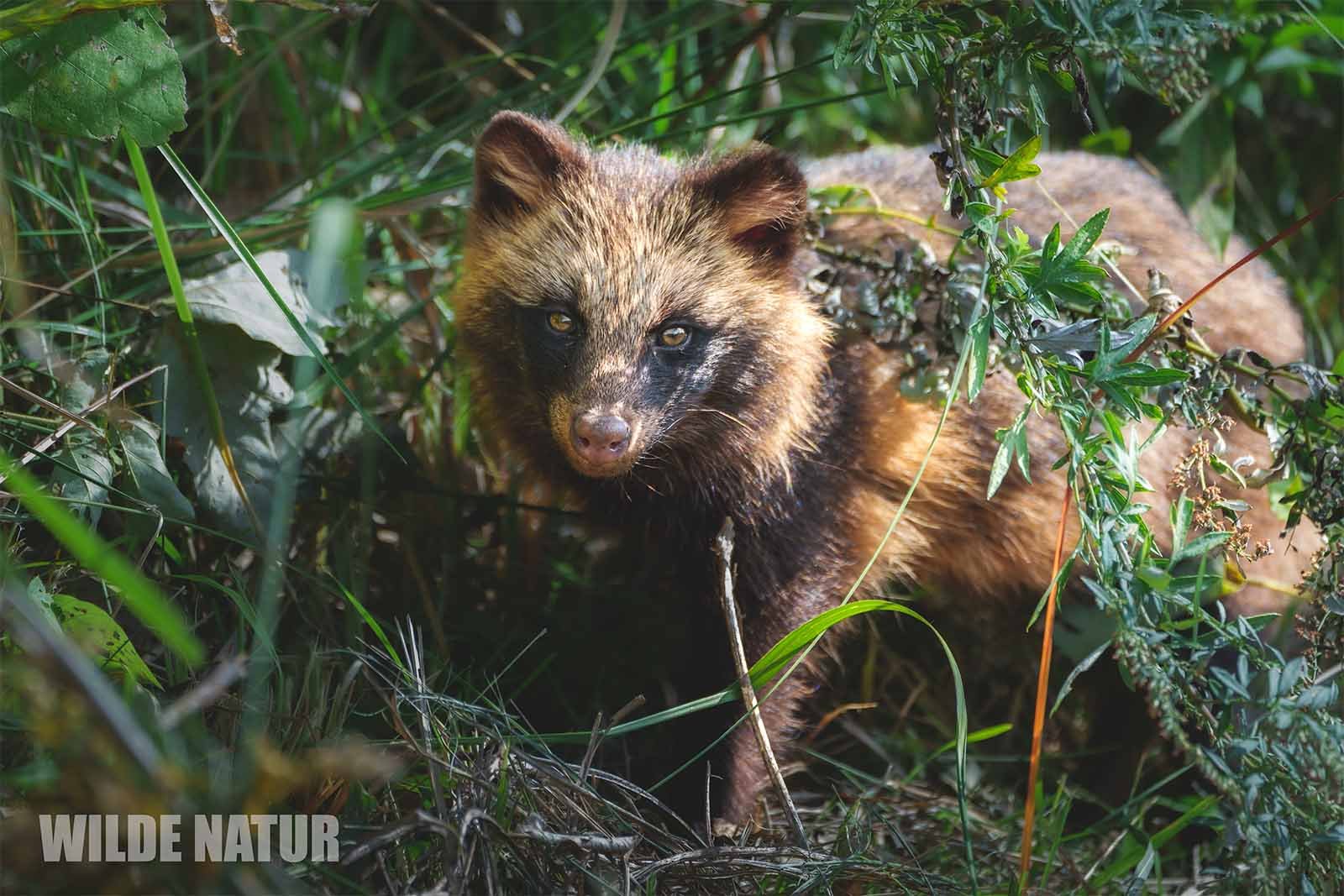
Raccoon dog (Nyctereutes procyonoides)
Japanese Raccoon Dog: Tanuki – Wild Canid and Cultural Icon
The Japanese raccoon dog (Nyctereutes procyonoides), called tanuki in Japan, is an endemic wild canid of Japan. Here you’ll find its appearance, behavior, diet, distribution, and special cultural significance.
Key Facts
- Size: 45–55 cm body length; tail 13–18 cm
- Weight: 3–6 kg, up to 8 kg in autumn
- Lifestyle: nocturnal and crepuscular, often monogamous
- Diet: omnivore — animals, fruits, acorns, carrion
- Distribution: exclusively Japan (endemic)
- Reproduction: 2–5 young; both parents rear the litter
- Winter: no hibernation, but reduced activity
- Culture: symbol of good luck, humor, and shape-shifting
- Scientific name: Nyctereutes viverrinus
- Japanese name: Tanuki (タヌキ)
- Family: Canidae
- Appearance: fox-like wild canid with a dark facial mask
- Habitats: forests, wetlands, farmland, parks, suburbs
- Adaptation: synanthropic, highly flexible in town and country
Table of Contents
- Introduction
- Appearance
- Traits and Behavior
- Diet
- Reproduction and Rearing
- Seasonal Behavior
- Habitat and Distribution
- Threats and Conservation Status
- FAQ
- Conclusion
Introduction
When people in Japan speak of the tanuki, they mean more than just a wild animal. The Japanese raccoon dog (Nyctereutes viverrinus) is endemic — it occurs only in Japan — and blends biology and myth like few other species. In folktales it appears as a cunning shapeshifter, a symbol of good luck, humor, and mutability. Out in the field, however, the tanuki is pragmatic: a flexible omnivore that uses mountain forests as readily as fields, parks, and the edges of large cities.
In short, the tanuki is a master of living alongside people — shy, resilient, resourceful. That is exactly what makes it so successful in dynamic landscapes.
Appearance
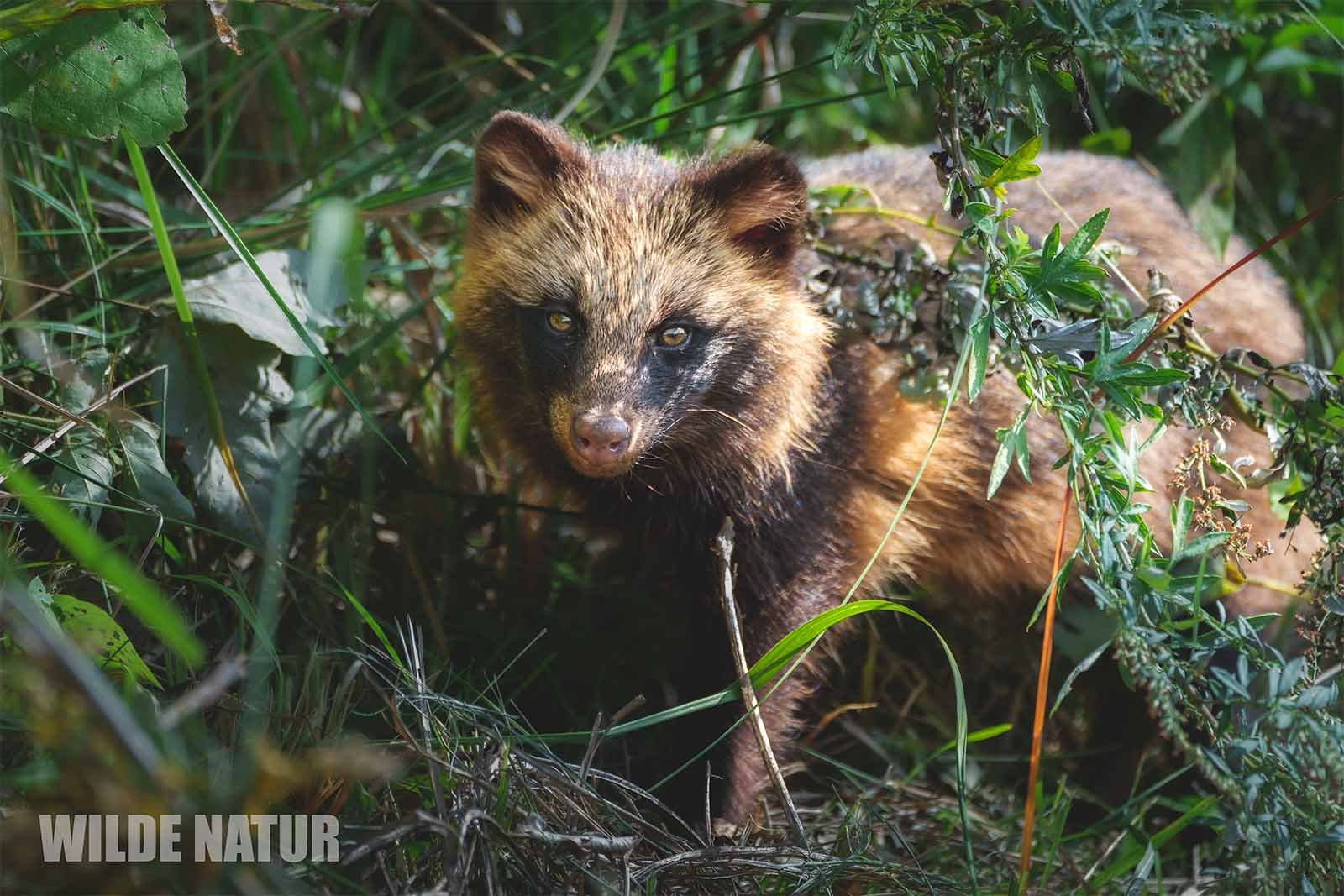
The tanuki looks like a mix of raccoon, fox, and dog — hence the English name Japanese raccoon dog.
At a glance:
- Stocky body, short neck, short legs
- Thick, soft fur, especially bushy in winter
- Distinctive dark facial mask around eyes and muzzle
- Small, rounded ears
- Thick, bushy tail, often with a dark tip
Coat & coloration:
Base color ranges from yellowish-brown to gray-black; the pale underfur in winter makes the tanuki look bulkier. The facial mask is its visual hallmark — high recognition factor included.
Measurements:
- Body length: about 45–55 cm (rarely up to 60 cm)
- Tail length: 13–18 cm
- Weight: 3–6 kg, in autumn sometimes up to 8 kg
Its compact, heat-conserving build helps it cope with cold winters, for example in northern Japan.
Traits and Behavior
The tanuki is mostly nocturnal or crepuscular and moves rather deliberately, almost stealthily. It is highly adaptable — in forests, along forest edges, in wetlands, farmland, and even suburbs it finds niches.
Behavior profile:
- Social structure: often monogamous pairs that share a territory
- Communication: scent marking and vocalizations (barks, growls, whines)
- Locomotion: able to swim and climb small obstacles; prefers cover-rich paths
- Safety: retreats into dense vegetation or burrows when threatened
This blend of cooperation, caution, and flexibility is a key to its success in human-dominated areas.
Diet
The tanuki is omnivorous — a true generalist. It adjusts its menu to season and habitat.
Animal food:
- Frogs, toads, mice, small birds
- Insects, snails, worms
- Carrion, when available
Plant food:
- Berries, fruits, acorns
- Grasses, roots, seeds
In autumn the share of plant food increases markedly — the tanuki builds fat reserves to draw on in winter. This broad diet explains why it can use forests, fields, and even gardens equally well.
Reproduction and Rearing
Notable is the cooperative rearing: both parents care for the young — not a given among wild canids.
Reproductive cycle:
- Mating season: February to March
- Gestation: about 60 days
- Litter size: 2–5 pups, rarely up to 7
- Birth site: sheltered den or dense cover
- Care: both parents feed, warm, and guard the litter
- Independence: after about 3 months
Pups are born blind, open their eyes after two weeks, and soon accompany the parents on first forays. This family model boosts survival — an effective pillar of the tanuki’s success story.
Seasonal Behavior
Hibernation? No — but a strategy. The tanuki does not truly hibernate, yet during cold spells it noticeably reduces activity.
Year profile:
- Winter (cold): retreat to the den, reduce energy use, rely on fat reserves
- Spring: mating season, territory care, renewed foraging
- Summer: high activity; young accompany the adults
- Autumn: fattening season — acorns, fruits, berries; building fat stores
In warmer parts of Japan it remains active year-round; in the north, pace is set by frost and snow.
Habitat and Distribution
The Japanese raccoon dog is endemic to Japan, inhabiting the islands Honshū, Shikoku, Kyūshū, and Hokkaidō.
Habitats:
- Deciduous and mixed forests, forest edges
- Wetlands, rice fields, floodplains
- Farmland, parks, urban fringes
As a synanthrope, the tanuki cleverly uses human structures — hedges, fallows, streams, narrow green corridors. In doing so, it links nature and settlement into a functional home range.
Threats and Conservation Status
According to the IUCN, the tanuki is Least Concern (not threatened). Its populations in Japan appear stable to increasing.
Regional risk factors:
- Road traffic on major routes
- Habitat loss due to development
- Diseases such as mange or distemper
- Hunting (mainly for fur) in some areas
Counterbalancing these is its high adaptability and — not to be underestimated — a cultural safety net: as a symbolic animal with positive folklore, the tanuki enjoys broad public goodwill.
FAQ
Where does the tanuki live?
Across Japan, from mountain forests to suburban fringes.
How big and heavy is it?
About 45–55 cm body length, 13–18 cm tail; 3–6 kg, up to 8 kg in autumn.
What does it eat?
An omnivore: from frogs and insects to fruits, acorns, and carrion.
Does it hibernate?
No. It reduces activity in cold spells and stays in the den.
Is it dangerous?
No. Tanuki are shy, avoid people, and steer clear of conflict.
Why is the tanuki culturally significant?
In Japanese mythology it is a shapeshifter and bringer of good luck — a symbol of change and joie de vivre.
In Short
The Japanese raccoon dog uniquely blends biology and culture: endemic, adaptable, social — and at the same time mythic as a cheerful shapeshifter.
It masters the interface between nature and city, uses what’s available, yet remains shy. The tanuki shows how flexibility becomes the key to success in a changing world — a quiet neighbor, a robust wild canid, and a living cultural icon of Japan.